Myth versus Fact: Industrial Automation and Electrical Systems
A myth-versus-fact primer on electrical system design in industrial automation, covering grounding, PLCs, digital signals, and emergency stop circuits.
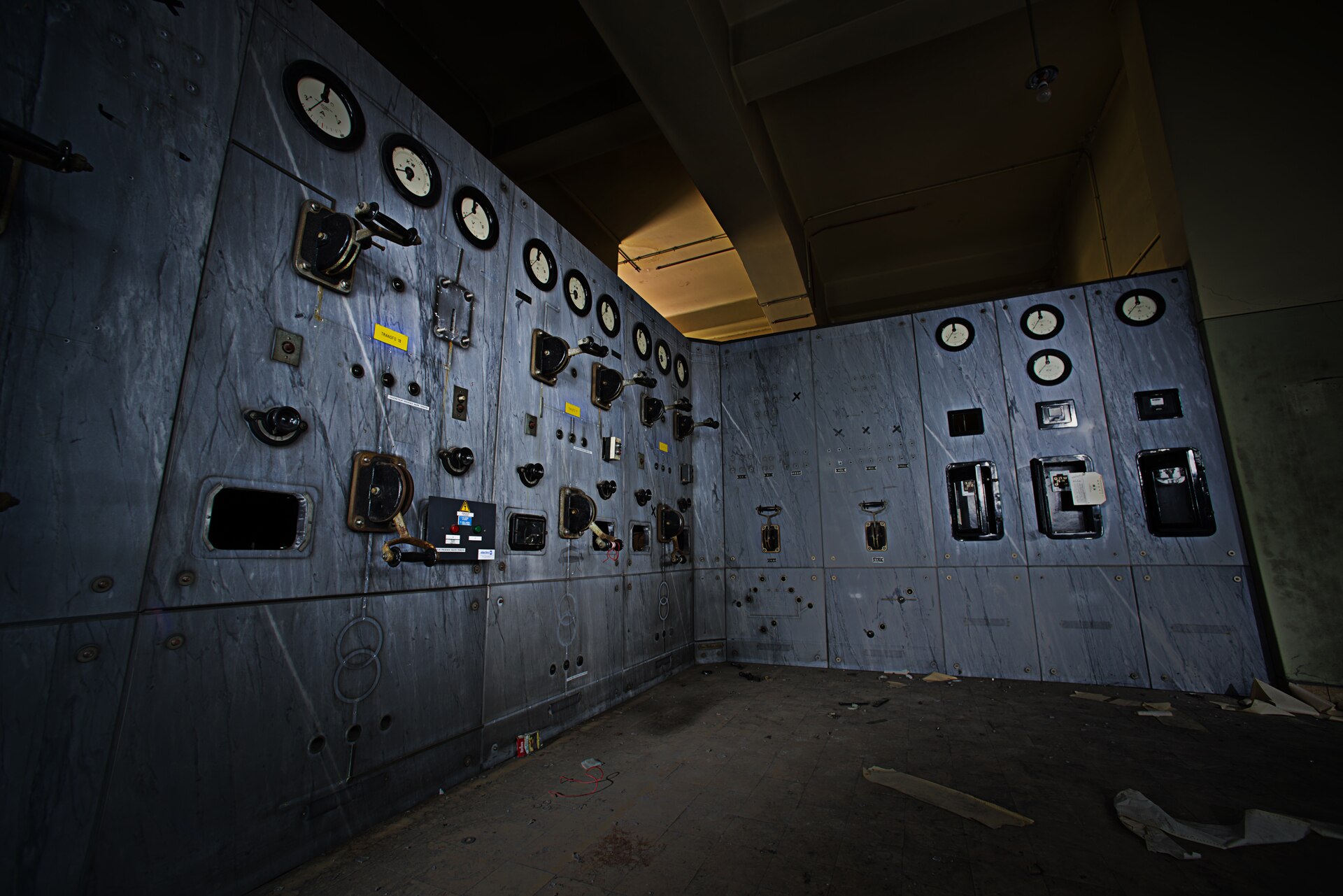
Cover: Control panel · Wikimedia Commons · CC BY-SA 2.0
Question: Which myths about industrial automation and electrical systems are commonly mistaken for facts?
Myth: Automated systems no longer need safety grounding
Myth: Because industrial automation uses electronic controls, the electrical system can operate without a dedicated grounding scheme. Fact: grounding is a core part of industrial electrical design. A properly bonded ground system helps protect personnel, stabilize voltage levels, and give overcurrent devices a defined path to function. Even fully automated machines rely on protective grounding for the incoming power service, metal enclosures, and exposed conductive parts.
Myth: A PLC is just an ordinary computer
Myth: A programmable logic controller (PLC) is the same as a desktop PC with different software. Fact: PLCs are engineered for industrial environments. They use robust power supplies, hardened input/output circuits, and deterministic scan cycles that are suitable for controlling relays, motors, and other automation equipment. While a PLC contains a microprocessor, its construction and programming are specialized for factory-floor reliability rather than general-purpose computing.
Myth: Digital signals are immune to electrical noise
Myth: Since digital signals are ones and zeros, electrical noise cannot affect them. Fact: digital signals can be corrupted by electromagnetic interference from motors, drives, and high-voltage conductors. If signal wiring is run too close to power cables or is unshielded, false pulses or data errors can appear. Industrial practice includes twisted-pair cabling, shielded cables, and separation of power and signal wiring to preserve reliable communication.
Myth: An automated machine does not need an emergency stop
Myth: In a fully automated machine, a computer can always stop the process safely, so a physical emergency stop is unnecessary. Fact: emergency stop circuits are designed as independent safety functions that remove power or bring the machine to a safe state when activated by a person. They are not based solely on software. In many countries and industries, emergency stop devices are required and must be wired so that they work even if the controller fails.