When you're working in industrial robotics and cobots, the first fork in the road is often about what you actually need in hand. Do you want to study the motion and shape of a six-axis arm without spending much, or do you need a precise component that can feel contact and load in a real system? The 1:10 ZN Industrial Robot Manipulator Six-axis 3D Model and the ATI Industrial Automation Mini45 force torque sensor sit at opposite ends of that decision.
Quick verdict
If your project is visual or educational, the 1:10 ZN model at $133.54 gives you an arm replica you can use to explain kinematics. If you're instrumenting a robot or end effector and need real force/torque data, the ATI Mini45 at $1,395.00 is a used but functional sensor. Both are used units, but they serve completely different roles.
Comparison table
| Product | Price | Best for | Key detail |
|---|---|---|---|
| 1:10 ZN Six-Axis Robot Arm Model | $133.54 | Demonstrating six-axis motion | 1:10 scale replica |
| ATI Industrial Automation Mini45 | $1,395.00 | Measuring force and torque on a cobot | Measures F/T in X, Y, Z axes |
Where each product wins
The ZN model wins on price and footprint. It's a scaled-down manipulator that makes joint movements obvious. The ATI Mini45 wins on functionality: it's a real force/torque sensor, removed from working automation and research equipment, and designed to let a robot detect contact, load, and tool interaction.
Product notes
#### 1:10 ZN Six-Axis Robot Arm Model
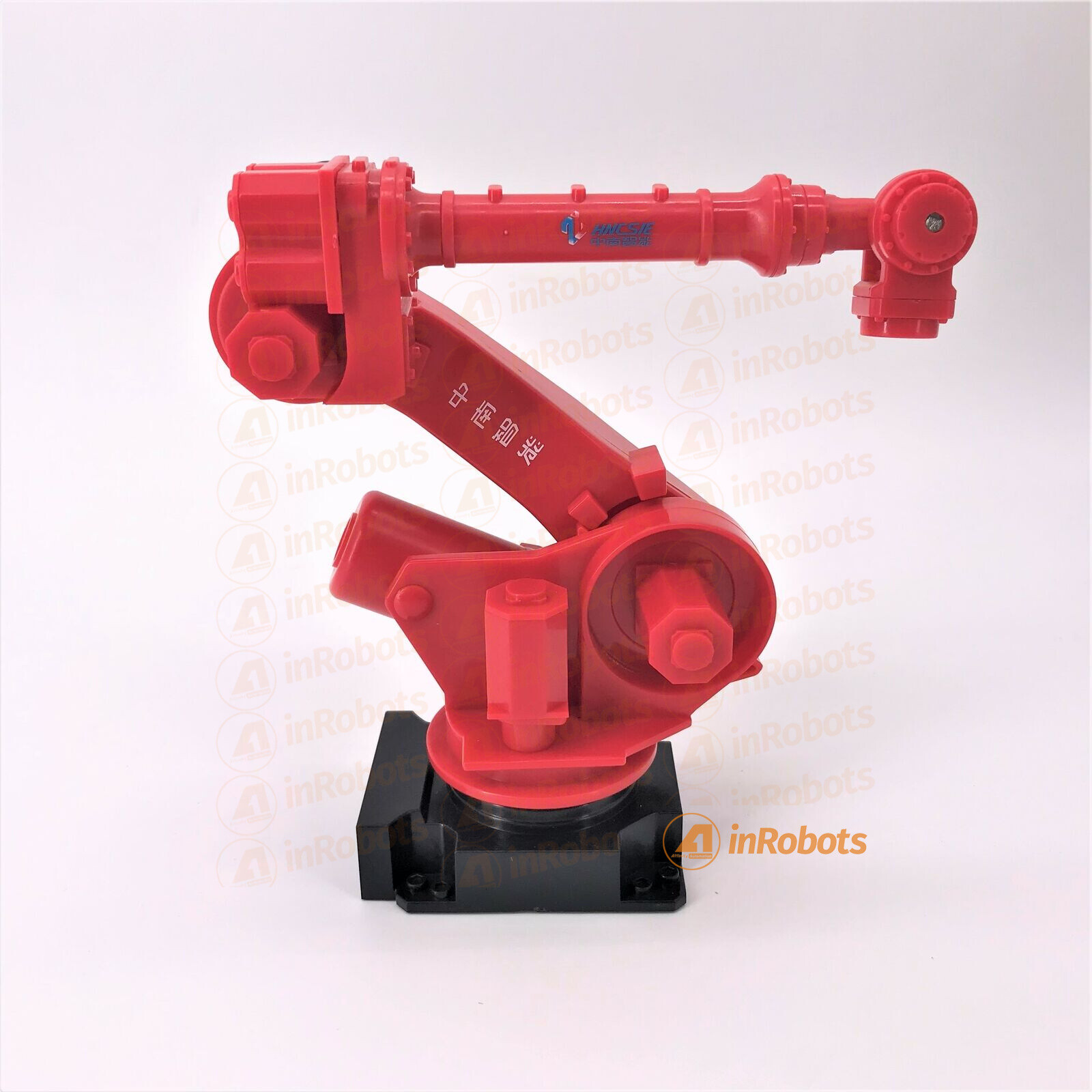
This model gives you a 1:10 scale physical replica of an industrial robot manipulator with six axes. It's a used unit, and its low entry cost makes it a practical way to visualize how a cobot or industrial arm moves before you commit to a larger build. The six-axis layout helps you see how each joint rotates and contributes to the overall reach. The trade-off is that it's a model, not a working robot, so it won't carry a payload, execute programmed motions, or connect to a controller. Keep it for demonstrations, educational displays, or as a design reference on your bench.
#### ATI Industrial Automation Mini45
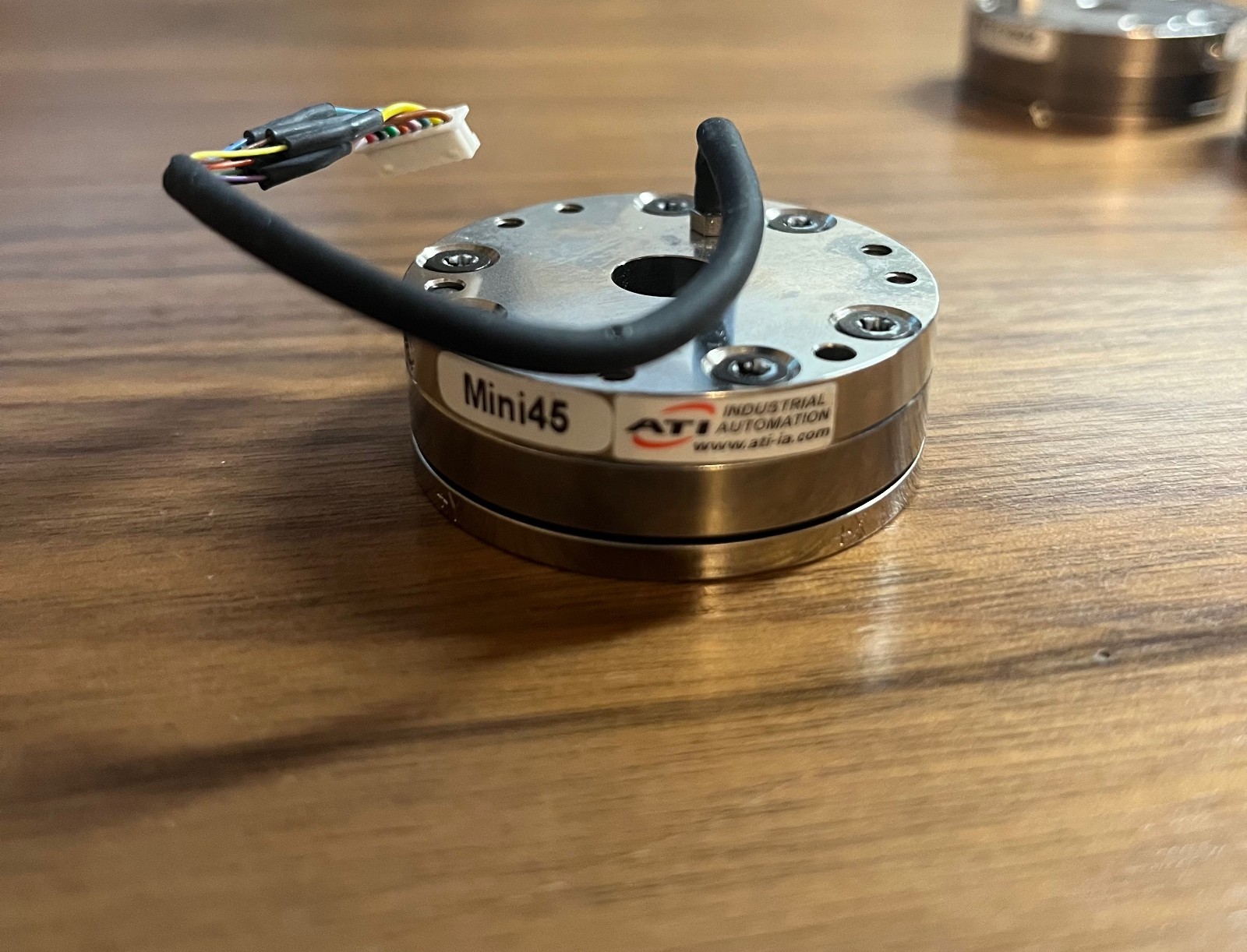
The ATI Mini45 is a used force/torque sensor removed from working automation and research equipment. It measures forces and torques simultaneously in X, Y, and Z axes, allowing a robotic system to detect contact, load, and tool interaction with exceptional accuracy. The integrated cable is included, and the sensor is sold individually. The main drawback is the upfront cost, which is a serious investment for a single component. It also shows minor cosmetic wear from normal industrial use, though no structural damage is noted. As a sensor, it needs a robot arm and a control system to be useful, so plan for the surrounding system.
Final choice by use case
If your aim is to study how a robot arm moves, teach the fundamentals of robotics, or add a physical reference model to your workspace, the 1:10 ZN robot arm model is the logical buy. If your aim is to build or instrument a cobot end effector that can sense contact and load, the ATI Mini45 is the one you'll actually integrate into a system. The two products don't overlap in function, so your choice should be driven by whether your goal is visualization or real-world sensing.