Choosing a DIN rail power supply for an automation panel usually comes down to voltage before anything else. You need 24V to run most PLCs, sensors, and relays, or 12V for valves, contactors, and certain controllers. The two supplies here sit at opposite ends of that decision: a 120W 24VDC unit that offers more raw power for less money, and a Mean Well MDR-100-12 that brings 12V output with adjustability and diagnostic signals. Let's sort out which one makes sense for your cabinet.
Quick verdict
The 120W 24VDC DIN Rail Power Supply is the pick if your control circuit runs on 24V and you want the most wattage for your dollar. It delivers 5A at 24V (120W total) with a listed efficiency of at least 85%, and it costs $22.99. The Mean Well MDR-100-12 is the better match if you specifically need 12V, want adjustable voltage, or want an LED indicator and DC OK signal to monitor the rail. It costs $29.99 and supplies 7.5A at 12V (90W), putting more of its budget into features rather than raw output.
120W 24V vs Mean Well 12V at a glance
| Feature | 120W 24VDC DIN Supply | Mean Well MDR-100-12 |
|---|---|---|
| Price | $22.99 | $29.99 |
| Output voltage | 24V DC | 12V DC |
| Output current | 5A | 7.5A |
| Output power | 120W | 90W |
| Input voltage | 100-240V AC | AC/DC converter |
| Extras | Efficiency ≥85% | Adjustable voltage, LED indicator, DC OK signal |
| Enclosure | Not specified | Plastic, enclosed |
Where each supply wins
120W 24V supply wins on price, power capacity, and voltage commonality in industrial control panels. At $22.99, it's $7.00 less than the Mean Well, and it delivers 30W more output. For a 24V sensor bus or a small PLC system, this is the workhorse.
Mean Well MDR-100-12 wins on features and 12V compatibility. The adjustable voltage lets you fine-tune the rail, while the LED indicator and DC OK signal provide at-a-glance status. The enclosed plastic housing also gives it a distinct physical package.
Product notes
120W 24VDC 5Amp Industrial DIN Rail Power Supply Single Output 1.7 x 4.8 x 5.1in
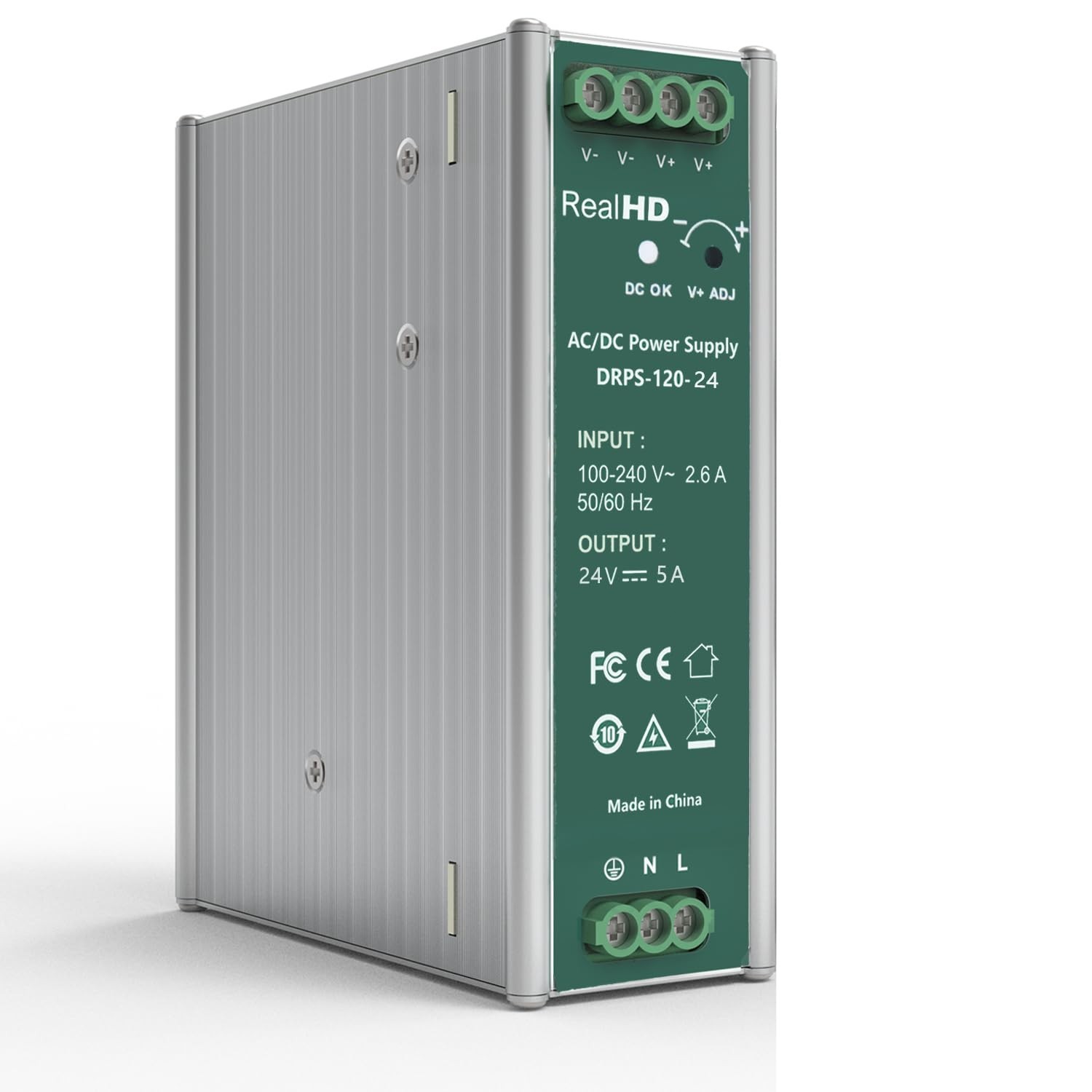
This is the straightforward option for a 24V panel. Its 120W output at 5A gives you solid headroom for multiple loads, and the listed input range of 100-240V AC means it can handle standard line power without fuss. The 1.7 x 4.8 x 5.1-inch footprint is easy to slot into a DIN rail enclosure, and the 85% efficiency keeps wasted heat down-nice when the cabinet is sealed. On the trade-off side, the listing centers on the core electrical specs and doesn't mention adjustable voltage or a DC OK indicator. If you need to fine-tune the output or want a remote status signal, the Mean Well is the one that spells out those features.
MDR-100-12 DIN Rail Power Supply 12V 7.5A 90W Plastic AC/DC Converter MEAN WELL
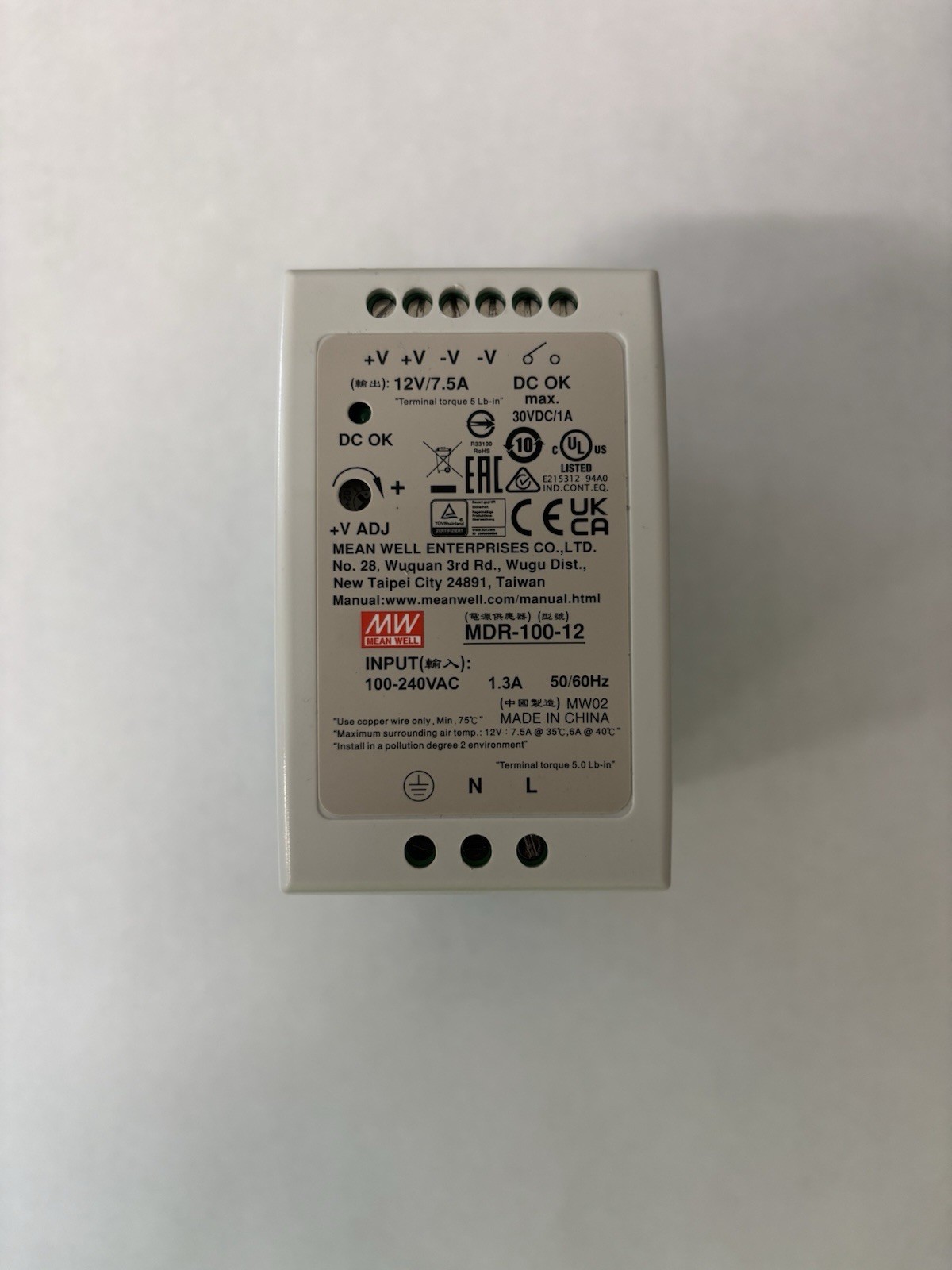
The MDR-100-12 is the smarter pick when 12V is your control voltage. It delivers 7.5A at 12V (90W), and the adjustable voltage lets you trim the output to match sensitive loads. The built-in LED indicator and DC OK signal are genuinely useful for troubleshooting-you can see at a glance whether the rail is healthy. The plastic, enclosed construction keeps internals protected for indoor installation. The catch is that you pay $29.99 for 30W less output capacity than the 24V supply, and it's not the right unit if your panel components expect 24V. For a 12V-centric system, though, the extra diagnostics and adjustability justify the price.
Final choice by use case
Choose the 120W 24VDC supply if you're building or expanding a standard 24V control panel, want the most watts per dollar, and don't need built-in voltage trimming or status outputs. It's the dependable, cost-effective foundation.
Choose the Mean Well MDR-100-12 if your gear runs on 12V, you want to adjust the output voltage, or you value the LED indicator and DC OK signal for monitoring the rail during commissioning and maintenance. It costs more, but it brings features the 24V supply doesn't mention.
If you're still on the fence, look at the output voltage of the devices you'll be powering-that single number will settle the argument faster than any other spec on the datasheet.