You're outfitting an industrial robotics cobots workspace, and your shortlist has two products that solve very different problems. One is a complete six-axis mechanical arm kit with a claw listed at $78.90. The other is a precision force torque sensor listed at $1,395.00. Both can play a role in an automation setup, so the question is not which one is better-it's which one matches the job you have right now.
Quick verdict
If your priority is a hands-on, buildable robot arm for college teaching, DIY production, or mechanical-skills practice, the 6DOF Mechanical Arm Claw Kit is the clear match. If your priority is giving a robot or end effector the ability to detect contact, load, and tool interaction, the ATI Mini45 force torque sensor is the component you'll want to integrate.
At a glance
| Product | Listed price | Visual indicator |
|---|---|---|
| 6DOF Mechanical Arm Claw Kit | USD 78.90 | |
| ATI Industrial Automation Mini45 | USD 1,395.00 |
Where each product wins
6DOF Mechanical Arm Claw Kit wins for learning environments and proof-of-concept builds. Its six servo motors produce front/back, up/down, and left/right gripping demonstrations, and the 2 mm aluminum plate brackets plus disc chassis are aimed at stable, flexible movement. This is a kit, not a finished arm, so the win is about the build process as much as the result.
ATI Industrial Automation Mini45 wins for automation and research tasks that need force/torque feedback. Because it measures forces and torques simultaneously in X, Y, and Z, it fits robotic arms, end effectors, and research applications where contact and load matter. This is a sensing component, so its win is about enabling control rather than providing the arm itself.
Product notes
6DOF Mechanical Arm Claw Kit
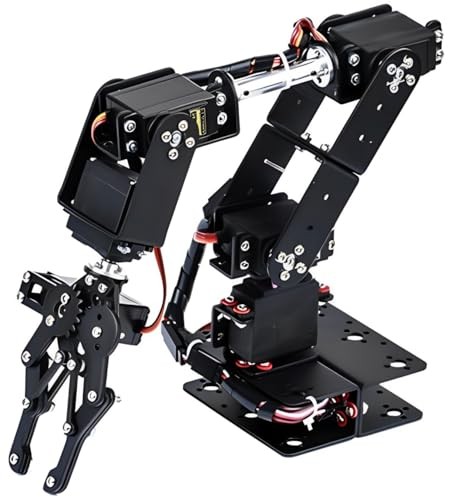
This black manipulator kit gives you a six-servo arm with a claw and a disc-shaped chassis. The servo-driven joints let you demonstrate front/back, up/down, and left/right gripping, while the 2 mm aluminum plate brackets are included for stability. It uses cup bearings at the steering joints to keep movement flexible and centered, which is useful when you are learning how robot geometry works. Assembly is required, and the educational objective points to mechanical skills, so you should expect to spend time building before running demos. For a classroom, club, or first robot project, that build time can be the whole point. The limitation is that this is a kit for experimental and teaching use, not a ready-to-run industrial cell component.
ATI Industrial Automation Mini45
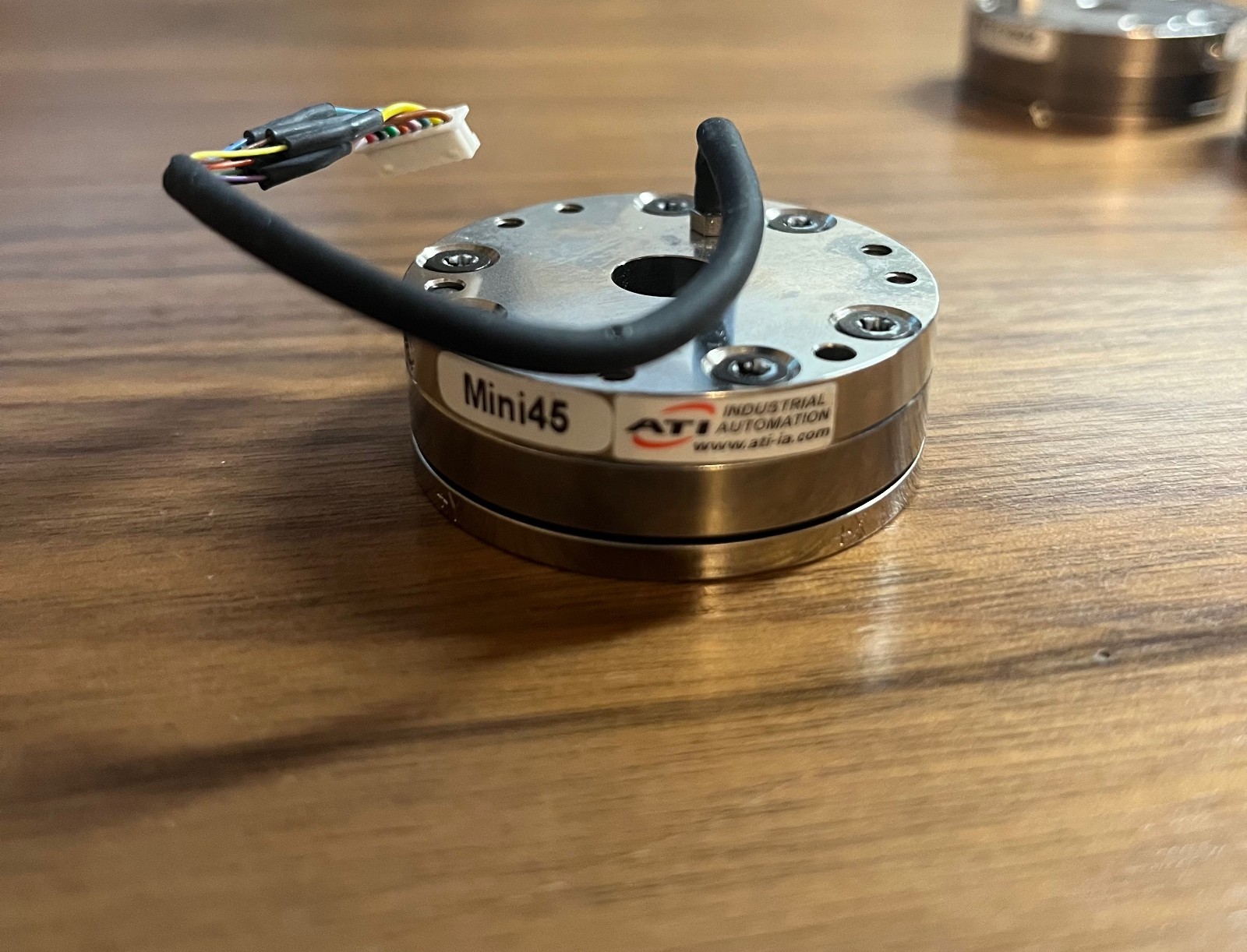
This used and functional sensor was removed from working automation and research equipment. It is a high-precision force torque sensor that measures forces and torques simultaneously in X, Y, and Z, with an integrated cable, and it is built for robotic arms, end effectors, and research applications. Minor cosmetic wear is expected, but no cracks, bends, or structural damage were observed, and the unit was stored in a controlled environment. Choose this when you need contact and load detection in an existing robot system. The limitation is that it is a sensor component rather than a complete robot, so you will be integrating it into equipment you already have or are building.
Final choice by use case
For a classroom or first robot build, choose the 6DOF Mechanical Arm Claw Kit-you get a complete, buildable manipulator to learn from. For instrumenting a cobot, end effector, or research rig with force/torque feedback, choose the ATI Mini45-you get the precision sensing piece that belongs inside an existing system.