When you're outfitting an industrial robotics cobot cell, one of the first decisions is whether you need to add a sensing layer to an arm you already have, or you need the arm itself. Two used components sit at opposite ends of that choice: the ATI Industrial Automation Mini45, a high-precision force torque sensor priced at $1,395, and the FANUC M-16IB/20, a six-axis industrial robot arm priced at $1,800. The $405 gap between them is small enough that both could fit in the same budget, but the right pick depends entirely on what your automation setup is missing.
Quick Verdict
If your robot arm is already in place and you need it to detect contact, load, and tool interaction, the ATI Mini45 is the component to get. If you have no arm at all and need a six-axis workhorse to build around, the FANUC M-16IB/20 is the one that belongs in your cell.
| Feature | ATI Mini45 | FANUC M-16IB/20 |
|---|---|---|
| Price | $1,395 | $1,800 |
| Condition | Used | Used |
| Component type | Force torque sensor | Robot arm (arm only) |
| Model | ATI mini45 | M-16IB/20 |
| Key specs | Measures forces and torques in X, Y, Z axes | 6 axes, 20 kg payload, 220 kg arm weight |
Where the ATI Mini45 Wins
The ATI Mini45 wins when you already have a robot or end effector and need to add precision force feedback. It measures forces and torques simultaneously in three axes, letting your system sense contact and load with exceptional accuracy. It's also $405 less than the FANUC, making it the lower-cost addition if your cell only needs a sensor.
Where the FANUC M-16IB/20 Wins
The FANUC M-16IB/20 wins when you need the arm itself. It's a complete six-axis robot with a 20 kg payload, giving you the foundational hardware to build a material-handling or processing cell. The arm-only configuration makes it a flexible starting point for integrators who already have a controller and cabling in mind.
ATI Industrial Automation Mini45 - USED & Functional
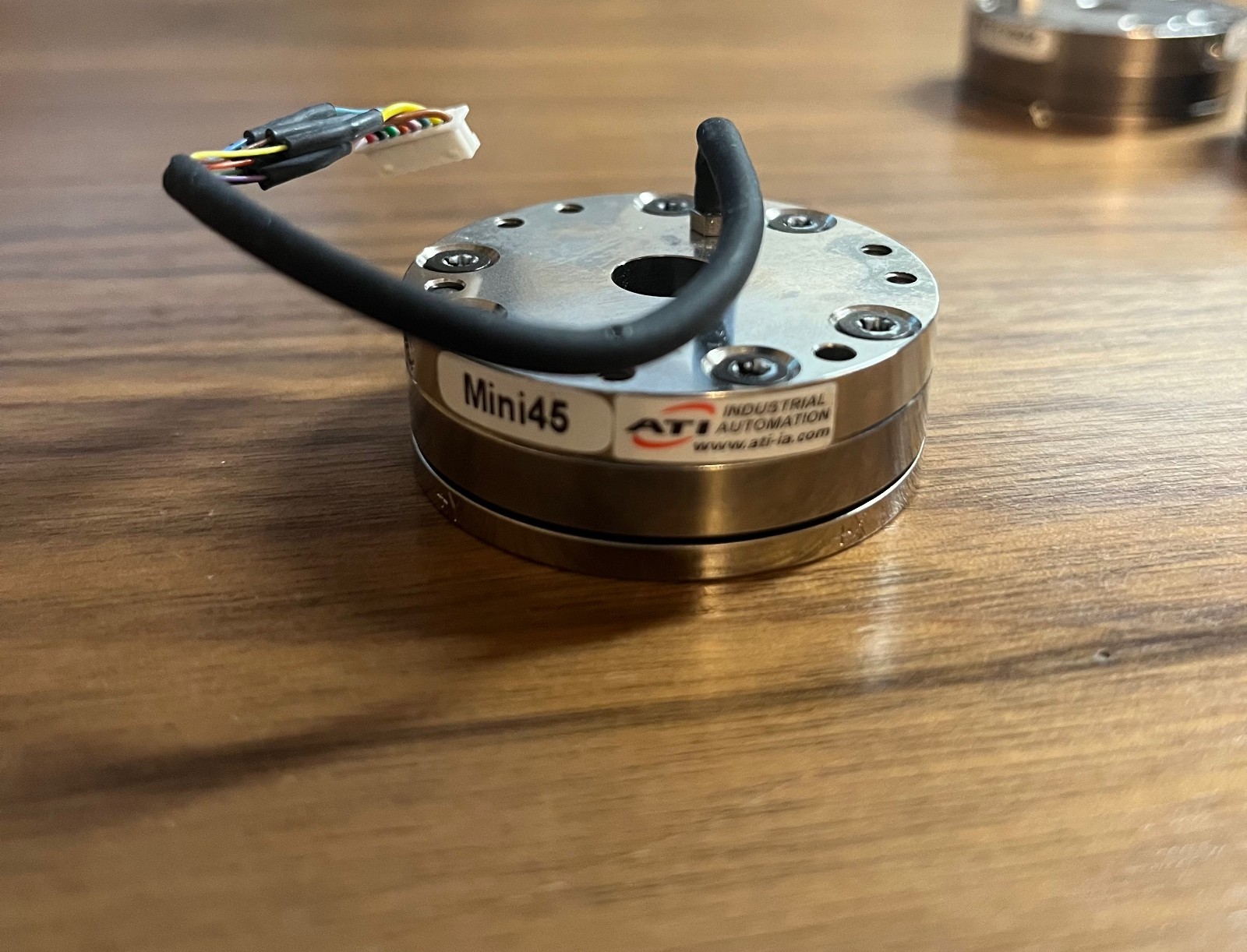
This is a force torque sensor, not a robot arm, so it's for teams that already have motion hardware and need to add a sense of touch. The Mini45 captures forces and torques across X, Y, and Z axes simultaneously, which makes it a strong fit for research setups, robotic arm end effectors, and applications where tool interaction needs to be monitored precisely. It was removed from working automation and research equipment, with only minor cosmetic wear and no structural damage. The integrated cable is included. The main limitation is that it can't move anything on its own; you'll need a compatible arm and controller to actually use the data it produces. If your cell is missing sensing rather than motion, this sensor gives you that capability for $1,395.
FANUC M-16IB/20 INDUSTRIAL ROBOT ARM A05B-1216-B202 2005 ARM ONLY USED
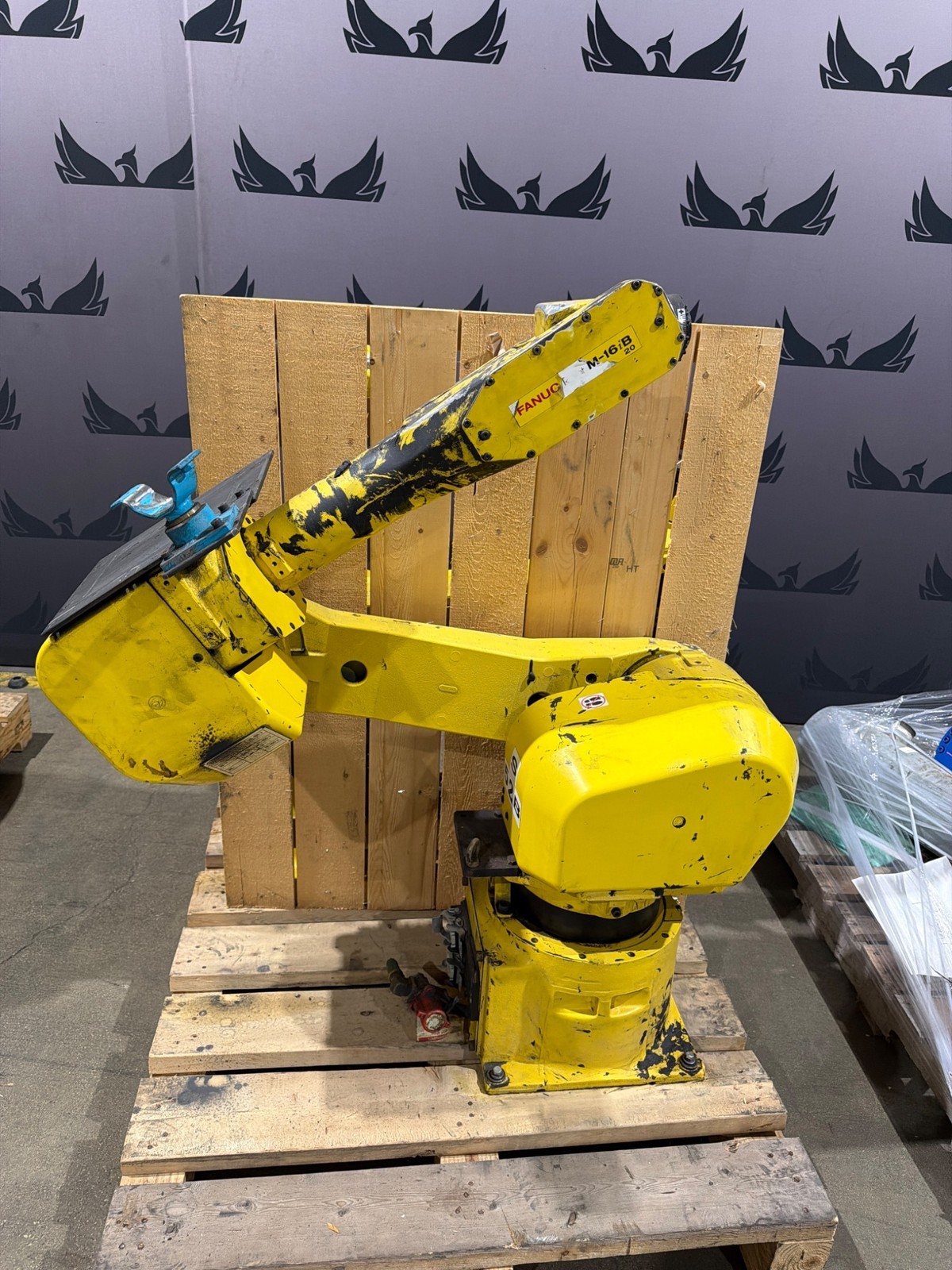
This is a used FANUC industrial robot arm from 2005, and it's a real six-axis workhorse with a 20 kg payload. The arm-only setup means you're getting the mechanical structure itself, which is ideal for integrators who plan to supply their own controller, teach pendant, and cables. The unit shows cosmetic wear and paint loss from prior industrial use, but the nameplate confirms the payload, axis count, and 220 kg weight without controller. It's priced at $1,800, and the main catch is that it's sold as arm only-no controller, teach pendant, or cables are included. So the true cost of getting this arm running will depend on what you already have in your parts bin. If you need a proven six-axis platform and have the supporting electronics, this FANUC is a solid foundation for a new cell.
Final Choice by Use Case
- Adding force feedback to an existing robot: ATI Mini45. It's the lower-priced component and gives you the exact sensing capability needed to detect contact and load.
- Building a new cell from the ground up: FANUC M-16IB/20. You get the six-axis arm with a 20 kg payload to work with.
- On a tight budget and need only a sensor: ATI Mini45 saves you $405 upfront.
- On a budget but need the arm itself: The FANUC is the higher-priced option but provides the core mechanical hardware, provided you can source the missing controller and cables.
Both are used components with cosmetic wear, so inspect the photos and understand what's included. Your decision comes down to whether your cell needs to feel or needs to reach.