When a control panel needs a knob that spins and clicks, you reach for a rotary encoder. When a machine guard needs to prove it is closed before power can flow, you reach for a safety-rated sensor. The EC11 360 Degree Rotary Encoder and the Schmersal BNS33-11ZG-2128 both live in the broader world of sensors, encoders, and machine safety, but they solve completely different problems. The fastest way to choose is to figure out the job the component must do, then look at the price and mounting.
Quick Verdict
Choose the EC11 rotary encoder if you need a PCB-mount unit with a D shaft for manual rotation, and you want a simple signal-level component. Choose the Schmersal BNS33-11ZG-2128 if you need a safety magnetic sensor rated for 10A at 24VDC. They are not interchangeable.
EC11 Rotary Encoder vs Schmersal BNS33-11ZG-2128 at a Glance
| Product | Price | Mounting | Termination | Best For |
|---|---|---|---|---|
| EC11 360 Degree Rotary Encoder | [] $2.50 | Through-hole board | PC pins | Rotary input and switch actuation on a circuit board |
| Schmersal BNS33-11ZG-2128 Safety Magnetic Sensor | [] $215.00 | Chassis | Cable with M8 4-pin connector | Safety interlocks on movable machine guards and articulating robot arms |
Where Each Product Wins
The EC11 rotary encoder wins when the input lives on a circuit board. The push-to-actuate function and 20 pulses per revolution make it a natural fit for menu dials and jog wheels, giving the controller directional feedback. It is not a power switch, so keep it in low-current circuits.
The Schmersal BNS33-11ZG-2128 wins when a guard must prove it is closed. The coded magnet and series-wired reed switches close only when the matched actuator is present, and the IP67-rated thermoplastic enclosure protects the switch in damp conditions. With a 10A contact rating at 24VDC, it is built for a safety control circuit rather than a circuit board.
Product Notes
EC11 360 Degree Rotary Encoder
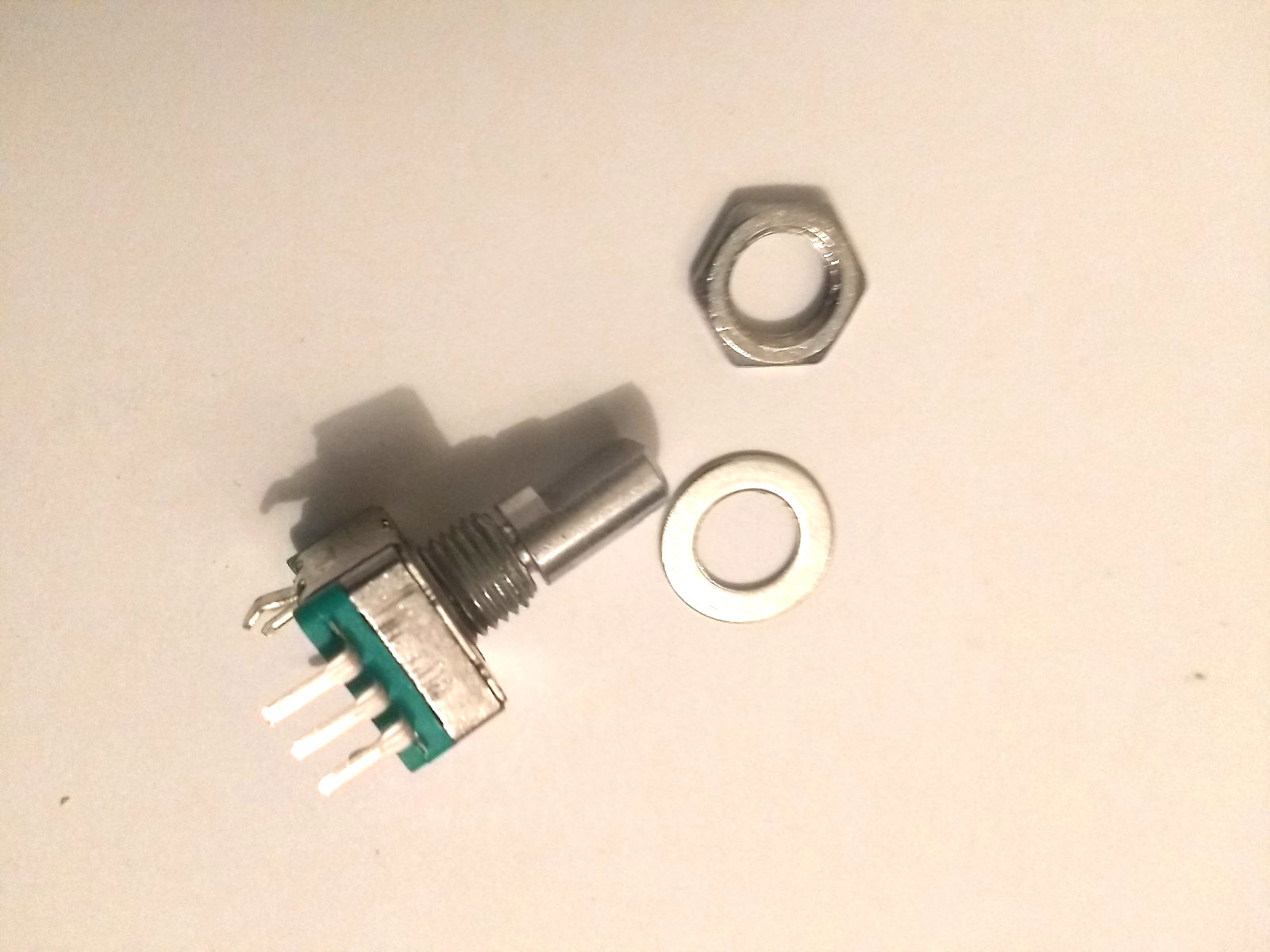
The EC11 is a PCB-mount rotary encoder with a D-shaped 15mm shaft and an integrated push-to-actuate switch. That combination lets a single component handle rotation and a click action, so it suits jog dials, menu navigation, or any panel where the user turns a knob and also presses it. The mechanical switch produces 20 pulses per revolution and is rated for 5V at 10mA, which makes it a signal-level device rather than a power-switching component. If that's your project, the EC11 is the part to grab. The trade-off is the PC-pin termination and board-mounted design, so this part belongs on the circuit side of the build, away from high-current machine circuits and machine-safety interlocks.
Schmersal BNS33-11ZG-2128
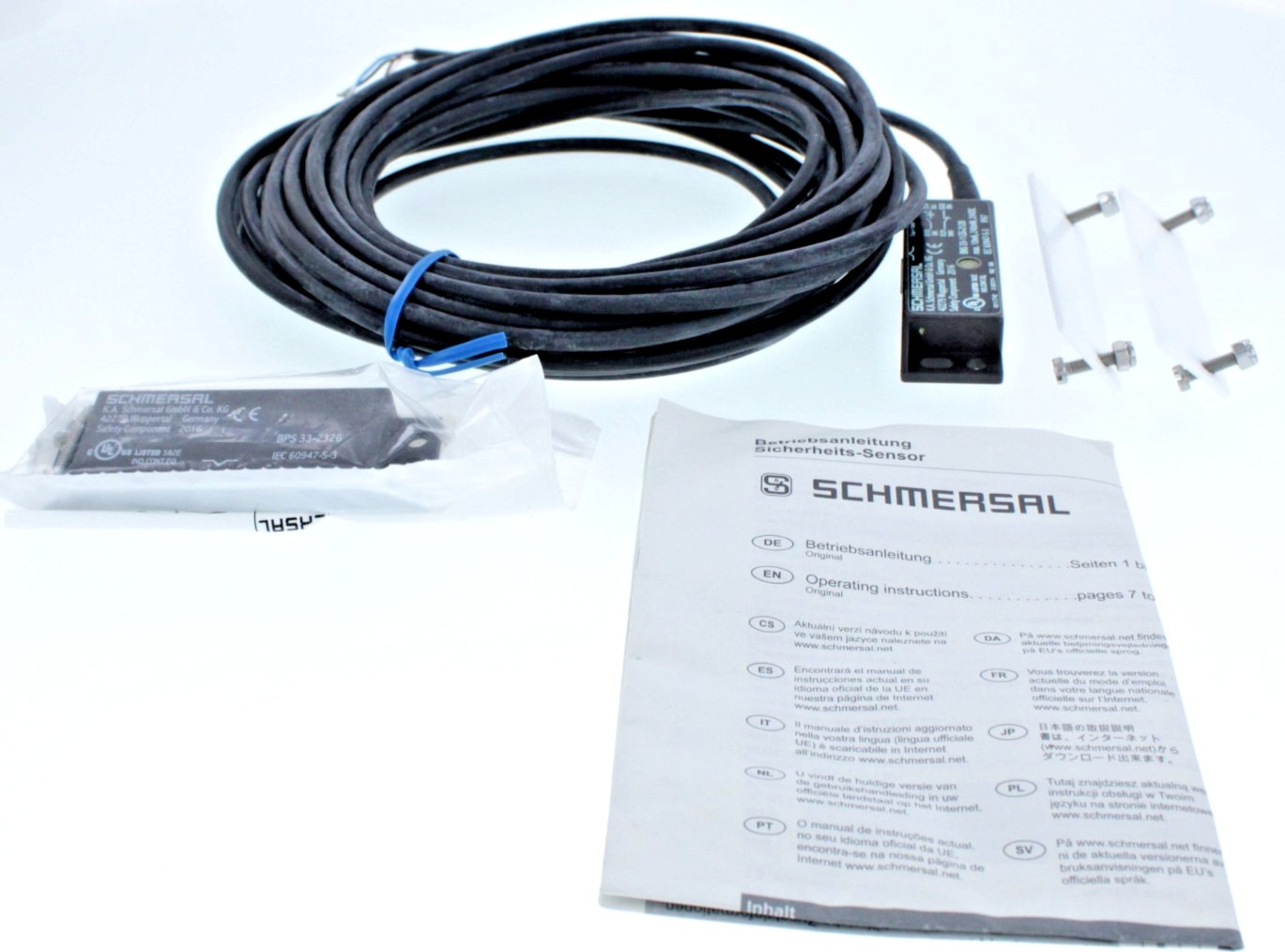
The Schmersal BNS33-11ZG-2128 comes with a matched magnet actuator and is built for movable machine guards and articulating robot arms. Inside, multiple reed switches are wired in series so the contacts only close when the matching magnetic field array is present. It is a chassis-mounted unit that terminates in a cable with an M8 4-pin connector, and the thermoplastic enclosure is sealed to IP67. Reach for the Schmersal when you need an industrial safety interlock with coded-magnet operation and the ability to mount to a machine frame. Just know that the unit is in new-open-box condition, and its price is higher than a simple encoder because it is designed for machine safety rather than user input.
Final Choice by Use Case
If you are assembling a control board, a prototype interface, or a user-adjustable dial, the EC11 360 Degree Rotary Encoder gives you rotary input and switch actuation in one board-friendly package. If you are installing a guard interlock on a machine that needs a safety-rated sensor, the Schmersal BNS33-11ZG-2128 with its magnet actuator is the match. The decision comes down to the mounting and the electrical path: board-side connections for control inputs, or a safety-control sensor for a machine-safety circuit.