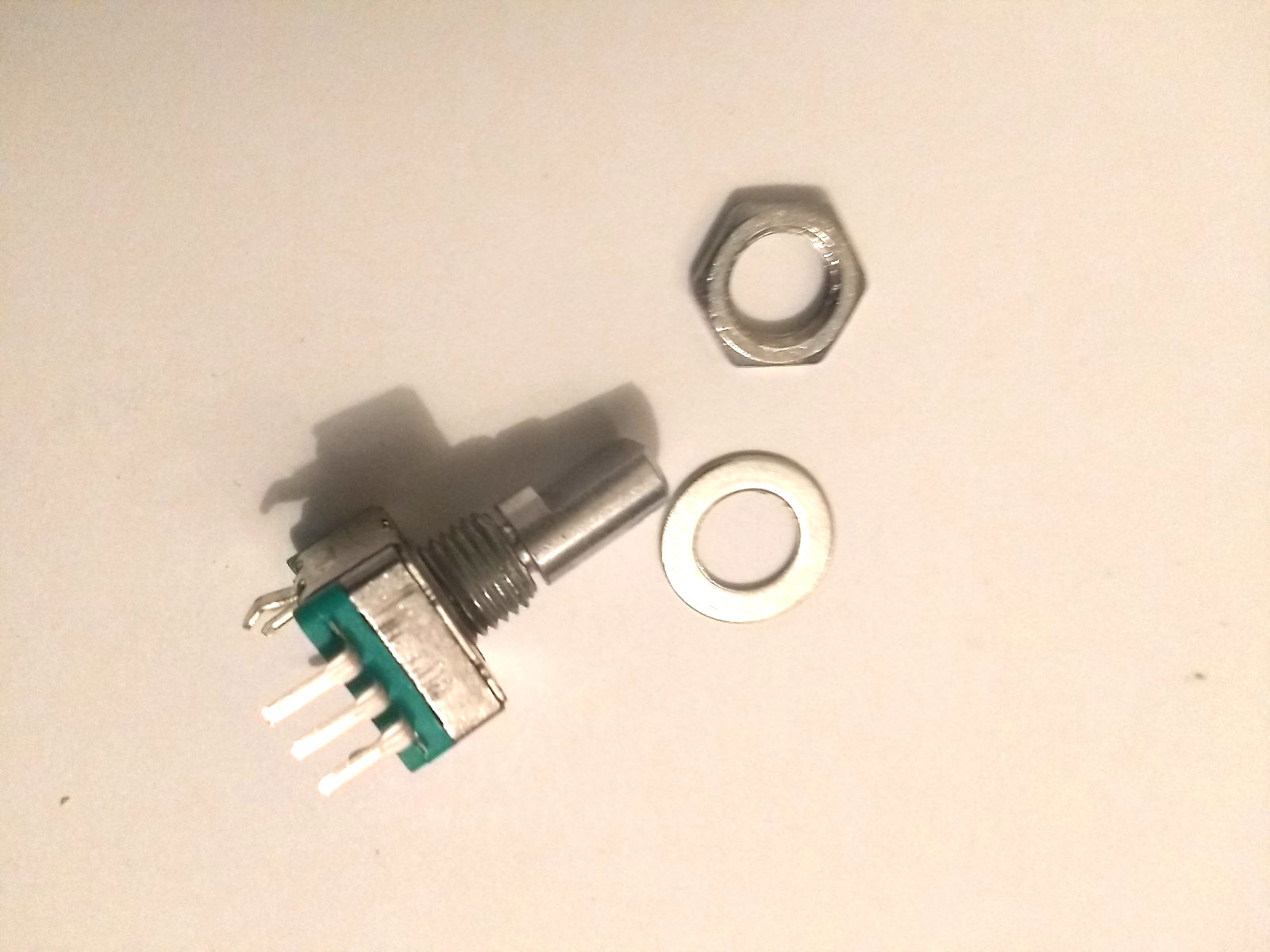
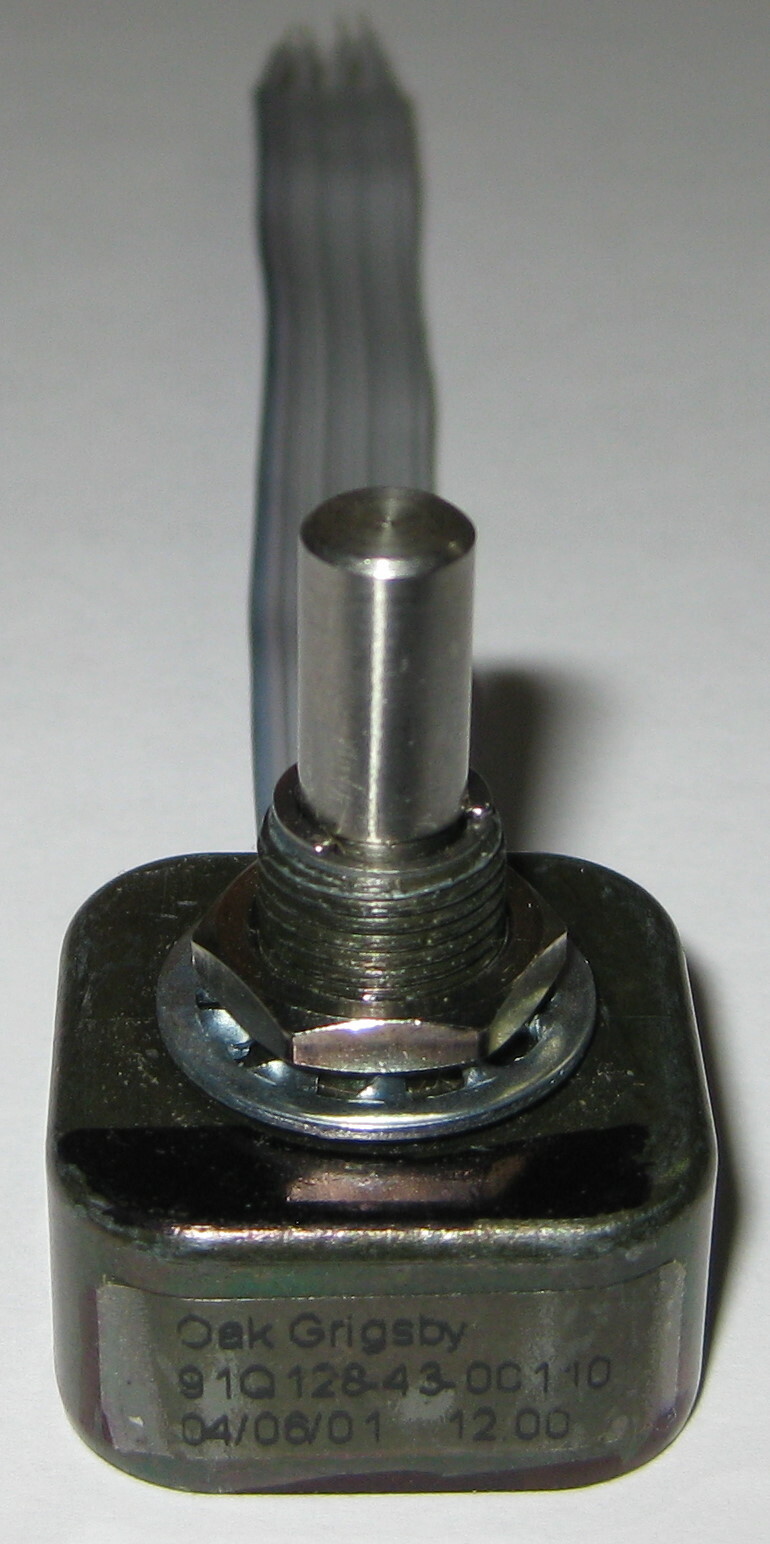
Choosing a rotary encoder comes down to how much rotation detail you need and how you want to wire it. The EC11 360-degree rotary encoder with an integrated push switch is a compact through-hole PCB component. The Oak / Grigsby 91Q128 is a sealed optical encoder with a 2-channel full quadrature output. Both are new, but they serve very different project goals.
Quick verdict
Pick the EC11 when you want a compact, lower-cost rotary encoder suited to PCB work. Pick the Oak / Grigsby when you want a more capable shaft encoder for rotation feedback.
Price and feature comparison
| Product | Listed price | Pulses per revolution | Output / termination | Mounting | Price position |
|---|---|---|---|---|---|
| EC11 360 Degree Rotary Encoder with Push Switch | USD 2.50 | 20 | PC pin, through hole | Through hole | |
| Oak / Grigsby 91Q128 Rotary Encoder | USD 16.95 | 128 (512 state changes) | Quadrature, lead wires | Shaft with mounting hardware |
The listed price spread is USD 14.45.
Where each encoder wins
The EC11 stands out for its lower-cost through-hole mounting and built-in push-to-actuate switch. Its D shaft gives you a keyed surface for a knob, and the PC pins are designed for direct PCB insertion. The Oak / Grigsby counters with a more detailed output and a sealed body with a stainless steel shaft, making it a better fit when rotation feedback needs to be precise.
EC11 360 Degree Rotary Encoder with Push Switch
The EC11 is a 360-degree rotary encoder with a D shaft, 15 mm shaft length, and seven pins for PCB mounting. It is a mechanical encoder with a built-in push-to-actuate momentary switch, producing 20 pulses per revolution as you rotate the shaft. That makes it a natural fit for menu navigation, volume controls, or any interface where the knob also needs to act as a button. The switch contacts are rated for 5 V at 10 mA, so it is suited to low-power signal-level switching rather than driving a load directly. The trade-off is resolution: 20 pulses per revolution is much lower than the Oak / Grigsby's 128, so if you need precise rotation tracking, the EC11 will feel coarse. It is a new component meant to be soldered into a board, not a standalone module.
Oak / Grigsby Rotary Encoder - 128 Pulse/Rev - 91Q128 - 2 CH Full Quadrature
The Oak / Grigsby encoder is optical and incremental, with a 2-channel full quadrature output. It produces 128 pulses per revolution, for 512 total changes of state per revolution, giving you more detailed position and direction feedback than the EC11. It uses 2-bit gray code, with Channel A leading Channel B by 90 degrees during clockwise rotation, and it is compatible with TTL logic at 5 V. The body is a sealed 1-inch square with a 1/4-inch diameter stainless steel shaft, and the package includes a nut and internal tooth star lock washer for mounting. The encoder terminates in a cable with bare wire ends, which means you will provide your own connector or solder to your board. The higher price reflects the higher resolution and the sealed construction, but the bare wire ends add a little work on your side.
Final choice by use case
- For a compact PCB knob-control project: EC11 360 Degree Rotary Encoder with Push Switch.
- For a more capable shaft encoder: Oak / Grigsby 91Q128 Rotary Encoder.