Choosing between microcontrollers & dev boards comes down to project style: do you want an integrated handheld wireless tool, or a guided kit for learning and experimenting with an ESP32? The ESP32-DIV V2.0 and ELEGOO ESP-32 Starter Kit take very different approaches, so the right pick depends more on your intended workflow than on the ESP32 name alone.
Quick verdict
Choose the ESP32-DIV V2.0 WiFi+Bluetooth NRF24 ESP32 Development Board Wireless if its built-in interface and wireless analysis hardware match your projects. It combines an ESP32-S3, 2.8-inch TFT touchscreen, three NRF24L01 modules, and a CC1101 transceiver in a handheld analysis and testing tool. Choose the ELEGOO ESP-32 Super Starter Kit if you want a tutorial-led route into Arduino IDE projects, with Bluetooth, GPIO, I2C, USB, and Wi-Fi connectivity. The listed-price spread is $42.25, with ELEGOO at USD 49.74 and ESP32-DIV at USD 91.99.
Compact comparison
| Product | Listed price | Main focus | Notable attributes |
|---|---|---|---|
| ESP32-DIV V2.0 Wireless Development Board | USD 91.99 | Handheld wireless analysis and testing | ESP32-S3, 16MB flash, TFT touchscreen, 3 NRF24L01 modules, CC1101 |
| ELEGOO ESP-32 Super Starter Kit | USD 49.74 | Tutorial-led starter kit | Arduino IDE, Bluetooth, GPIO, I2C, USB, Wi-Fi, 35-count unit listing |
Where each product wins
ESP32-DIV V2.0 wins for integrated wireless hardware
The ESP32-DIV is the more specific choice for wireless analysis and testing because its description combines several dedicated elements in one handheld design: a 2.8-inch ILI9341 TFT touchscreen, three NRF24L01 modules, and a CC1101 Sub-GHz transceiver. The ESP32-S3 processor and 16MB flash are also explicitly identified. Four WS2812B RGB LEDs and an integrated buzzer provide status alerts, while the IP5306 IC handles battery charging and power delivery. This is a focused hardware package for someone who wants a screen-led interface and multiple wireless modules rather than a general introductory kit.
ELEGOO wins for guided Arduino IDE projects
The ELEGOO kit is the clearer fit for learning-oriented builds. Its title includes a tutorial, and its attributes identify compatibility with Arduino IDE. The connectivity list covers Bluetooth, GPIO, I2C, USB, and Wi-Fi, giving makers several familiar interfaces to explore. The 35-count unit listing reinforces its kit format. Its concrete limitation is equally clear: the description marks it as not Smart Home Compatible, so it is not the direct choice for a shopper specifically seeking that compatibility label. It also lists one total USB port, an important consideration when planning a project around several USB-connected devices.
Product notes
ESP32-DIV V2.0 Wireless Development Board
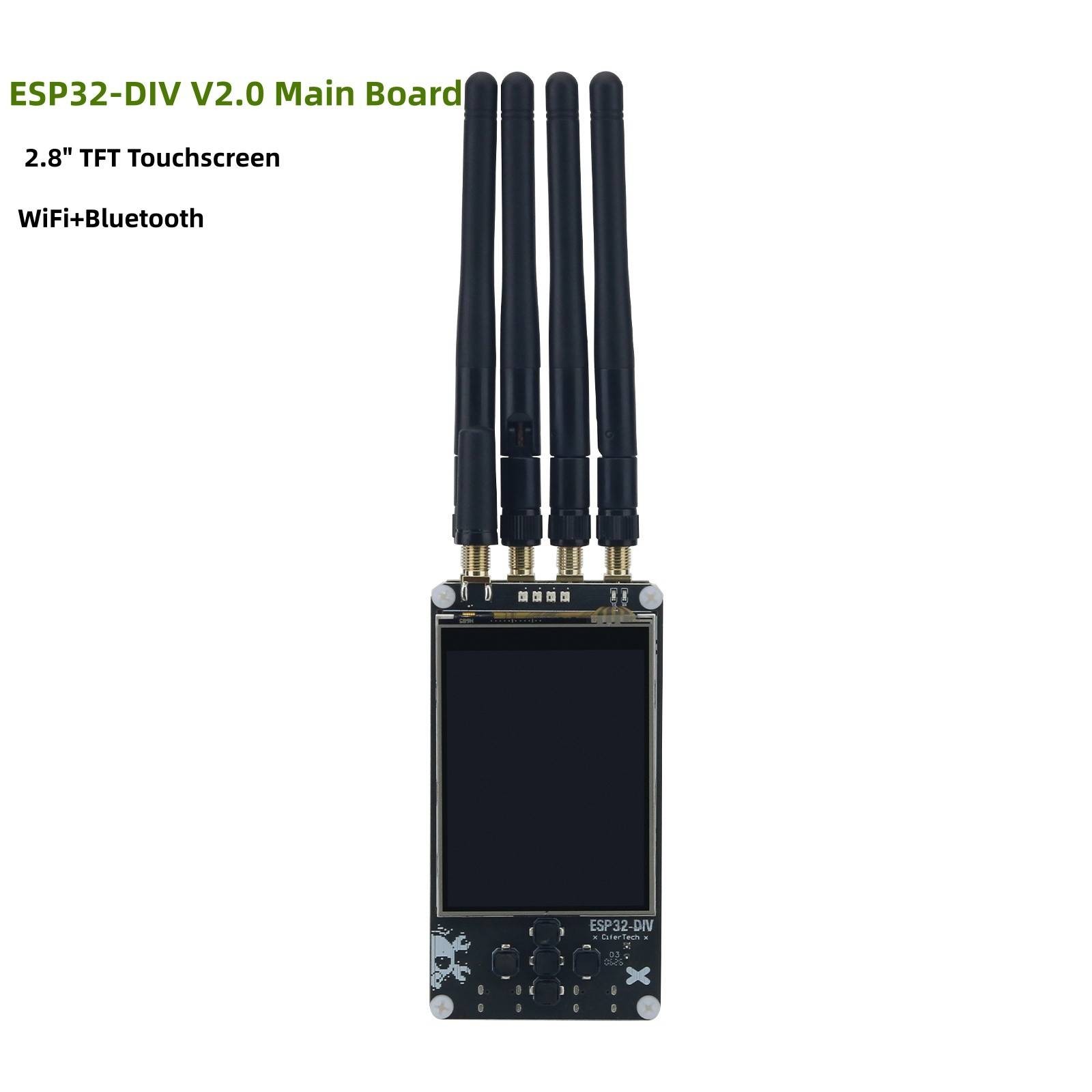
The ESP32-DIV V2.0 is designed around a particular kind of project: its description calls it a handheld wireless analysis and testing tool, and the hardware supports that role with an ESP32-S3, 2.8-inch TFT touchscreen, three NRF24L01 modules, and a CC1101 transceiver. The RGB LEDs, buzzer, and IP5306 power-management IC add concrete interface and power features beyond a basic development board. Choose it when on-device navigation and multiple RF modules are more useful than a tutorial-led kit structure. The limitation is its focused format: the attributes specify a unit quantity of 1, while the description emphasizes analysis and testing rather than a multi-component learning bundle.
ELEGOO ESP-32 Super Starter Kit
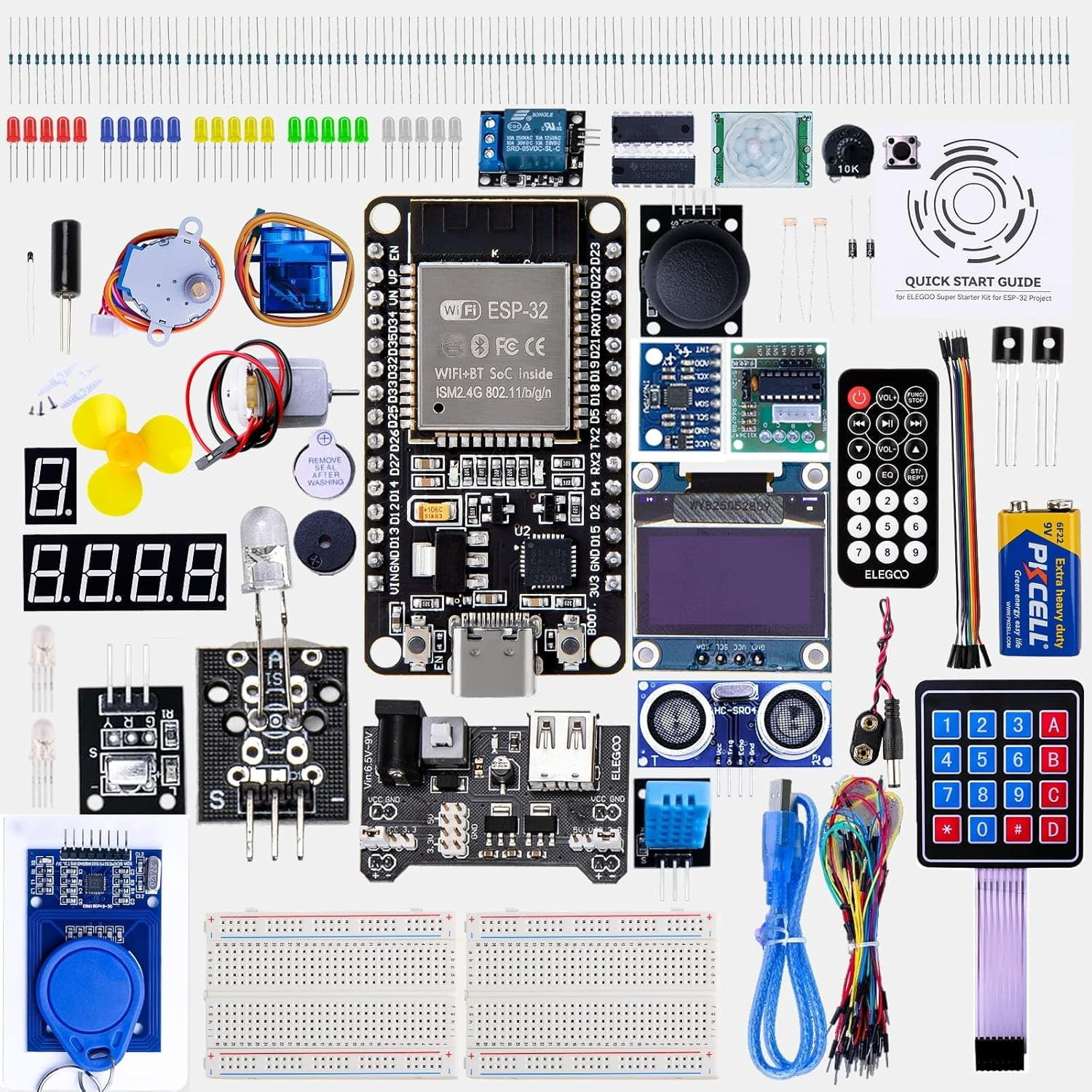
The ELEGOO ESP-32 Super Starter Kit makes the strongest case for a structured entry into Arduino IDE work. The product title explicitly includes a tutorial and development board, while the connectivity attributes name Bluetooth, GPIO, I2C, USB, and Wi-Fi. Its 35-count unit listing gives the package a kit-oriented shape for experimenting with different interfaces and starter projects. Choose it when guided learning and broad connection options matter more than a built-in touchscreen or dedicated RF-analysis hardware. The limitation is that it is marked Not Smart Home Compatible, and its description lists one total USB port, which may shape how you plan peripherals around the board.
Final choice by use case
- For handheld wireless analysis and testing: choose the ESP32-DIV V2.0, based on its touchscreen, three NRF24L01 modules, CC1101 transceiver, and handheld-tool description.
- For Arduino IDE learning and guided experimentation: choose the ELEGOO ESP-32 Super Starter Kit, whose title includes a tutorial and whose attributes list Arduino IDE compatibility.
- For a screen-led interface with integrated status feedback: choose the ESP32-DIV V2.0, with its TFT touchscreen, RGB LEDs, and buzzer.
- For a kit format with multiple named connectivity options: choose the ELEGOO ESP-32, with Bluetooth, GPIO, I2C, USB, and Wi-Fi listed.