Choosing among microcontrollers & dev boards often means deciding between a project that gets physical quickly and a kit that teaches the basics in a more guided way. The ESP32 Robotics Kit SLATE Board points toward robotics and IoT experimentation, while the Complete Arduino Starter Kit is framed for beginners. Because both list Arduino as the core, that shared attribute is not the tie-breaker. The real question is whether you want the broader robotics setup or the more structured learning route.
Quick verdict
The ESP32 Robotics Kit SLATE Board is the better match for a hands-on robotics or IoT build. The Complete Arduino Starter Kit is the clearer route for beginner lessons and DIY projects. Choose based on project direction and how much setup support you want from the kit.
At a glance
The key differences are format and condition, while the stated Arduino core is shared.
| Attribute | ESP32 Robotics Kit | Complete Arduino Starter Kit |
|---|---|---|
| Listed price | USD 45.00 | USD 44.78 |
| Stated format | Robotics Kit | Starter Kit |
| Condition | Used | New |
| Core | Arduino | Arduino |
Where each product wins
ESP32 Robotics Kit SLATE Board
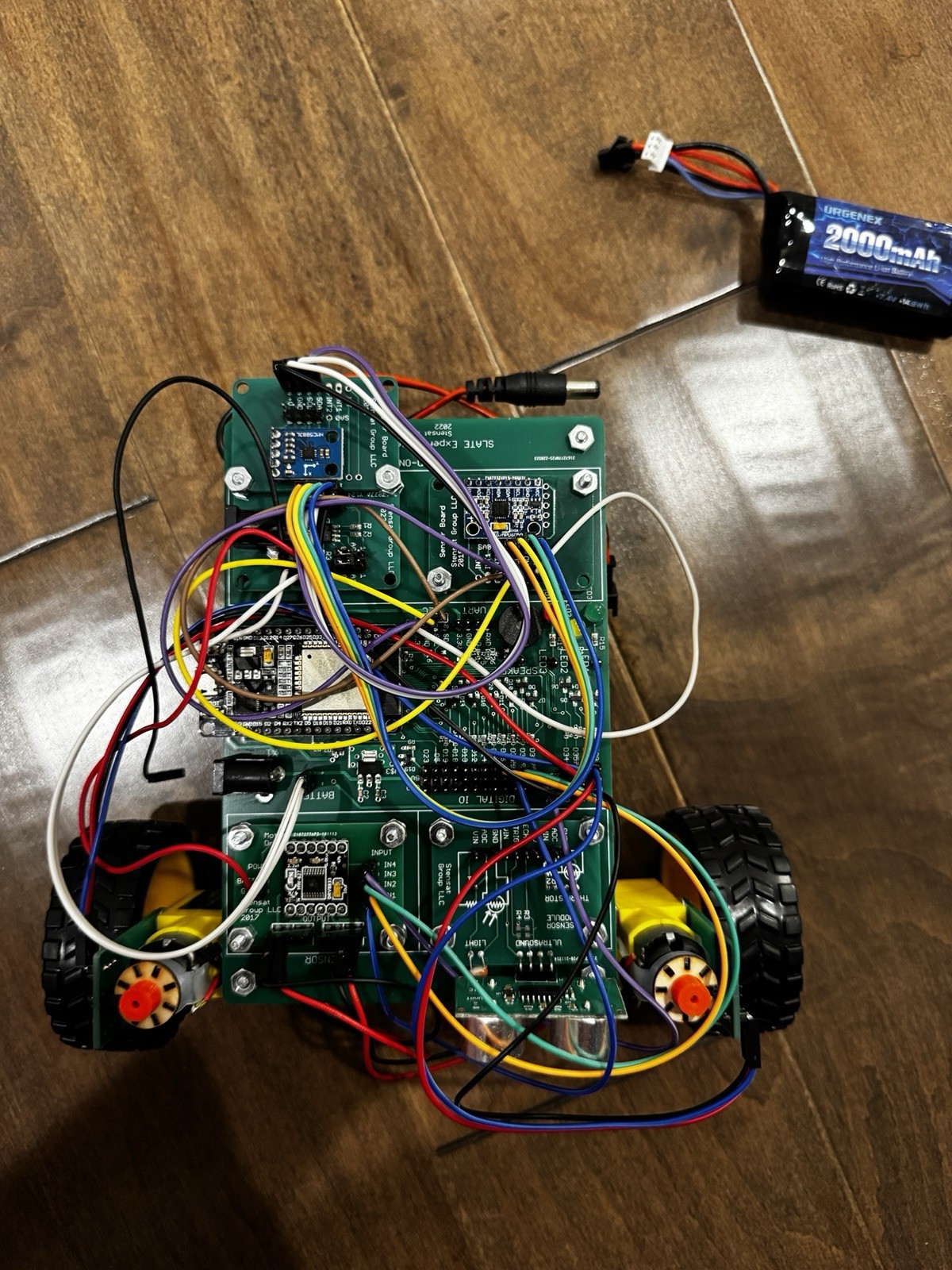
This kit wins for a physical build because its title explicitly combines ESP32, Robotics, and IoT, and its description calls it a robotics and IoT development kit. The used, as-is status means the purchase is aimed at parts, repair, or project use, but the intended project direction is unusually clear.
Complete Arduino Starter Kit
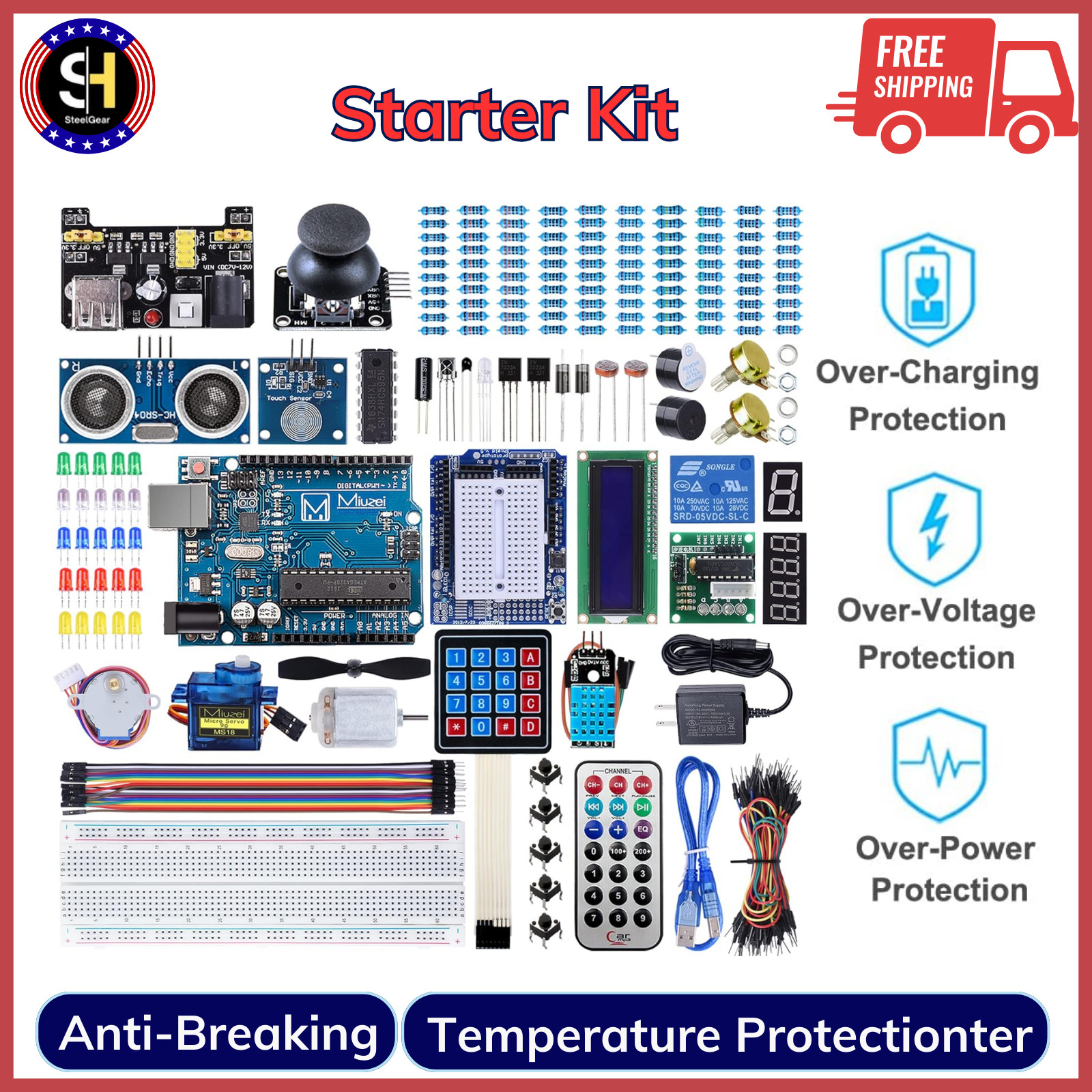
The Complete Arduino Starter Kit wins for guided learning. Its beginner-focused title, tutorial links, USB project route, breadboard, and sensor and servo components create a straightforward starting point for DIY practice. The new condition also gives it a different starting profile from the used robotics kit.
Product notes
ESP32 Robotics Kit SLATE Board
Choose the ESP32 Robotics Kit SLATE Board when you want a project with a clear robotics or IoT direction. The description pairs an ESP32 development board with WiFi and Bluetooth, multiple sensor modules, a motor driver, two DC gear motors, a robot chassis with wheels, a 7.4V 2000mAh Li-ion battery, and assorted wiring. That mix gives a hands-on builder a defined path from electronics to motion. The limitation is the condition and support: it is used, powers on but is untested beyond that, and is sold as-is for parts, repair, or project use. No instructions are included, and programming and setup may be required. Choose it for experimentation where those constraints are acceptable.
Complete Arduino Starter Kit
Pick the Complete Arduino Starter Kit for a beginner-friendly start built around lessons and modular practice. It includes more than 28 lesson links with instructions in English, projects that can be completed by USB, already-soldered components, pin-header connections, a breadboard, sensor kit, servo motor, and a 9V 1A power supply. The soldered modules and pin-header connections keep the focus on connecting and programming. The limitation is that the guidance is link-based, with online or cloud-drive access as part of the learning route. Its title clearly positions it for beginners, making it a natural fit for someone who wants a sequence of DIY projects rather than a repair-oriented build.
Final choice by use case
For robotics or IoT projects
Choose the ESP32 Robotics Kit SLATE Board. Its title directly names ESP32, Robotics, and IoT, and its listed format is a Robotics Kit.
For a guided first Arduino build
Choose the Complete Arduino Starter Kit: Microcontroller, Modules & Tutorials For Beginners. The title makes its beginner and tutorial focus explicit, while its format is a Starter Kit.
If price is the tie-breaker
The listed prices are USD 45.00 and USD 44.78, an absolute spread of $0.22. With that small gap, format is the more meaningful decision: choose the ESP32 kit for robotics-oriented experimentation or the Complete Arduino kit for structured beginner learning.