Choosing a contactor for relays, contactors, and industrial switches is usually more about the job than the part number. Do you need a simple switch to turn an air conditioner on and off, or do you need a motor starter that can handle heavier motor control? The two products in this comparison sit at opposite ends of that spectrum. The HIATSU is an AC contactor aimed at HVAC duty. The Allen Bradley 100-C09 is a motor starter for more demanding circuits. That difference matters before you compare prices, because a contactor and a motor starter are not interchangeable in a control panel.
Quick Verdict
For HVAC/AC duty with a smaller spend, the HIATSU contactor at $13.68 is the straightforward pick. It's sold as new and built for dual-circuit control, with a 30A FLA rating. On the other side, the Allen Bradley 100-C09 starter at $74.99 makes sense when you need a complete motor starter; it's listed as used. If your application is a simple on/off AC circuit, the HIATSU saves you money on a part you can install and forget. If you're building out a motor starter panel, the Allen Bradley is the more complete starting point. The price spread is wide, but each product fills a distinct slot.
Comparison at a Glance
| Feature | HIATSU 2-Pole 30A 120V | AB 100-C09 Reversing Starter |
|---|---|---|
| Price | USD 13.68 | USD 74.99 |
| Condition | New | Used |
| Current / overload | 30A FLA | 1.6/5A overload relay |
| Included components | 01 Contactor | Contactor with overload relay and connector wire |
Where Each Product Wins
The HIATSU wins when the job is a direct AC contactor replacement: you get a new contactor without extra starter hardware. The Allen Bradley wins when you're assembling a motor starter and need direction control in one package. Choose based on what your control circuit already has, not just on price.
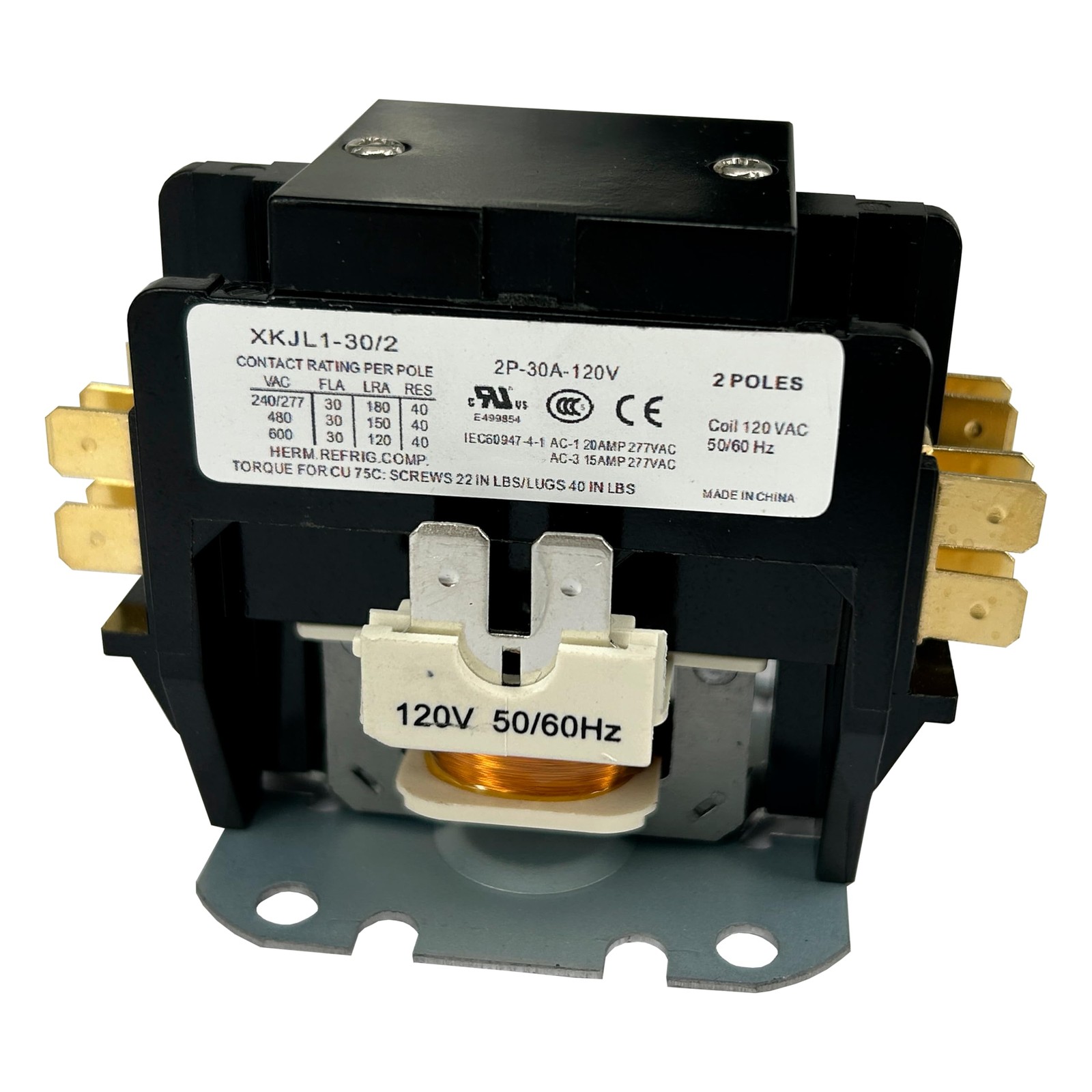
HIATSU Air Conditioner Contactor
This contactor is made for HVAC equipment that needs a straightforward 2-pole switch. The package contains a single contactor. The dual-pole layout lets you open and close both sides of the circuit, and the encapsulated coil helps protect the winding from moisture and vibration. Quick-connect terminals simplify wiring, and the Class B insulation plus CE/RoHS certification are typical of professional-grade components. Its compact size and straightforward wiring make it a practical service part. If you're servicing an air conditioner and want a new part with standard dual-circuit control, this is the one to choose. The main limitation is scope: it's a contactor, not a starter, so it won't handle motor control beyond switching a single AC circuit.
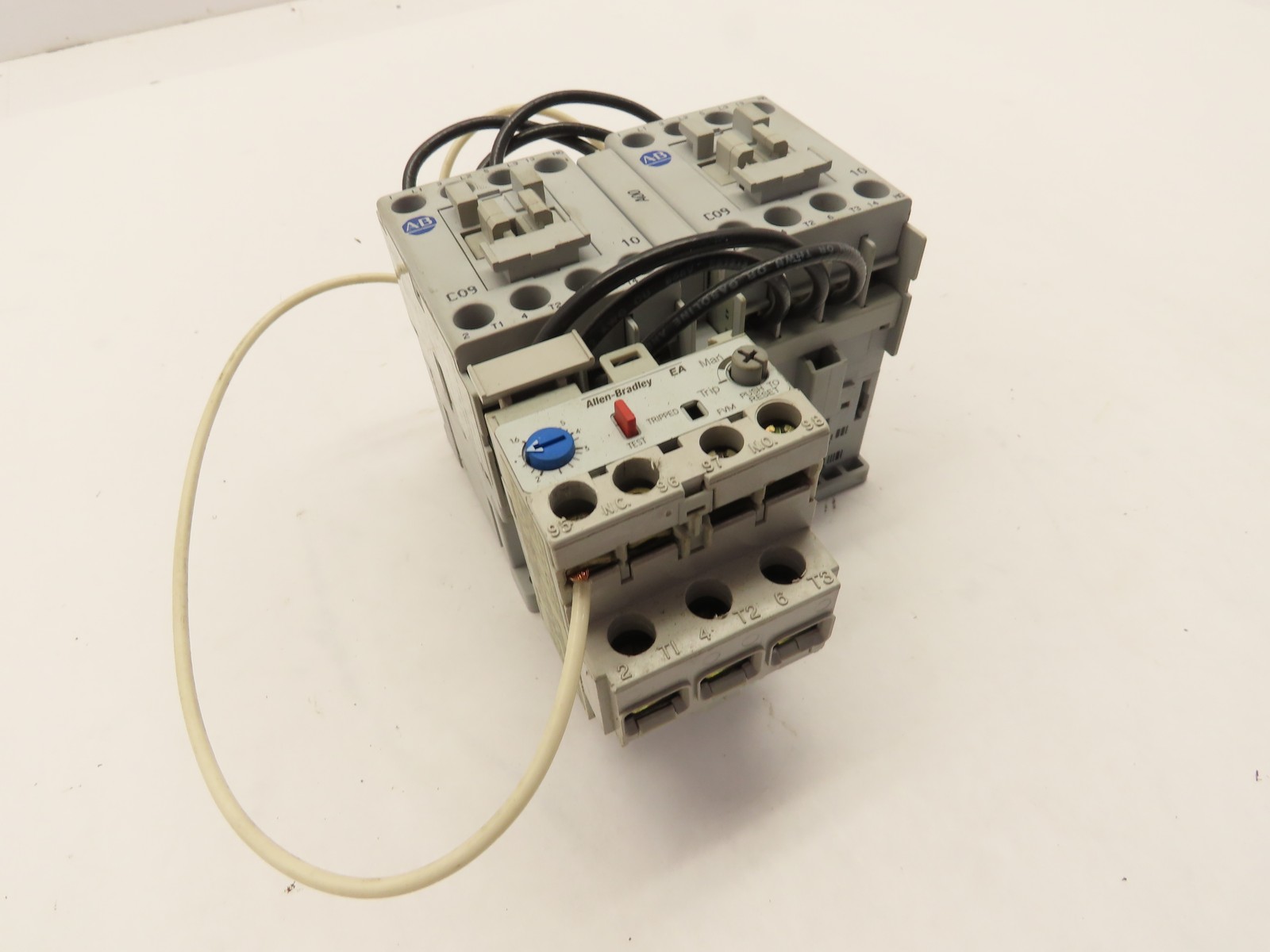
Allen Bradley 100-C09 Reversing Motor Starter
This unit is a reversing motor starter rather than a plain contactor. It includes a 1.6/5A overload relay, so the motor gets current protection right out of the box. The 120V coil matches the control voltage used in many industrial panels, and the connector wire between the contactors is included, which cuts down on extra wiring. Because it's a reversing starter, it can swap motor direction, a capability the HIATSU doesn't offer. The flip side is that this is a starter with a specific job; it's not the right tool for a basic AC contactor replacement. For applications that need forward/reverse control, this is the more complete package.
Final Choice by Use Case
If you're replacing a failed air conditioner contactor and want a new, drop-in part, choose the HIATSU. If you're assembling a motor starter, choose the Allen Bradley. For simple on/off switching in an HVAC system, the HIATSU is the right fit; for a motor starter build, the Allen Bradley brings the necessary components. When in doubt, match the product to the circuit: simple switching for the HIATSU, motor starter assembly for the Allen Bradley.