When you're selecting an industrial power supply transformer for a DIN rail, the first question is voltage - not just total wattage. Two supplies can deliver the same total power while serving completely different loads: one steps down to a standard voltage, the other to a lower voltage with more current. The choice affects everything from the devices you can power to how many you can connect on one bus. Many industrial controls run on a DC bus, so this decision has a wide ripple effect. The right choice balances the voltage of your controls against the current your loads pull. This comparison lays out the specs and the situations where each supply earns its place.
Quick Verdict
The Mean Well EDR-120-24 is the pick for conventional control panels. The NDR-120-12 is the pick for loads that want a lower voltage and more current. Both are sold as new, so the decision comes down to how your loads are wired. If your system uses a standard control voltage, start with the EDR; if it uses a lower voltage with a need for more current, go with the NDR. In short, match the supply to the bus voltage and verify the amp draw before ordering.
Comparison
| Product | Output Voltage | Output Current | Power | Price |
|---|---|---|---|---|
| Mean Well EDR-120-24 | 24 VDC | 5 A | 120 W | USD 28.00 |
| NDR-120-12 | 12 VDC | 10 A | 120 W | USD 39.99 |
Both are new DIN rail units, so condition won't decide this for you. The meaningful difference is how each unit balances voltage, current, and price. The NDR also adds an indoor/outdoor installation area.
Where Each Product Wins
- The EDR-120-24 is the straightforward choice for standard-voltage control panels.
- The NDR-120-12 is the better match for lower-voltage, higher-current distribution.
Before you buy, total the current draw of the devices you plan to power. That number tells you whether you need a higher-current supply.
Product Notes
Mean Well EDR-120-24
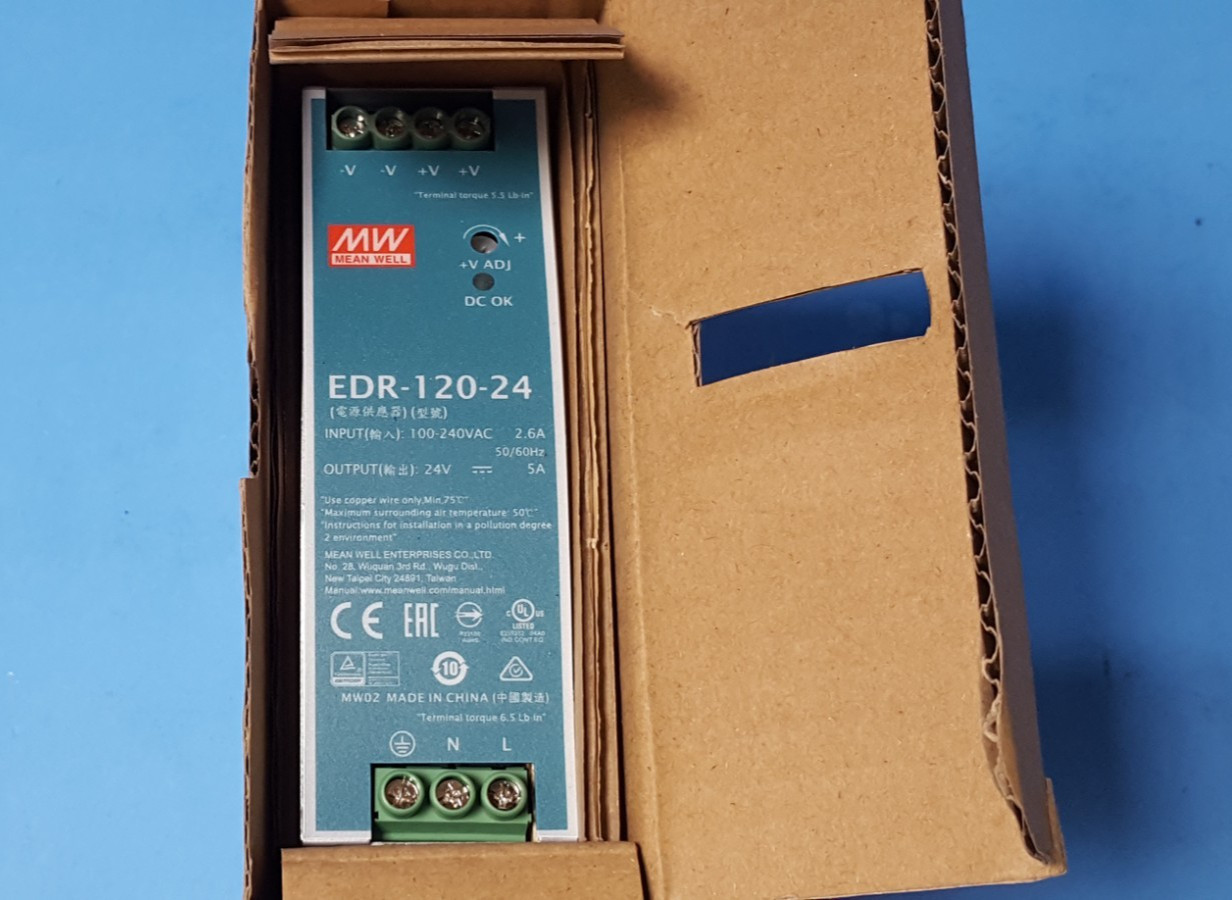
The EDR-120-24 sits at the lower end of the price spread, making it the more affordable supply of the two. The reason to choose it is straightforward: you get a 120W, 5A-capable supply while spending less than the alternative. Its limitation is that 5A current ceiling - if your loads total more than 5A, this supply will be undersized. For a typical control circuit with modest draw, that is usually enough, but it is worth calculating the sum of your connected loads before you commit.
NDR-120-12
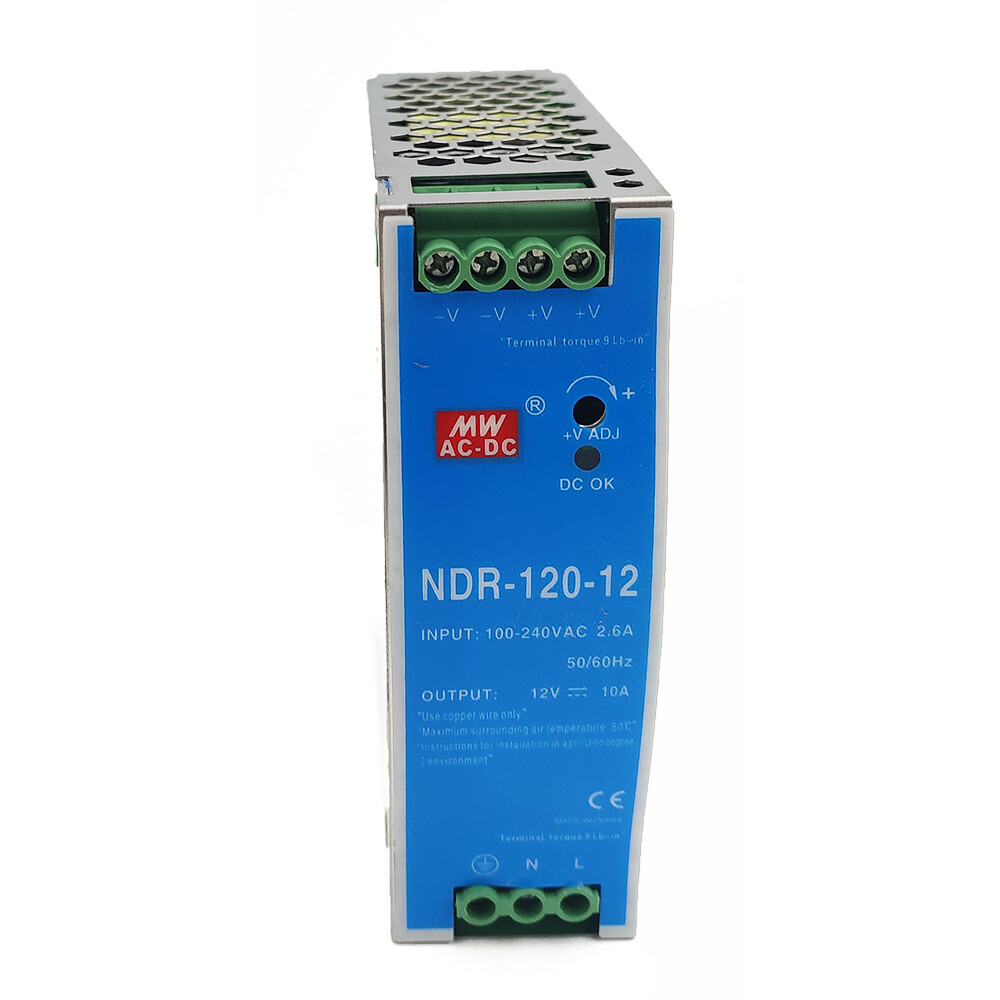
The NDR-120-12 comes in at the higher end of the price spread and targets loads that value current headroom. Its 10A output is the strongest reason to pick it over the EDR. The unit also lists an indoor/outdoor installation area, so placement can be more flexible. The reason to choose it is the 10A capacity: on a 12V bus, you can power more devices before hitting the limit. The limitation is the 12V-only output. If your system expects 24V, this supply cannot feed those loads directly, so you would need to adjust your voltage architecture. The higher price is part of that trade-off.
Final Choice by Use Case
Choose the Mean Well EDR-120-24 at USD 28.00 for a 24V control setup when keeping the spend down is the priority. Choose the NDR-120-12 at USD 39.99 when you need the higher current and broader installation flexibility.