When you're choosing signaling indicators and operator controls, the first question isn't which component to pick; it's what the operator needs to do. Should the panel accept a command, or should it display a state? The first choice gives you metal push buttons; the second gives you waterproof LED indicator lamps. They answer different parts of that question.
For a control input, the push-button set is the clear choice. For a visual signal, the LED indicator set is the one. They are complementary rather than interchangeable, so let the function of your circuit decide.
The main difference is the job: a push button is an input device that completes a circuit for as long as you hold it, while an indicator lamp is an output device that turns on to show a condition. If you wire a button where an indicator lamp belongs, operators won't get the visual feedback they need. If you fit a lamp where a button is required, there's no way to trigger the action.
| Product | Price | Function | Quantity | Price Bar |
|---|---|---|---|---|
| Metal Momentary Push Button Switch | $17.99 | Momentary push-button control with a normally open contact | 4 switches | |
| LED Indicator Pilot Lamp | $75.16 | Green single-color LED status indication | 10 lamps |
Where each product wins:
- The push button wins for direct action: it has prewired leads, and is suited to home, garden, automotive, industrial, and control-equipment panels. It gives the operator a tactile way to trigger a brief action.
- The LED indicator wins for output: its IP67-rated metal body and pin-type or screw-type wiring options make it a flexible light for panel positions. You can use it to confirm that a device is powered or active.
Push Button Switch
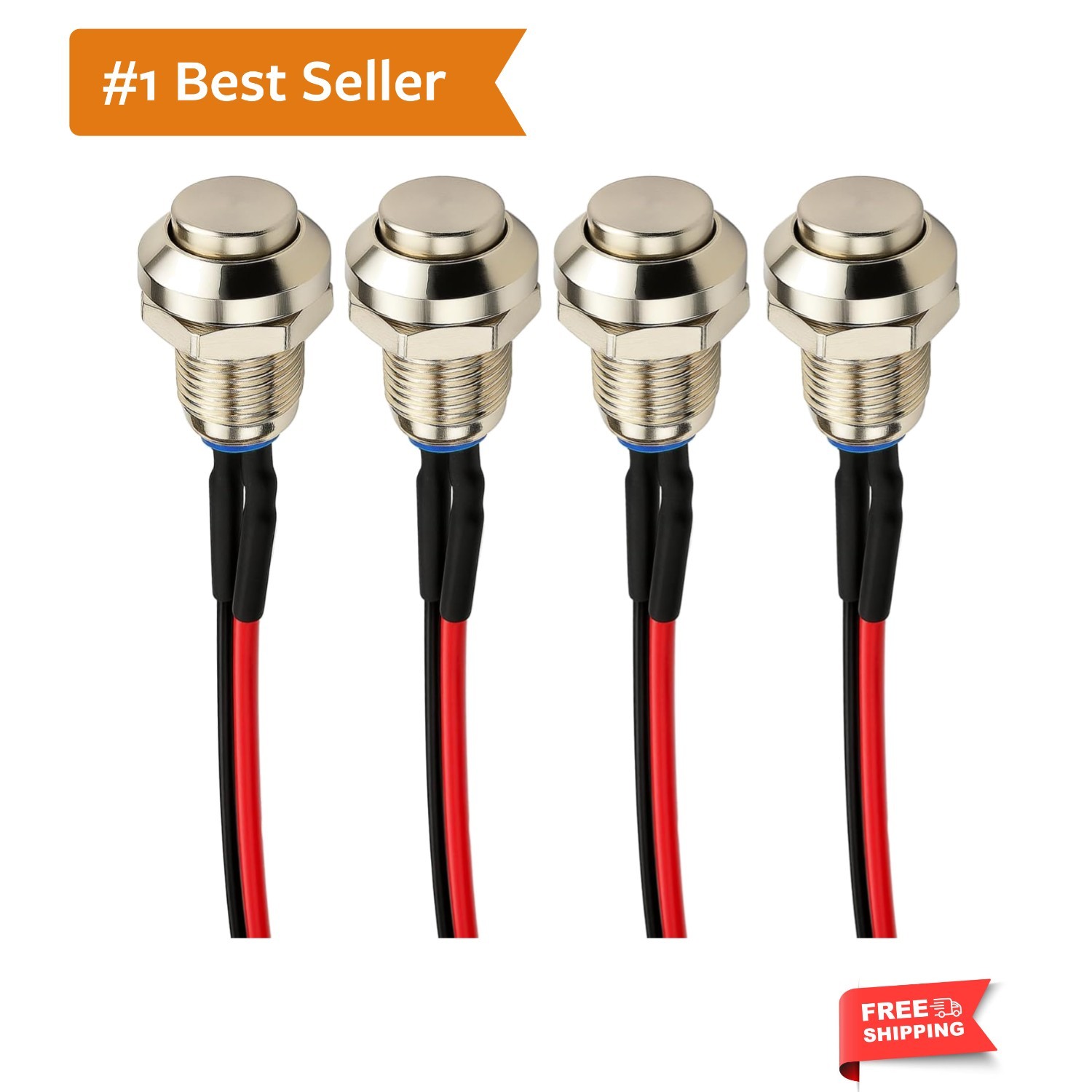
These are normally open, self-reset switches rated for 3A at 0-24 VDC and 1A at 110-220 VAC. The prewired leads let you connect them without soldering, and the waterproof design suits home, garden, automotive, industrial, and control-equipment panels. The high-head shape makes the button easy to identify by touch. If you need a momentary control for a doorbell, start command, or reset, this set provides multiple inputs at a lower cost than the indicator lamp. The trade-off is the electrical rating: with 1A on AC, it suits signal-level circuits, not high-current loads. The 8mm mounting hole also places it in the compact-panel category.
LED Indicator Pilot Lamp
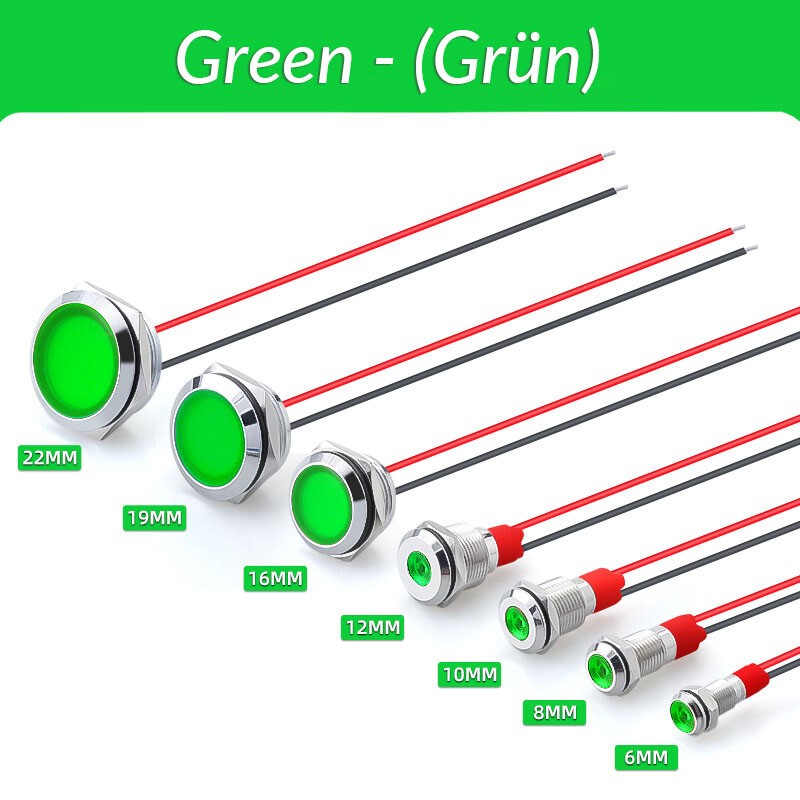
This green single-color LED pilot light comes with an IP67-rated metal body, which is a good match for dashboards and panels exposed to moisture or dust. It accepts AC/DC 9-24V or AC 220V, and the wiring can be pin-type or screw-type. Because the set includes multiple lamps, you can fit several panel positions consistently. The through-hole mounting style is straightforward. The main limitation is that it provides indication only: it has no switch contacts, so it cannot send a momentary command. A 0.1-0.3mm measurement variance is allowed for, so you'll want to account for that when preparing your mounting hole.
Choose the Push Button Switch when your panel needs a compact, self-resetting control. Choose the LED Indicator Pilot Lamp when you need a sealed, green signal light to confirm a state. If you're outfitting a full panel, you may want both - one for the operator's finger and one for the operator's eye.