Deciding on a fieldbus gateway starts with protocol mapping. If you have Modbus devices that need to communicate with a Profibus master, you need a gateway that can present your Modbus network as a Profibus slave. The Moxa 4101-MB-PBS is one such option, and it comes down to whether a single-port, 230.4 Kbps unit fits your specific setup. In practice, this means you need to know your baud rate and segment count before you choose.
Quick verdict
Priced at USD 869.00, this gateway is built specifically for the Modbus-to-Profibus slave translation. It is listed with a 230.4 Kbps data rate and a 0 to 55°C operating range. For a single Modbus segment that needs to appear on a Profibus network, this is a focused solution.
Who it suits
It suits industrial networking setups where a Modbus device must be read by a Profibus controller. It also fits engineers who want a hardware module rather than a software-based converter. For a small machine or a single process line, that is often all you need.
What stands out
The gateway is offered as a drop-in module, and the listing shows an open-box condition. The drop-in form factor is convenient for panel integration, while the open-box status gives you a reason to consider its condition.
Meaningful trade-offs
The main trade-off is the single-port design. You can bridge one Modbus segment per unit, so multiple lines require multiple gateways. The 230.4 Kbps data rate is serviceable for many applications, but confirm that your master and slave devices are set to the same baud rate. If your network grows, you will need to plan for additional units, which affects both cost and panel space.
Bottom line
If you need a dedicated protocol bridge for a single Modbus-to-Profibus connection, the Moxa 4101-MB-PBS at USD 869.00 is a practical choice. It keeps the translation in one module and lets you move on to configuration. This gateway is not a broad multi-protocol tool; it is a specific answer to a specific problem.
Moxa 4101-MB-PBS Fieldbus Gateway
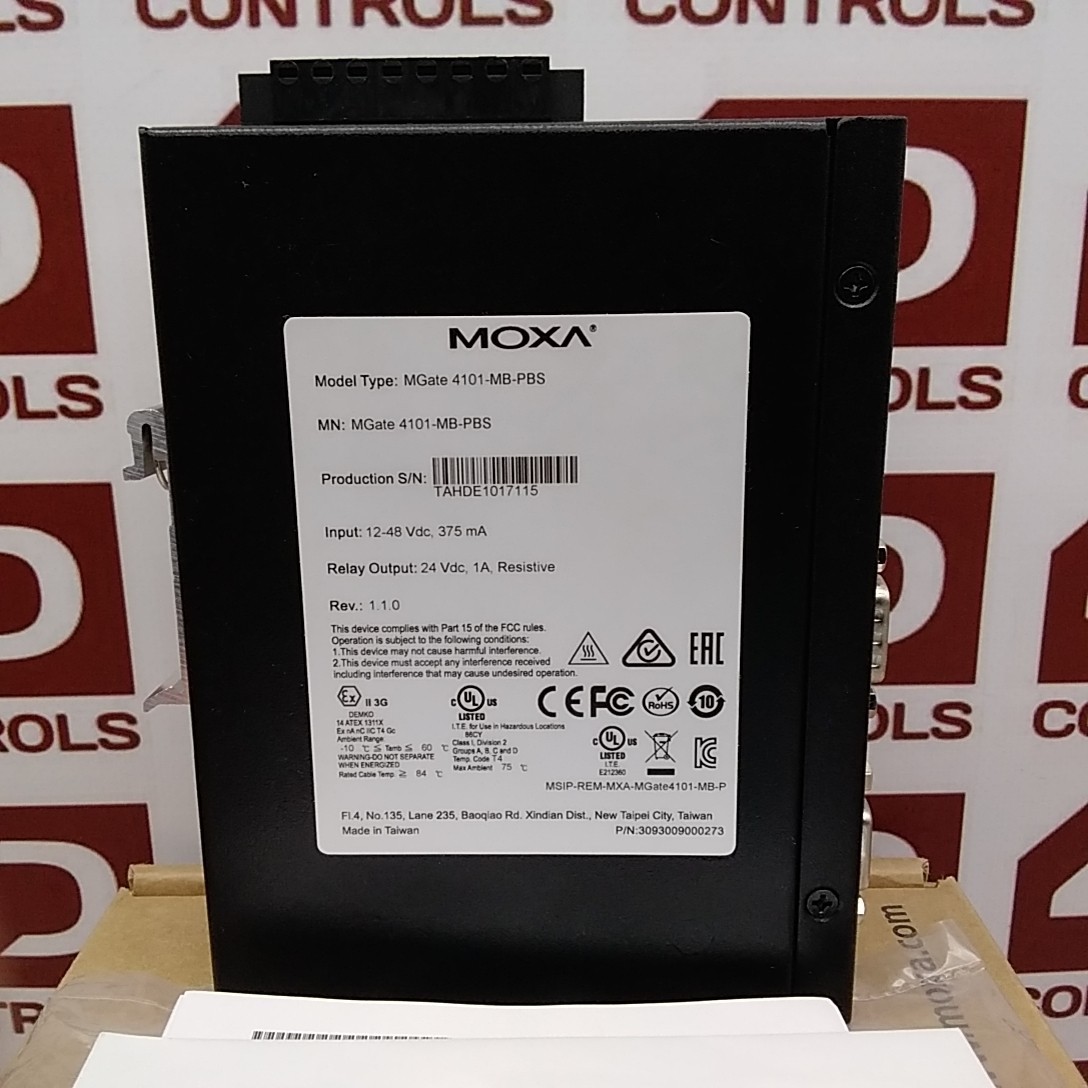
The 4101-MB-PBS is a drop-in module for control cabinets and handles the Modbus-to-Profibus slave role. A reason to choose it is that it removes the need for custom serial bridging. A limitation is that the single-port design covers one Modbus segment, and the open-box condition means the unit may have prior handling.