When you need a rotary encoder for a control panel, a machine safety project, or a repair, the first question is what the encoder is actually doing. Is it feeding a controller a precise position signal, or is it acting as a knob a person turns and presses? These two encoders sit on opposite sides of that line, and the right choice usually becomes clear once you look at the shaft and the connection.
Quick Verdict
The Oak / Grigsby 91Q128 is the pick when the encoder has to send a precise logic signal. The EC11 is the pick when the encoder is part of a control knob on a front panel. After that, the shaft style and hookup in the table below tend to make the final decision obvious.
At a Glance
| Oak / Grigsby 91Q128 | EC11 30 Position | |
|---|---|---|
| Price | $16.95 | $21.00 |
| Shaft | 0.4-inch stainless steel | 12.5 mm split shaft |
| Hookup | Bare wire leads | 5-pin |
Where Each Product Wins
The Oak / Grigsby 91Q128 wins when your circuit needs a high-resolution feedback signal. It outputs a 128-pulse quadrature signal with 512 state changes per revolution, uses a 2-bit Gray code, and runs on 5V TTL logic. If you are building a system that has to know position and direction, that is the meaningful advantage.
The EC11 wins when you are putting together a tactile panel control. The 30-position detent makes each change in setting feel distinct, and the push switch gives the same component a second action for confirmation or selection. That makes it easy to hand to an operator who wants a knob, not a sensor.
Product Notes
Oak / Grigsby Rotary Encoder - 128 Pulse/Rev - 91Q128 - 2 CH Full Quadrature
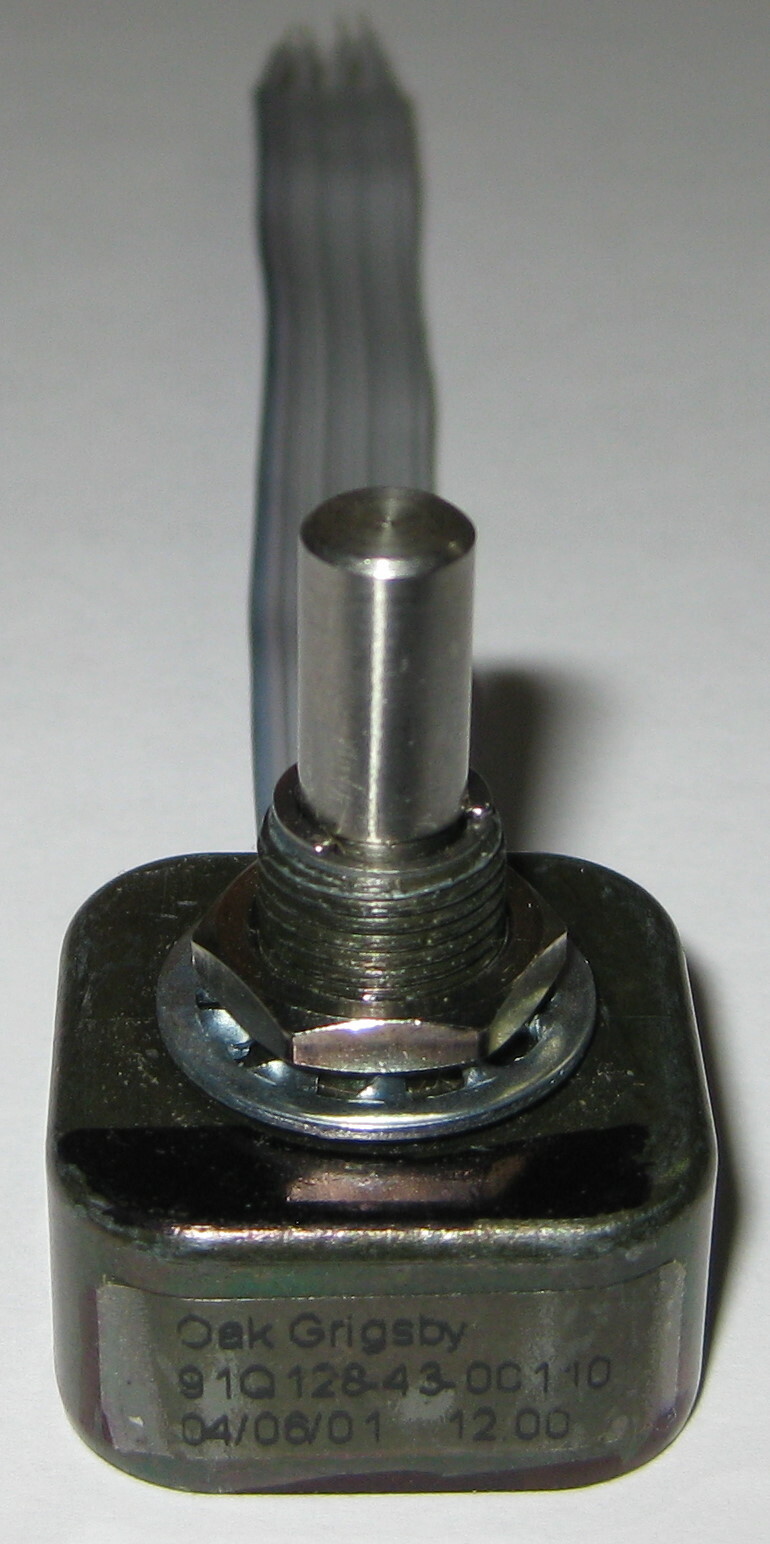
This is the unit to choose when precision matters more than convenience. The 128 pulses per revolution become 512 total state changes per turn through the 2-bit Gray code, and the 5V TTL-compatible output is ready for a logic circuit. The sealed enclosure and sealed sleeve bearing point to a panel-grade part, and the mounting nut and lock washer are included. The trade-off is the interface: the 4-inch cable ends in bare wire ends with no connector, so you are wiring it directly rather than plugging it in. The 0.4-inch stainless steel shaft is also short. For a fixed design where direct wiring makes sense, this encoder is the straightforward option.
One 5PIN EC11 30 Position Rotary Encoder With Push Switch Split Shaft
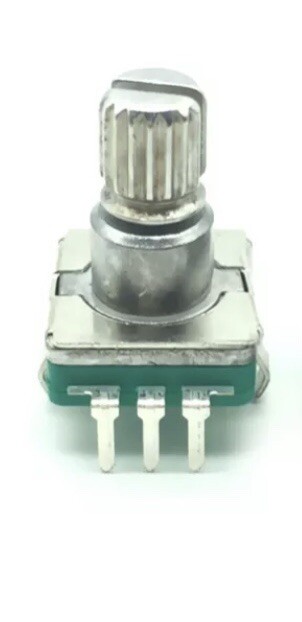
This encoder is the option when the control has to feel like a knob. The 30-position rotary step gives a detent at every position, and the integrated push switch adds a second function without extra hardware. The 12.5 mm split shaft is a familiar size for a press-on knob grip, and the 5-pin hookup matches a compact front-panel board. If you are replacing a radio-style control, the push switch and split shaft line up with that job. The limitation is the other side of that specialty: this is a selector knob, not a high-resolution instrument encoder. For a circuit that needs precise logic outputs, the Oak / Grigsby is the better match.
Final Choice by Use Case
If you need an encoder to feed a controller with precise feedback, choose the Oak / Grigsby 91Q128 at $16.95.
If you need a front-panel control that works as both a rotary selector and a select button, choose the One 5PIN EC11 30 Position Rotary Encoder With Push Switch Split Shaft at $21.00.