When you're automating a door, a gate, or a small industrial machine, you usually need to know one of two things: Is something there? Or how far has a wheel turned? Both questions live in the sensors encoders machine safety category, but they call for very different hardware. This head-to-head pits a compact photoelectric laser sensor against a rotary encoder digital counter kit, and the right pick comes down to the job you're wiring up.
Quick Verdict
If your project is about detecting objects, presence, or passage through a space, the Photoelectric Switch is the more direct tool. If you need to measure roll length, count rotations, or trigger a stop after a set distance, the Rotary Encoder Counter is the complete package.
Comparison
| Feature | Photoelectric Switch 12mm 636V 020M Laser Sensor NPN | 300ppr Rotary Encoder Digital Meter Counter with Wheel & Mounting Bracket |
|---|---|---|
| Price | USD 39.72 | USD 86.20 |
| Primary job | Detects objects with a 0-20M light beam | Measures wheel rotation and length with 300 pulses per revolution |
| Output | NPN, normally open | Relay output |
| Power | 6-36V | 110-220V (US plug) |
| Package | Sensor only | Counter, encoder, wheel, mounting bracket |
Where Each Product Wins
The photoelectric switch is the winner when your goal is presence detection. It uses a light beam to spot objects, count passing items, or serve as a limit switch. Its weatherproof construction lets it work outdoors on gates or garage doors as well as on indoor machinery. For simple detection jobs, it is the lower-price option.
The rotary encoder counter wins when you need quantitative feedback. The kit bundles a meter, encoder, wheel, and bracket, so you can measure roll length or count rotations immediately. Its relay output lets it stop or start devices automatically, which is useful for cut-off or batch counting.
Product Notes
Photoelectric Switch 12mm 636V 020M Laser Sensor NPN Industrial Sensor
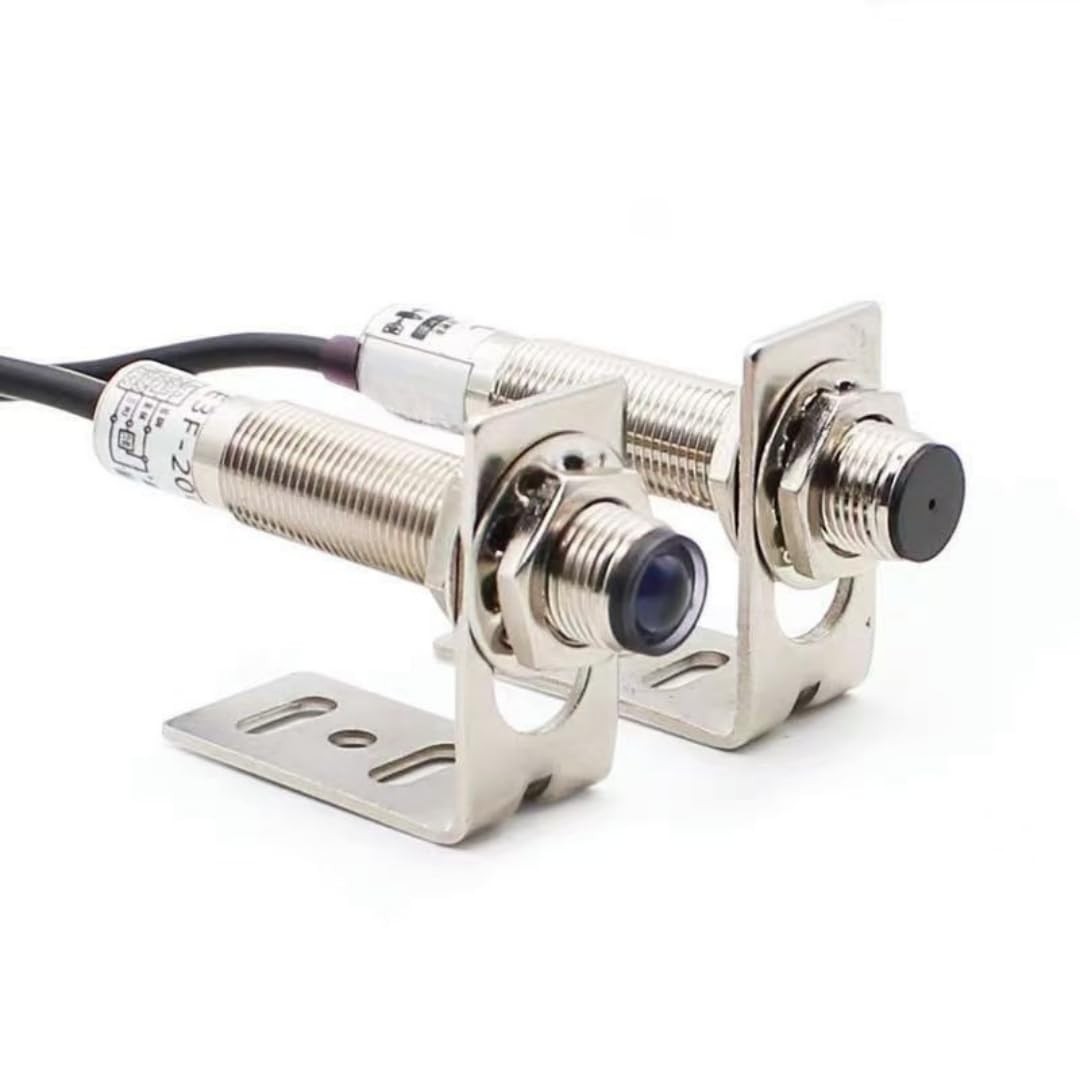
This sensor is built to answer one question: Is something in the beam? With a 0-20M sensing range and NPN normally-open output, it works well for gates, doors, and machine automation jobs like limit sensing, counting, and personnel passage detection. The stainless steel contacts and RCA connector make it a straightforward component to wire into a control circuit. It operates on 6-36V, giving you flexibility across different industrial supplies. And at $39.72, it is the lower-cost choice in this pairing. The obvious limitation is that it only detects presence; it won't tell you how far a wheel has turned or how much material has passed. If you need measurement data, you'll have to look beyond this single sensor.
300ppr Rotary Encoder Digital Meter Counter with Wheel & Mounting Bracket
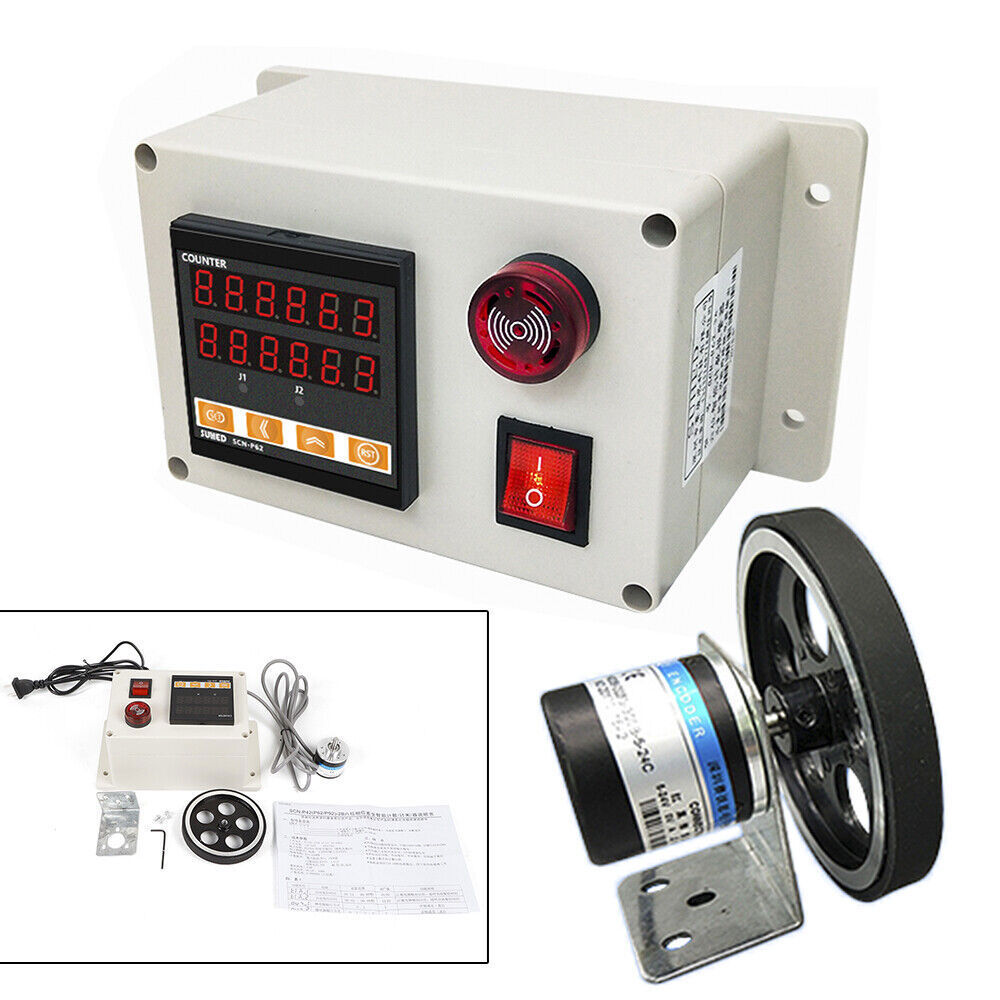
This is a complete measuring kit rather than a bare component. You get the digital meter, a 300-pulse-per-revolution encoder, a measuring wheel, and a mounting bracket, so it's ready to measure roll length right out of the package. The controller has a relay output, and you can set a warning value to make connected devices stop or start automatically. It runs on 110-220V with a US plug, which makes it easy to power in a typical shop or testing environment. Its limitation is that it's dedicated to rotation and length tasks; if you only need to detect whether an object is present, the higher price and extra components are more than you need.
Final Choice by Use Case
Choose the Photoelectric Switch if your main need is detecting objects or passage for a gate, door, or industrial limit function, and you want a lower-cost sensor that installs into an existing control circuit.
Choose the 300ppr Rotary Encoder Digital Meter Counter if you need to measure roll length, count wheel rotations, or automatically stop or start machinery after a set distance, and you want the wheel, encoder, and counter included in one kit.
In the end, these two products answer different questions. The photoelectric switch tells you whether something is there. The rotary encoder counter tells you how much has moved. Pick the one that matches the question your machine needs answered.