Choosing between two DIN-rail-ready industrial switches usually comes down to the same question: do you want a simple copper switch that just works, or do you need fiber flexibility and a little more control? In the industrial networking fieldbus category, these two designs sit close in price but differ in approach. They are not interchangeable, though.
Quick Verdict
If your network is mostly copper endpoints and you want plug-and-play operation, the PUSR 5/8-port model is the direct answer. If your network crosses into fiber or needs managed switching, the 6-port SFP DIN-rail switch is the one to choose.
At a Glance
| Feature | PUSR 5/8-Port Switch | 6-Port SFP DIN-Rail Switch |
|---|---|---|
| Price | USD 27.99 | USD 29.99 |
| Price bar | ||
| Port lineup | 5/8-port options, up to 8 LAN ports | 4 gigabit Ethernet RJ-45 + 1 RJ-45 uplink + 1 SFP |
| Management | Unmanaged | Managed |
| Mounting | DIN-rail | DIN-rail or wall-mount |
| Industrial protection | IP40, -40°C to 85°C, 6KV lightning protection | IP40, -40°C to 85°C, 6KV lightning resistance |
Where Each Product Wins
If you value simplicity over optionality, the PUSR is the switch to deploy. If you need more flexibility in wiring or control, the 6-port switch has the edge. Neither is a bad fit for an industrial cabinet; the difference is how much flexibility you want beyond plug-and-play.
Product Notes
PUSR 5/8-Port Gigabit Switch USR-ISG/ISF
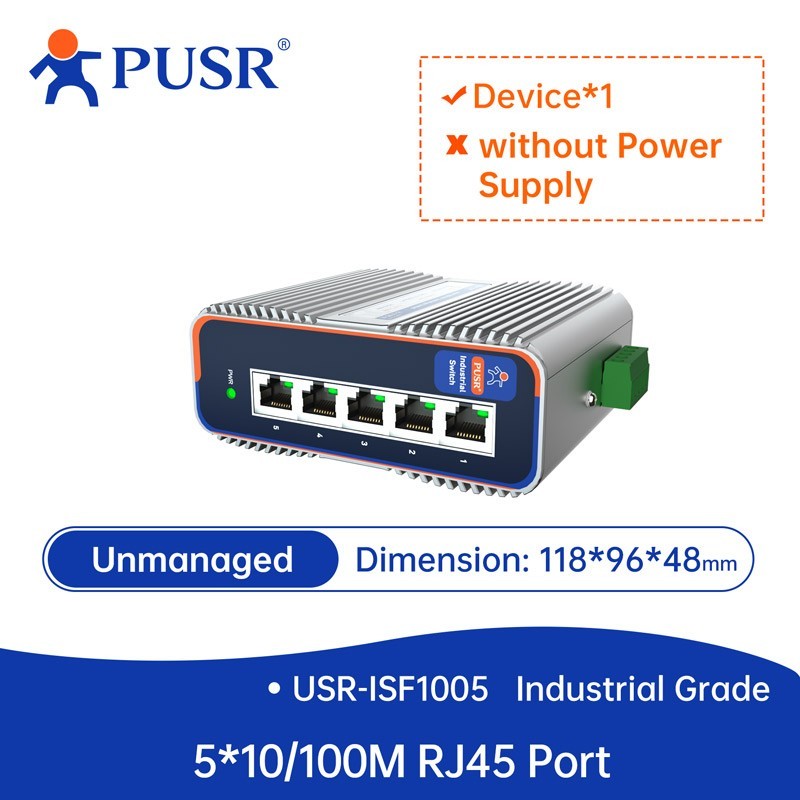
This PUSR switch makes the simplest case for a cabinet upgrade. It's unmanaged, so the install path is plug in Ethernet (RJ-45) cables and let the 10/100/1000Mbps ports handle the rest. The 5/8-port line gives you room to match your endpoint count, and the compact aluminum housing is built for enclosed or outdoor industrial spots. It also supports redundant DC power input, which matters for rail, security and new-energy cabinets. The tradeoff is the unmanaged design: if you need per-port settings or managed controls, the other switch in this comparison is the better direction.
Industrial 6P SFP DIN-Rail Switch
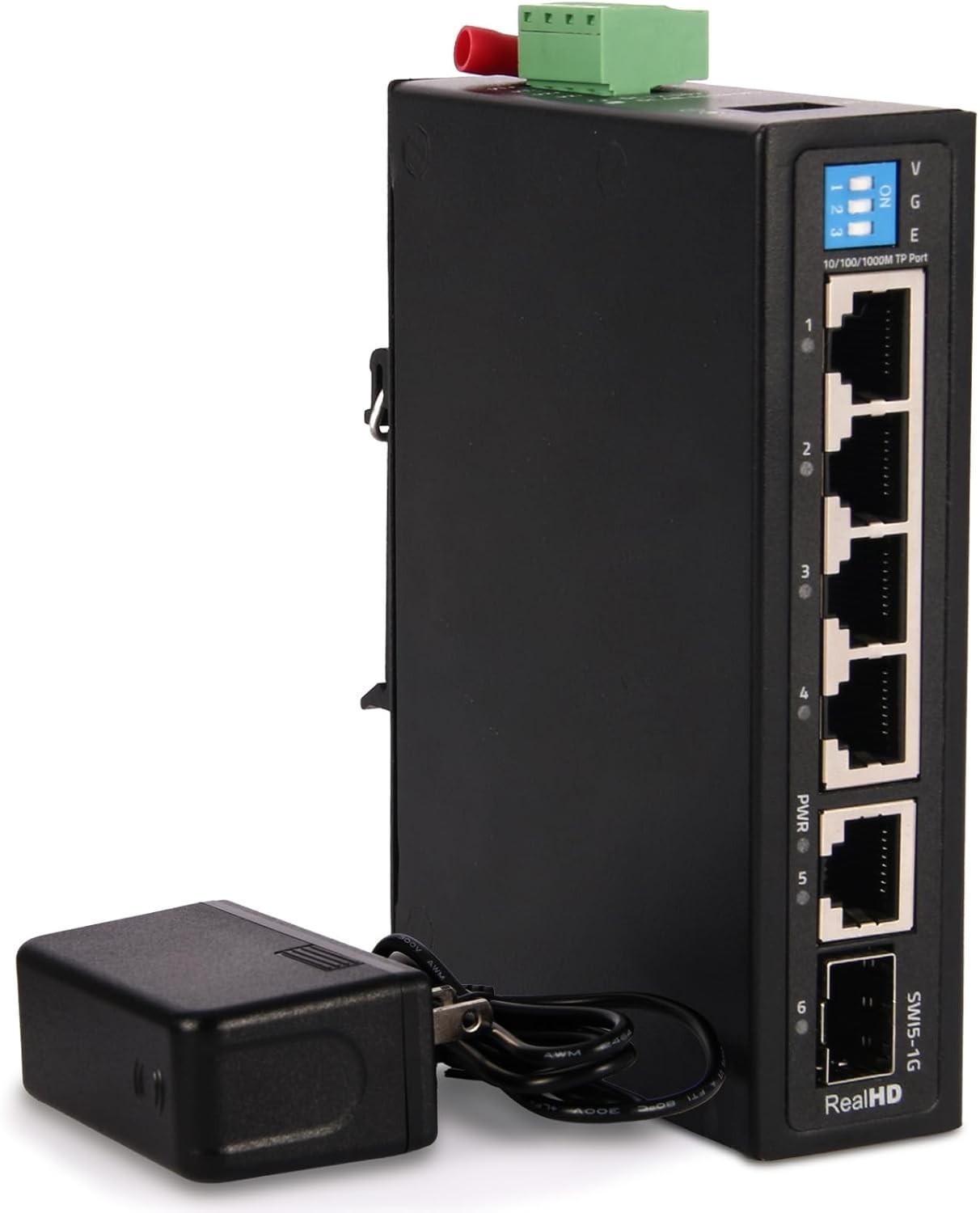
This 6-port switch earns its place by adding a differentiator in this head-to-head: a dedicated SFP port for fiber. The layout is four gigabit Ethernet RJ-45 ports, one RJ-45 uplink and one SFP, with a total switching capacity of 12Gbps. It supports both DIN-rail and wall mounting, which is handy in tight control boxes. The unit is classified as managed, putting it a step above the PUSR's unmanaged operation, and it supports automatic MDI/MDI-X and full/half-duplex adaptation. Its limitation is port count: if your field devices are all copper and numerous, the PUSR's higher-port option offers more RJ-45 lanes without adding another switch.
Final Choice by Use Case
For an all-copper control cabinet where you want a low-maintenance switch that powers up and moves traffic, choose the PUSR. For a setup with a fiber backbone or a need for managed switching, choose the 6-port SFP DIN-rail switch. Let the $2 gap between them be the tiebreaker once you know which of those two priorities reflects your network.