When you are building or expanding an industrial networking fieldbus, the first fork in the road is control versus simplicity. Do you need a switch that passes Ethernet traffic the moment you plug it in, or do you need to configure ports, watch alarms, and manage traffic? The PUSR 5/8-Port Industrial Gigabit Ethernet Switch and the Cisco IE-3000-8TC sit on opposite sides of that split, and the right choice depends on your environment, your team, and how much hands-on control you expect.
Quick verdict
The PUSR is the set-and-forget option; the Cisco is the configurable option. Your biggest question is whether the switch will be actively maintained or left alone in a cabinet.
Comparison
Here is how they compare on price and the attributes that matter most for an industrial networking fieldbus.
| Feature | PUSR 5/8-Port Gigabit Switch | Cisco IE-3000-8TC |
|---|---|---|
| Price | $27.99 | $250.00 |
| Management | Unmanaged | Managed |
| Condition | New | Used (Grade B) |
| Power input | Redundant DC, 9.6-60V | Dual DC inputs (Pwr A / Pwr B) |
| Operating temperature | -40°C to +85°C | -40°C to +60°C |
| Price bar |
Where each product wins
The PUSR is a better fit when the job is simple connectivity in a small cabinet. It is plug-and-play, with an aluminum housing, IP40 protection, DIN-rail mounting, and a wider operating temperature range. The Cisco wins on management tools: console access, dual DC power inputs, an alarm relay, and hazardous-location capability.
Product notes
PUSR 5/8-Port Industrial Gigabit Ethernet Switch
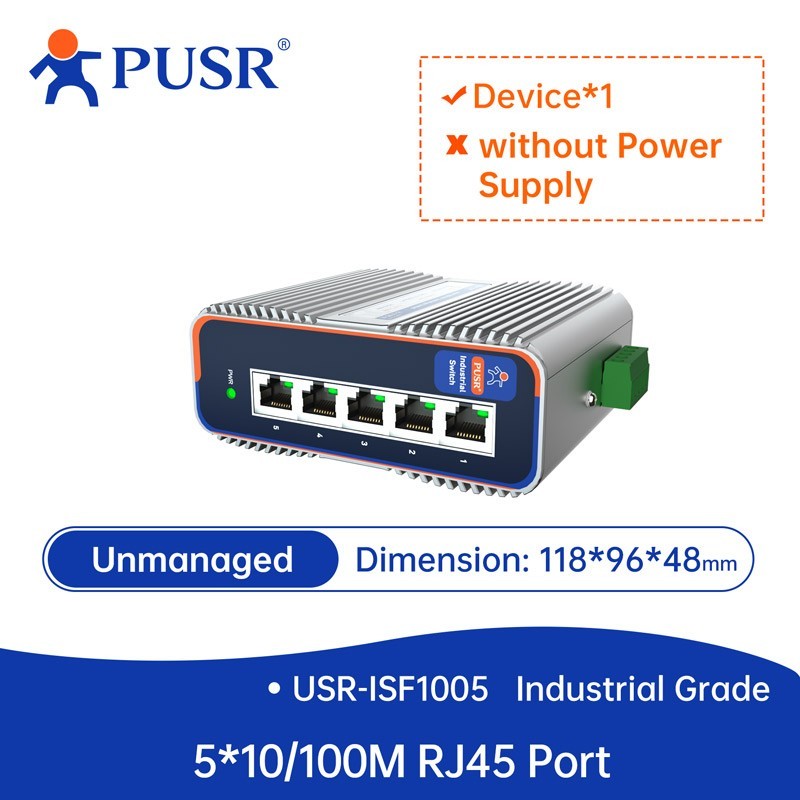
This plug-and-play switch is built for hands-off installation: connect the RJ-45 cables, apply DC power, and traffic flows without any configuration. The aluminum housing plus IP40 protection and DIN-rail mounting make it practical for control cabinets, and the compact size helps when space is tight. At $27.99, it keeps project costs low and is easy to replace if your layout changes. The limitation is that you cannot manage it remotely or segment traffic; for applications that need VLANs, QoS, or port-level visibility, you will be stuck with a basic forwarding device. It also relies on the factory settings, so there is no remote visibility into traffic.
Cisco IE-3000-8TC Industrial Ethernet Switch
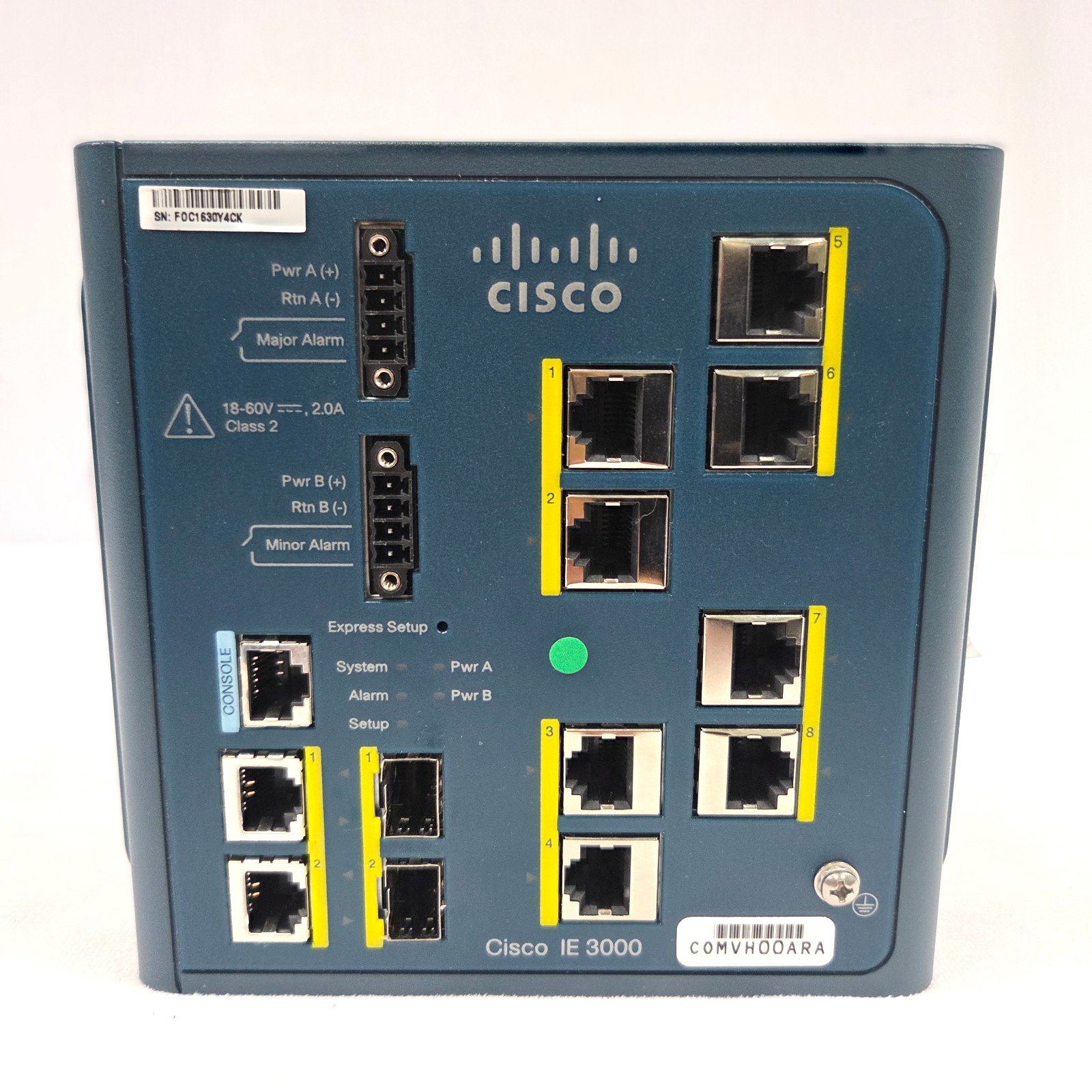
This switch is for networks where you need control and status feedback. The console port lets you configure ports and monitor activity, and the alarm relay provides a clear signal for major or minor events. With dual DC power inputs, it can tolerate a failed power feed, and its hazardous-location rating makes it a candidate for demanding industrial sites. The unit is sold as used Grade B, which means it may show slight handling scratches and does not include accessories; the item has been tested for key functions. Choose it when you have someone who can handle switch configuration and you need more than basic forwarding. If your deployment is simple and does not need configuration, this switch adds complexity you will not use.
How to decide
If your installation mainly needs to carry traffic between a few devices, the PUSR is enough. When the switch will be part of a larger network that requires traffic isolation or event alerts, the Cisco has the tools to do that. Also consider that the Cisco does not include accessories, so factor that into the trade-off. Think about who will maintain it: the Cisco rewards a team that can configure it, while the PUSR works with no learning curve.
Final choice by use case
For a straightforward extension in a normal industrial cabinet, go with the PUSR 5/8-Port Industrial Gigabit Ethernet Switch. For deeper control and event visibility, choose the Cisco IE-3000-8TC.