Two industrial networking switches, both built for harsh environments, sit at different price points. The PUSR 8-port unmanaged gigabit switch costs $27.99, while the 10-port switch with 2 SFP ports costs $39.99, a $12 price gap. Your choice really comes down to whether you need fiber connectivity and extra port count, or you want a simple switch without fiber.
Quick verdict
If you don't need fiber uplinks and prefer a plug-and-play setup, the PUSR 8-port is the straightforward pick. It's easy to set up and costs less. If you need fiber uplinks or more total ports, the 10-port switch with SFP is worth the extra money.
Comparison at a glance
| Feature | PUSR 8-Port Gigabit Switch | 10-Port Industrial Switch with SFP |
|---|---|---|
| Price | $27.99 | $39.99 |
| Total ports | 8 | 10 (8 copper + 2 SFP) |
| Copper gigabit ports | 8 | 8 |
| SFP fiber slots | 0 | 2 |
| Mounting options | DIN-rail | DIN-rail and wall |
| IP40 protection | Yes | Yes |
| Operating temperature | -40°C to 85°C | -40°C to 85°C |
| Lightning protection | 6KV | 6KV |
Where each switch wins
The PUSR 8-port wins for price and power flexibility. It includes dual power input with a wide DC 9.6-60V range, which is a real advantage in facilities with fluctuating voltage. The 10-port switch wins for connectivity options. Two SFP slots let you connect fiber runs to distant equipment, and the wall-mount option helps in compact enclosures. Both offer the same IP40 and temperature rating, so environmental ruggedness isn't the deciding factor here.
Product notes
PUSR 5/8 Ports 10/100/1000Mbps Industrial Gigabit Ethernet Switch USR-ISG/ISF
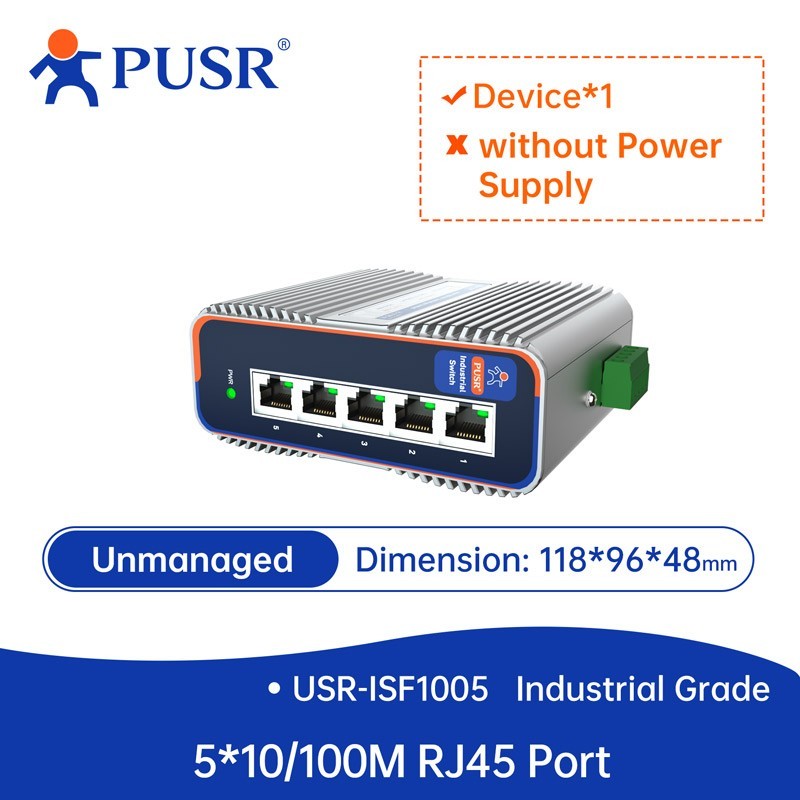
The PUSR unmanaged switch focuses on simplicity and reliability. It gives you eight gigabit RJ-45 ports, an aluminum housing, fanless cooling, and redundant power input, all in a compact package. The lower price makes it an easy choice when you don't want to overspend, and the plug-and-play setup means no configuration is needed. The limitation is that the unmanaged design doesn't provide configuration options for advanced network management, so if you need VLANs or QoS, you'll need a managed switch. For basic Ethernet networks, this switch covers the basics well.
Industrial 10P Ethernet Switch w/Industrial DIN-Rail 2 SFP Port 20Gbps Capacity
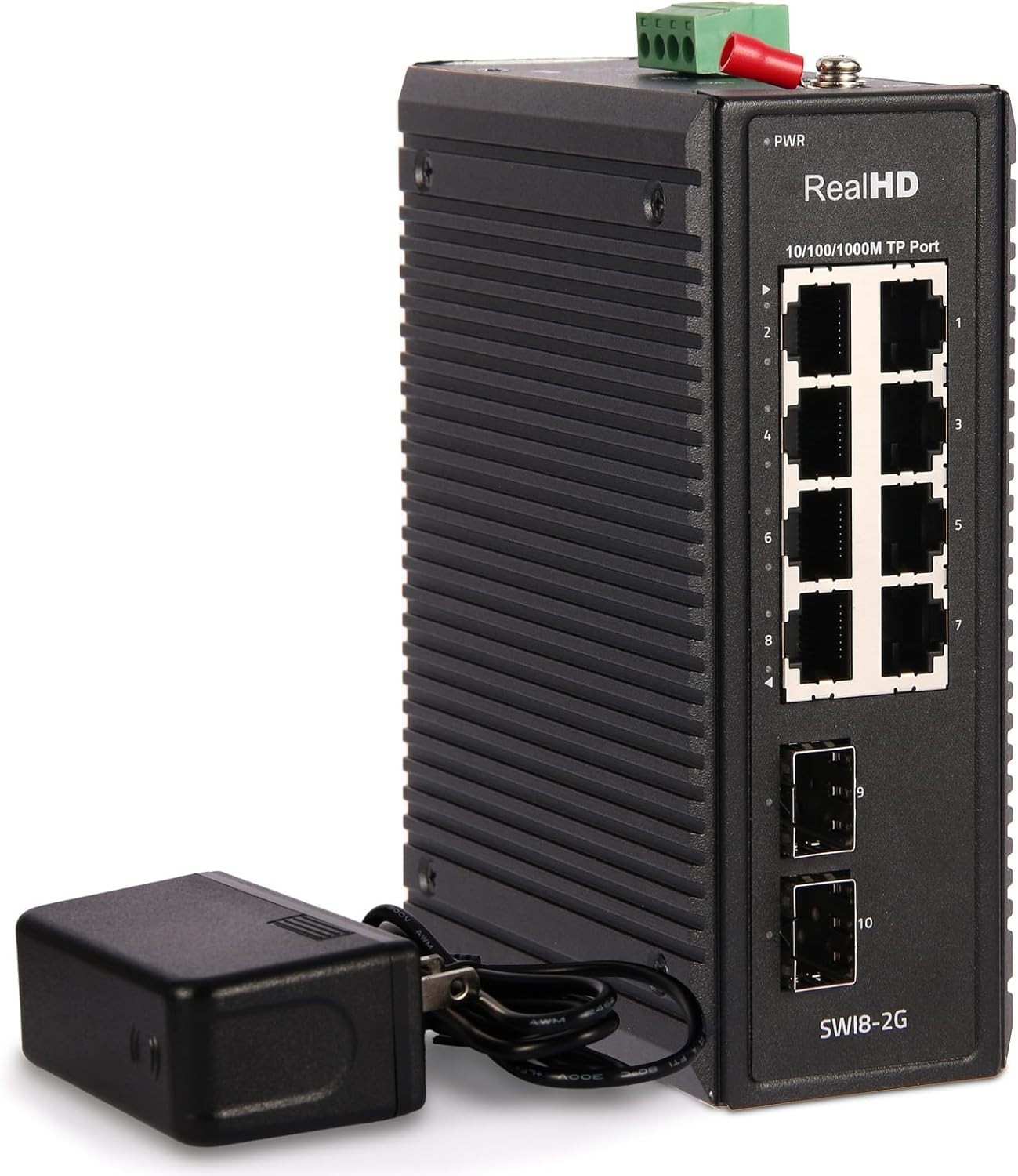
This 10-port switch brings two SFP fiber slots and eight gigabit RJ-45 ports, giving you more flexibility for uplinks or extended runs. The switching capacity of 20Gbps is the higher of the two, and the included mounting hardware supports both DIN-rail and wall mounting. The higher price is the trade-off, but it's justified if you need fiber connections or the extra capacity. The limitation is that those SFP slots are only useful if you have fiber cabling; if you don't plan to use fiber, the added cost may not be necessary. For networks that need long-distance connections with lightning protection, this model gives you the ports to do it.
Final choice by use case
Pick the PUSR 8-port when you want a reliable, no-frills switch for a basic Ethernet network and want to keep the purchase price down. Pick the 10-port switch with SFP when you need fiber uplinks, wall-mounting capability, or a higher 20Gbps switching capacity, and the extra ports are worth paying more for.