Choosing between a board for a focused build and a kit for a more guided start is the key decision in microcontrollers & dev boards. The Raspberry Pi RP2350A USB Development Board costs USD 17.78, while the ELEGOO ESP-32 Super Starter Kit costs USD 49.74. The Raspberry Pi product is framed as a development board; the ELEGOO product is a Super Starter Kit. If you want the lower-priced, board-first route, Raspberry Pi is the straightforward pick. If you want a kit-oriented setup, ELEGOO is the better match.
Quick verdict
Raspberry Pi is the better fit for a board-first purchase, while ELEGOO is the better fit for a guided, kit-style start. The Raspberry Pi choice centers on the RP2350A board itself; the ELEGOO choice centers on the ESP-32 kit format and its named connectivity mix.
At a glance
| Attribute | Raspberry Pi RP2350A | ELEGOO ESP-32 |
|---|---|---|
| Price | USD 17.78 | USD 49.74 |
| Format | Development Board | Super Starter Kit with development board |
| Core or platform detail | RP2350A; dual-core ARM Cortex-M33 and dual-core Hazard 3 RISC-V | ESP-32 |
| Connectivity named | USB host/device and USB expansion port | Bluetooth, Wi-Fi, GPIO, I2C, and USB |
| Memory detail | 520KB SRAM; 2MB on-chip Flash | 520K RAM installed |
Where each wins
- Raspberry Pi: Choose the lower-priced development-board route when the RP2350A focus matches your project, rather than a kit format.
- ELEGOO: Choose the kit route when a tutorial and Arduino IDE compatibility are useful starting points alongside the ESP-32 board.
Product notes
Raspberry Pi RP2350A USB Development Board
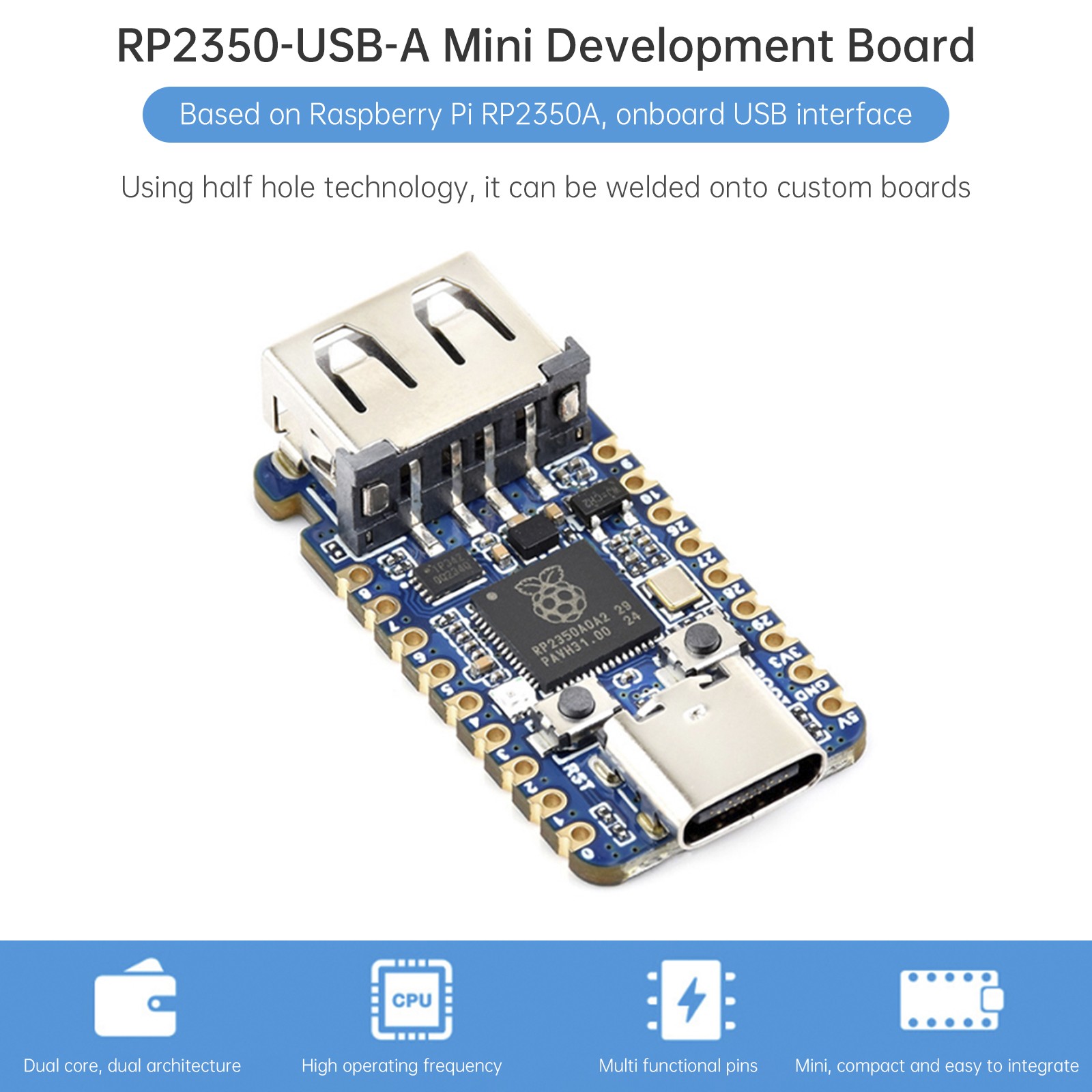
Raspberry Pi RP2350A USB Development Board is the focused choice for a buyer who wants to work directly with the RP2350A microcontroller. The board pairs a dual-core ARM Cortex-M33 processor with a dual-core Hazard 3 RISC-V processor, plus up to 150MHz, 520KB SRAM, and 2MB on-chip Flash. Its stamp-hole design supports integration with a user-designed baseboard, and USB host/device support gives it a clear USB-oriented angle. The limitation is its focused development-board format: shoppers specifically seeking a tutorial-led starter kit should choose ELEGOO instead. Choose Raspberry Pi when the architecture, stamp-hole design, or board-first setup matters more than guided kit packaging.
ELEGOO ESP-32 Super Starter Kit
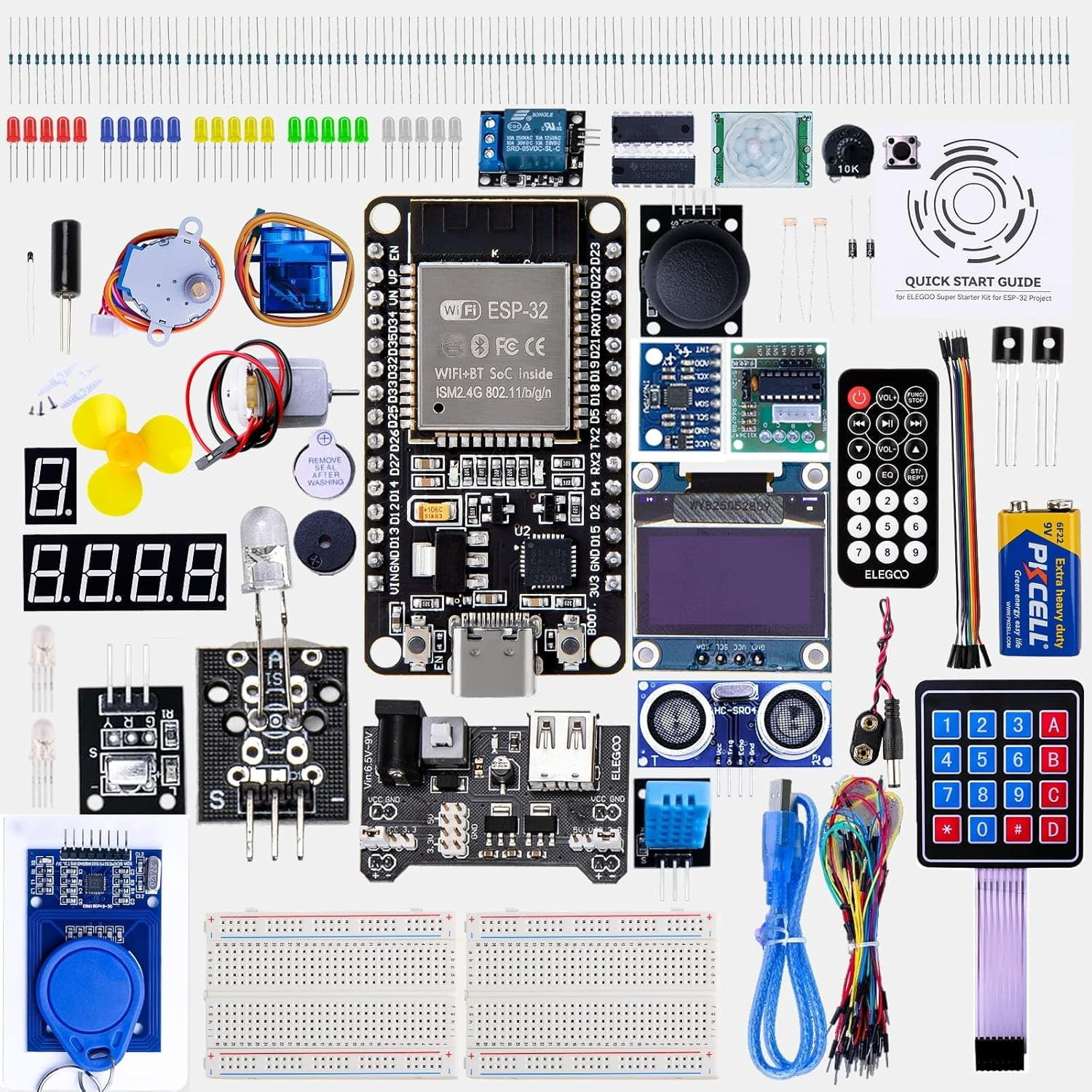
ELEGOO ESP-32 Super Starter Kit makes the stronger case for a guided, interface-rich start. The kit pairs its ESP-32 development board with a tutorial, supports Arduino IDE, and names Bluetooth, Wi-Fi, GPIO, I2C, and USB connectivity. That combination gives shoppers several concrete project hooks alongside the ESP-32 board. Its limitation is cost relative to the Raspberry Pi board: the price gap is $31.96. If your plan is simply to choose a board rather than a kit, the additional kit format may not be the deciding factor. Choose ELEGOO when the tutorial, Arduino IDE workflow, or named wireless and interface connections justify that wider setup.
Final choice by use case
- For a board-first electronics build: choose Raspberry Pi RP2350A USB Development Board. The development-board format and RP2350A focus match that use case.
- For a kit-oriented start: choose ELEGOO ESP-32 Super Starter Kit. The Super Starter Kit format makes that role explicit.
- For a price-led decision: choose Raspberry Pi, the lower-priced of the two options.