When you're building or upgrading a machine control station, the core question is whether you need to signal a machine's status or actually switch its power. That's the split between these two signaling indicators operator controls: the Signal Tower Stack Light and the 3-Phase On/Off Push Button Switch. Choosing the wrong one means either a machine that runs without a visible alert or a control that can't safely interrupt motor power.
Quick Verdict
If your priority is a visible and audible status display for automated machinery, the Signal Tower Stack Light is the clear pick. If your priority is a manual start/stop for a three-phase motor, the 3-Phase Push Button Switch is the right tool. They do different jobs, so the choice comes down to whether you need to alert operators or switch power.
Comparison
| Feature | Signal Tower Stack Light | 3-Phase Push Button Switch |
|---|---|---|
| Price | USD 41.95 | USD 14.29 |
| Core job | Visible/audible machine status | Manual on/off motor control |
| Voltage | 12V/24V DC | 220V/240V, max 380VAC |
| Notable specs | 3-layer LED, 90dB buzzer, IP54 | 30A, screw terminals, normally open contacts |
| Best for | Monitoring processes | Starting/stopping a motor |
Where Each Product Wins
Where the Signal Tower Stack Light wins is in environments where operators need to see and hear a machine's state from across the floor. It turns process status into something you can notice, which is essential for automated machinery.
Where the 3-Phase Push Button Switch wins is at the control panel when you need a dependable manual way to start and stop a three-phase motor. It handles the switching task directly, without relying on a signal or indicator.
Product Notes
Signal Tower Stack Light 3-Layer Buzzer 12V 24V DC Industrial Andon Steady
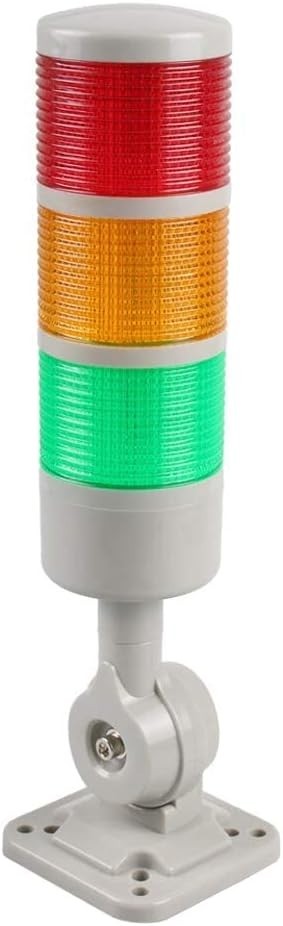
The Signal Tower Stack Light is the option to reach for when a machine status needs to be obvious from across the floor. Its three layers use long-life LEDs, and the built-in 90dB buzzer adds an audible alarm to the visual stack. You can set each tier to steady or flashing, which makes it flexible for showing normal, warning, and fault states. The IP54 rating also means it can handle dust and moisture in a typical industrial setting. The main limitation is that this is a signaling device, not a switch: it won't start or stop a motor. It also requires a 12V or 24V DC supply, so you need to have that control voltage available. If your only need is to alert operators, this unit makes that job easy; if you need power switching, keep looking at a dedicated motor switch.
3 Phase on off Push Button Switch, 220V/240V 30A Industrial Motor Starter Switch
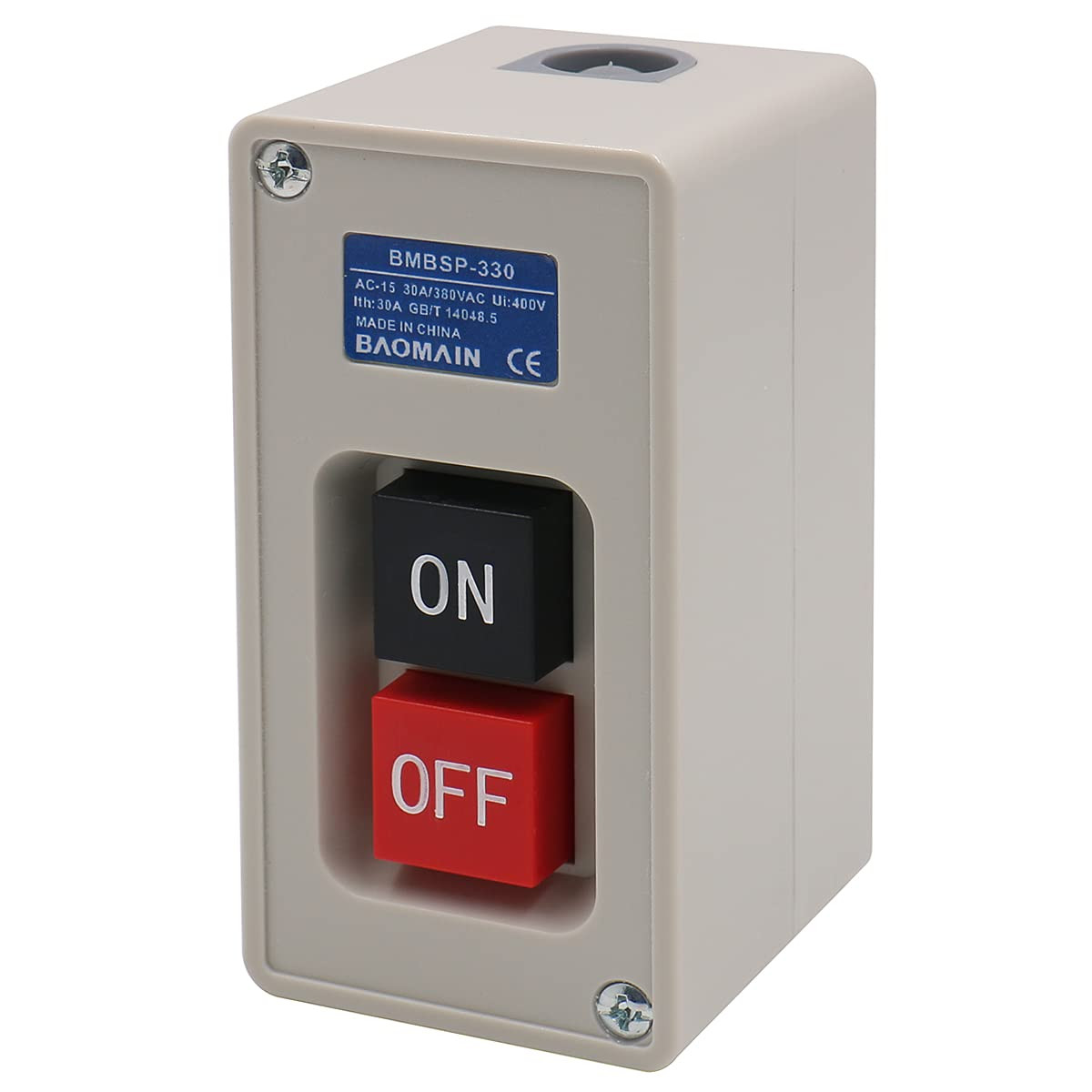
Where the 3-Phase Push Button Switch makes sense is at the control panel when you need to manually interrupt a motor circuit. It is rated for 30A at 208-240VAC, so it is built for industrial three-phase loads, and the screw terminals make it straightforward to wire into a motor starter setup. The push-button actuator with normally open contacts gives you a clean on/off action rather than a toggle. Its limitation is equally clear: it is built for switching action, not for showing machine state, so plan for a separate status light if operators need to see what the machine is doing. At $14.29, it is the lower-cost of the two, but it earns that price by focusing purely on switching duty.
Final Choice by Use Case
Choose the Signal Tower Stack Light when you need machine status visibility and audible alarms. Choose the 3-Phase Push Button Switch when you need a dependable manual control for a three-phase motor. If your control station requires both functions, plan for one unit to switch power and another to display status; the tower handles the alerting while the push button handles the starting and stopping.