When you're shopping for industrial robotics cobots, the first decision isn't which add-on to buy-it's whether you're buying the arm itself or the sensor that gives it a sense of touch. Those are two different purchases, and this head-to-head looks at a used Stäubli RX130-B robot arm and a used ATI Mini45 force-torque sensor to help you sort them out.
The Stäubli RX130-B is a complete robotic arm assembly with Stäubli robotics controls and a standard construction type, made in France. The ATI Industrial Automation Mini45 is a high-precision force-torque sensor that measures forces and torques in the X, Y, and Z axes, letting a robot detect contact, load, and tool interaction. One is the mover; the other is the feeler. That's why comparing them side by side is really about matching the component to the gap in your setup.
Quick verdict
Need a complete arm? The Stäubli RX130-B is the one. Need to add precise sensing to an existing arm or end effector? The ATI Mini45 is the one. The price spread backs that up: the arm is the higher-priced unit, the sensor the lower-priced one.
At a glance
| Feature | Stäubli RX130-B | ATI Mini45 |
|---|---|---|
| Price | USD 3,410.00 | USD 1,395.00 |
| Product type | Complete robotic arm assembly | Force-torque sensor |
| Condition | Used | Used & functional |
| Key specs | Standard construction; Stäubli robotics controls | Measures forces and torques in X, Y, Z axes; includes integrated cable |
| Best fit | Building an arm-based automation cell | Adding contact and load sensing to an existing robot arm or end effector |
Where each product wins
The Stäubli RX130-B wins when you need a complete arm on the floor. It's the higher-priced unit, but it arrives as a full robotic arm assembly with Stäubli controls and a standard build. That makes it the foundation for moving tools or end effectors through a task.
The ATI Mini45 wins when you need tactile feedback. It's the lower-priced unit, and it brings force-torque sensing to the table so your robot can detect contact, load, and tool interaction. If your arm already exists, this is the component that makes it more responsive.
Product notes
Stäubli Industrial Robot Arm Automation Equipment RX130-B
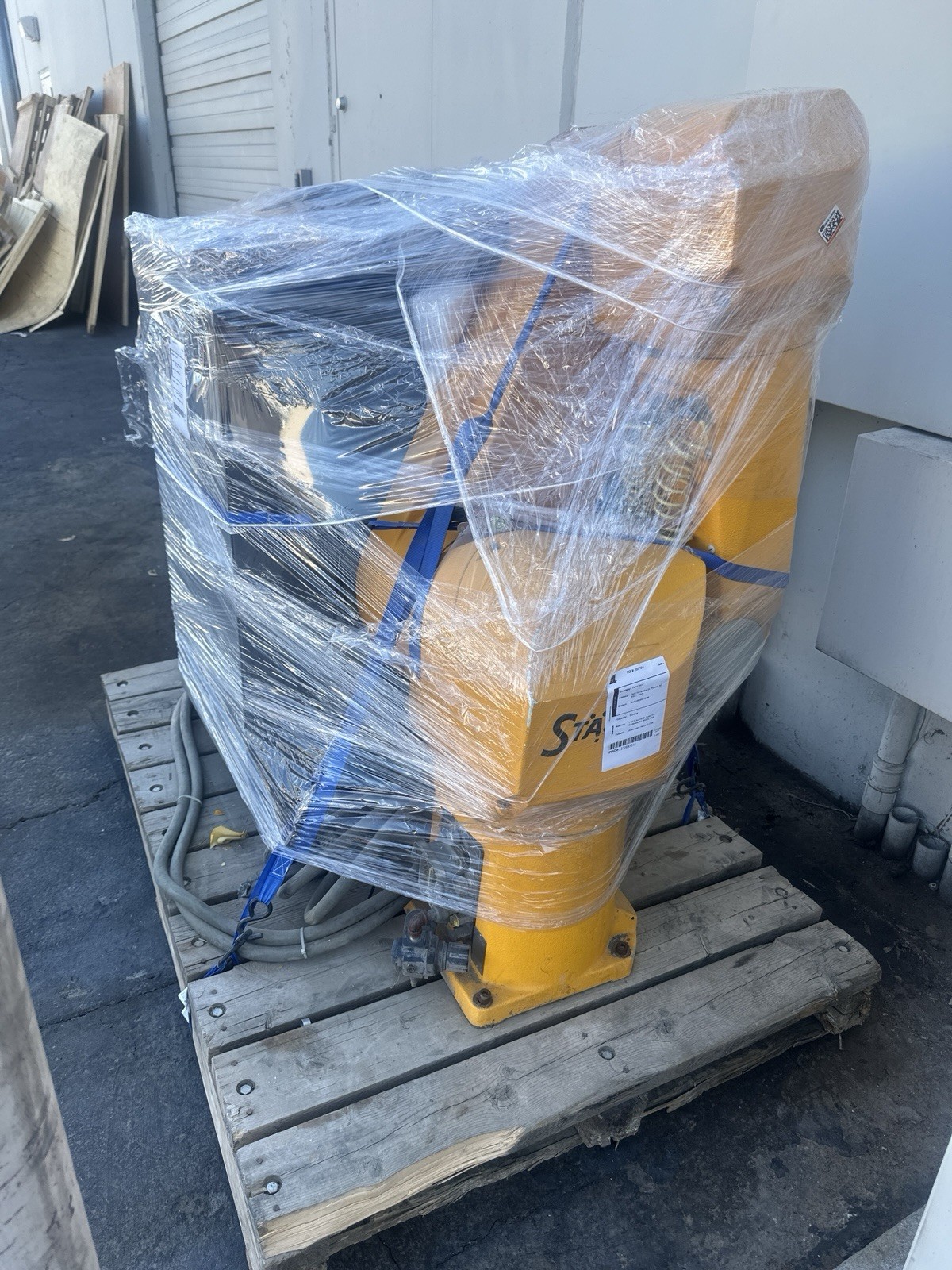
At USD 3,410.00, the Stäubli RX130-B is the higher-priced option in this pairing, and it earns that position by being more than a component. The Stäubli RX130-B combines a complete robotic arm assembly with Stäubli robotics controls and a standard construction type, made in France. For a shop that needs an actual arm to move tools or end effectors, that's the concrete reason to choose it: you're getting the structural core of an automation cell, not a sensing add-on. The limitation is equally concrete: at $2,015 more than the ATI Mini45, it needs a project that genuinely requires a full arm. If your setup already has motion handled, this purchase may be more than you need.
ATI Industrial Automation Mini45 - USED & Functional
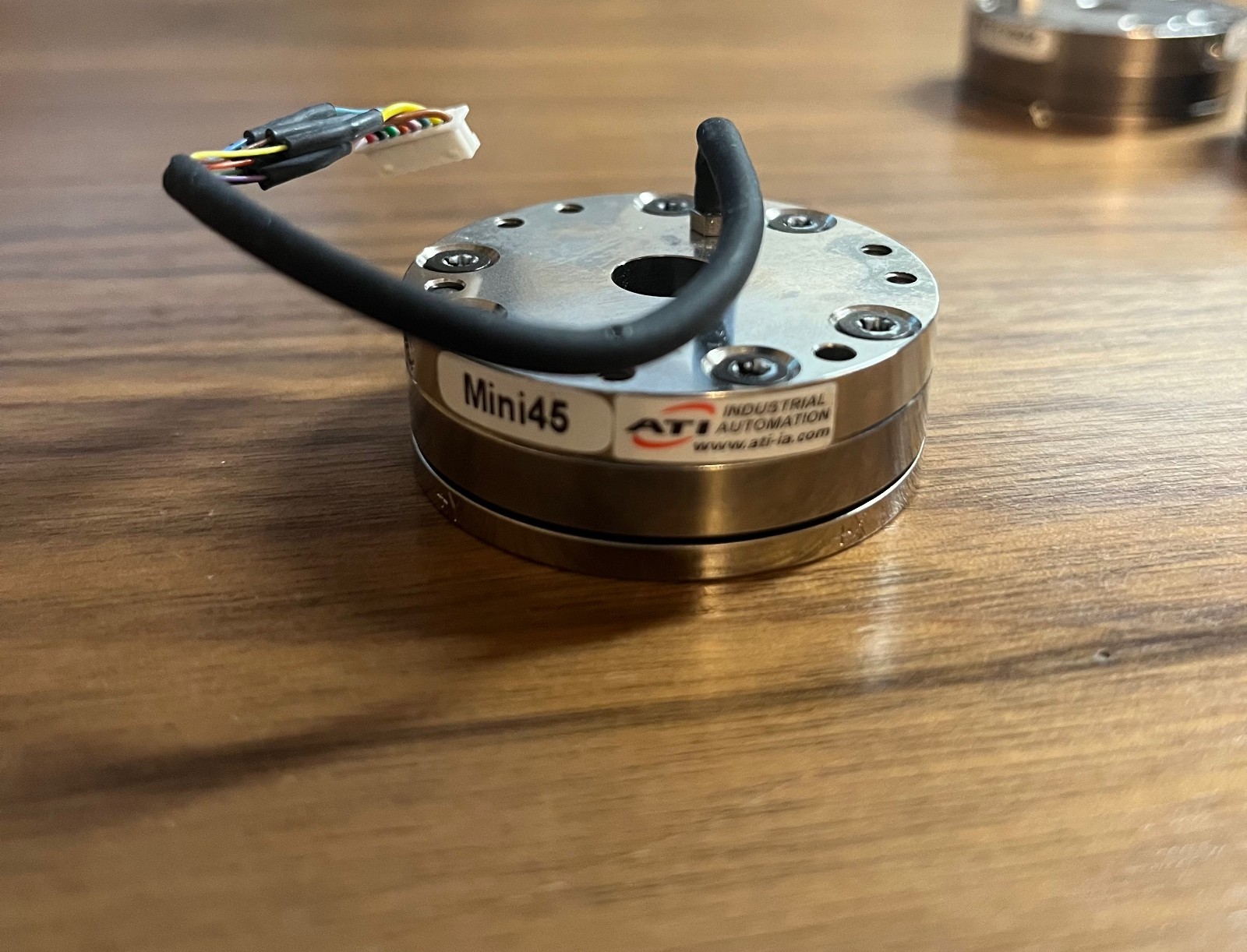
At USD 1,395.00, the ATI Mini45 is the lower-priced unit, and it earns its place when the question is sensing rather than motion. This high-precision force-torque sensor measures forces and torques in X, Y, and Z axes, so a robot arm can detect contact, load, and tool interaction. This ATI Mini45 was removed from working automation and research equipment, shows only minor cosmetic wear, and includes the integrated cable. That gives it a clear reason to choose: it turns an existing robot arm into a system that can feel what it is touching. The limitation is just as clear: it is not an arm. Without a host robot or end effector, the sensor alone can't perform automation tasks, so it only makes sense if you're adding it to a larger setup.
Final choice by use case
Pick the Stäubli RX130-B if your industrial robotics cobot project needs a complete robot arm with Stäubli controls and standard construction. Pick the ATI Mini45 if you need high-precision force-torque feedback on an existing arm or end effector. The two units serve different stages of the same automation workflow: the arm provides the motion, and the sensor provides the touch. Choose the one that fills the gap in your own cell.