When you're evaluating industrial robotics cobots, the first question is often what you'll ask the arm to lift and how precisely it must move. Two six-axis robots sit in the same budget class but take different paths: the Universal Robots UR5e is a compact, force-sensing arm built for medium-duty tasks, while the AUBO i10 is an industrial-oriented arm designed for high-output production. This head-to-head helps you decide which one belongs on your floor.
Quick Verdict
If your work involves delicate assembly, screwdriving, polishing, or laboratory automation, the Universal Robots UR5e is the stronger choice thanks to its integrated force/torque sensor and intuitive touchscreen programming. If your floor deals with welding, packing, or other production tasks that need a robust, easy-to-deploy arm, the AUBO i10 offers a compelling mix of certified safety features and a straightforward industrial design. The real decision point is whether you value finesse or muscle.
At a Glance
Here's how the two robots compare on the specifications that matter:
| Feature | Universal Robots UR5e | AUBO i10 |
|---|---|---|
| Price | USD 21,000 | USD 22,000 |
| Payload | 5 kg | 10 kg |
| Degrees of freedom | 6 rotating joints | 6 DOF |
| Programming | PolyScope touchscreen | Hand guide with safety certifications |
| Notable design | Integrated force/torque sensor | Power and force limiting design |
Both arms are collaborative, meaning they're designed to work alongside people, but the way they achieve that differs.
Where Each Product Wins
Universal Robots UR5e: The finesse pick. The integrated force/torque sensor lets the arm react to resistance, which is essential for consistent insertions, surface finishing, and gentle handling. The compact footprint mounts in any orientation, making it easy to place in tight workspaces. If precision is your priority, the UR5e is the clear winner.
AUBO i10: The industrial-output pick. Certified safety functions and power/force limiting design support safe collaboration on a factory floor. The arm's design targets simple deployment for high-throughput tasks like welding and packing. If you need a robot that can handle demanding repetitive work, the AUBO i10 steps up.
Product Notes
Universal Robots UR5e
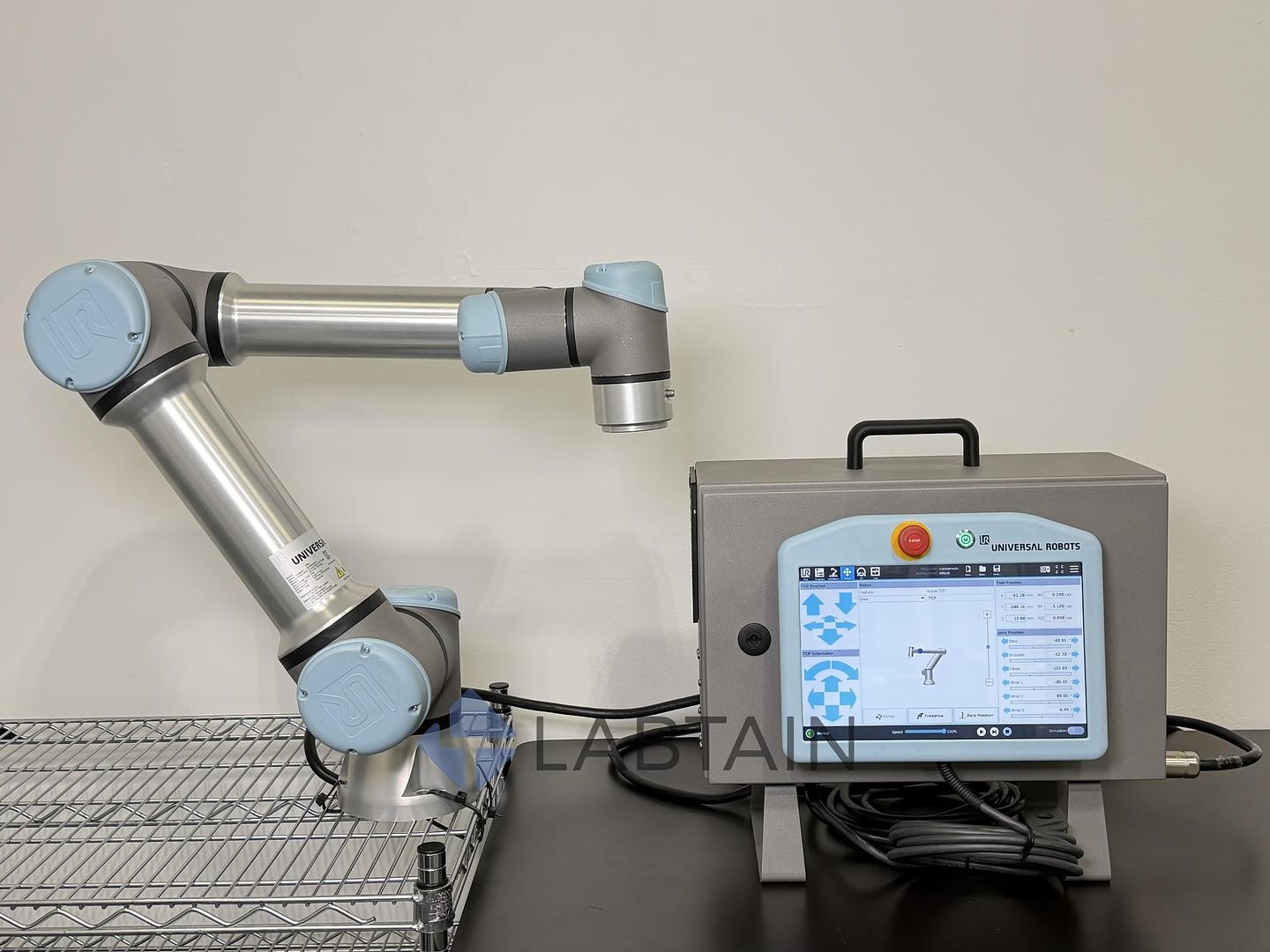
The UR5e pairs a 12-inch PolyScope touchscreen with hand-guided teaching, so you can program waypoints by moving the arm and fine-tuning on-screen. Its integrated 6-axis force/torque sensor gives it a precision edge for tasks like screwdriving, polishing, and laboratory automation. The unit is used and listed with low hours, so it's wise to plan a quick inspection before full production. Choose the UR5e if your jobs center on tactile feedback and you need a compact arm that can be mounted flexibly. Its limitation is the used condition; you'll want to verify that the low hours match your expectations.
AUBO i10
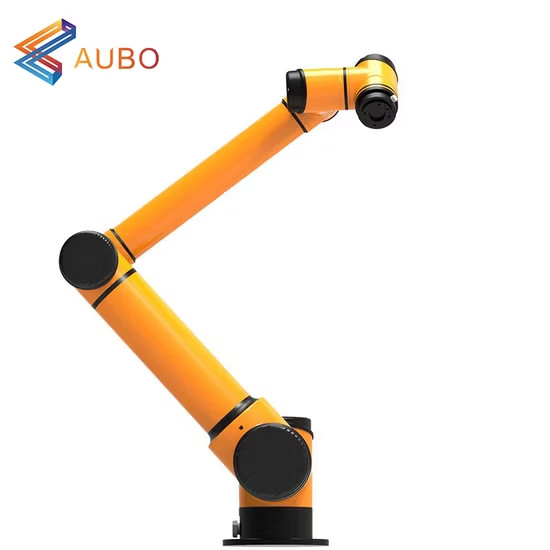
The AUBO i10 arrives as a new open-box unit, which offers the reassurance of a fresh robot without the sealed-package formality. Certified safety functions and a power/force limiting design make it suitable for human-robot collaboration in industrial settings. It's positioned for straightforward applications like welding and packing, where repeatability and safety matter more than force-controlled nuances. Choose the AUBO i10 if you're outfitting a production floor and want a robot that's simple to deploy and certified for safety. Its limitation is that the documentation focuses on heavy-duty use, so if you need delicate precision work, you may find fewer resources to guide you.
Final Choice by Use Case
Select the Universal Robots UR5e if you need up to 5 kg of precision handling for assembly, inspection, or laboratory tasks. Select the AUBO i10 if you need up to 10 kg of lifting capacity for welding, packing, or machine tending on an industrial floor. Your decision comes down to whether payload or finesse drives your daily operations.