Choosing between sensors, modules & components usually comes down to one question: do you want a broad Arduino sensor kit for exploring many projects, or an organized electronics component kit for basic UNO R3 work? The 22-In-1 Starter Kit Sensor Module focuses on variety, while the Electronics Component Basic Kit centers on a breadboard, components, and storage.
Quick verdict
Choose the 22-In-1 Starter Kit Sensor Module With Tutorial For Arduino-Raspberry Pi Durable when the main attraction is its stated 22-sensor package and beginner-oriented project range. Choose the Electronics Component Basic Kit with 830 tie-points Breadboard Resist for UNO R3 when you want a more component-focused setup with a storage case and a clearly stated UNO R3 application. The listed prices are $22.99 and $14.49 respectively, an $8.50 difference.
Compact comparison
| Kit | Listed price | Main focus | Notable listed detail |
|---|---|---|---|
| 22-In-1 Starter Kit Sensor Module | $22.99 | Sensor-module variety | 22 sensors; Arduino-Raspberry Pi wording in title |
| Electronics Component Basic Kit | $14.49 | Basic components and breadboarding | 830 tie-points; Applicable: UNO R3 |
Where each kit wins
The 22-In-1 Starter Kit wins for sensor variety
The strongest reason to pick the 22-In-1 kit is the number of modules: the title and description identify a 22-in-1 sensor package. That makes it the more direct fit for a beginner who wants to move between different sensor-module projects instead of concentrating on a basic component assortment. Its title also names Arduino and Raspberry Pi, which may appeal to shoppers searching for a multi-platform starter package.
The Electronics Component Basic Kit wins for organized UNO R3 projects
The Electronics Component kit is the more focused choice for UNO R3 builds. Its 830 tie-point breadboard is a clear headline feature, and the description adds a white storage case, multicolor signal lamps for distinguishing fittings, and a function sheet printed on the lid. Those details support a tidy, component-led setup rather than a broad sensor collection. Its lower listed price also makes the choice straightforward when the project does not require a 22-sensor package.
Product notes
22-In-1 Starter Kit Sensor Module With Tutorial For Arduino-Raspberry Pi Durable
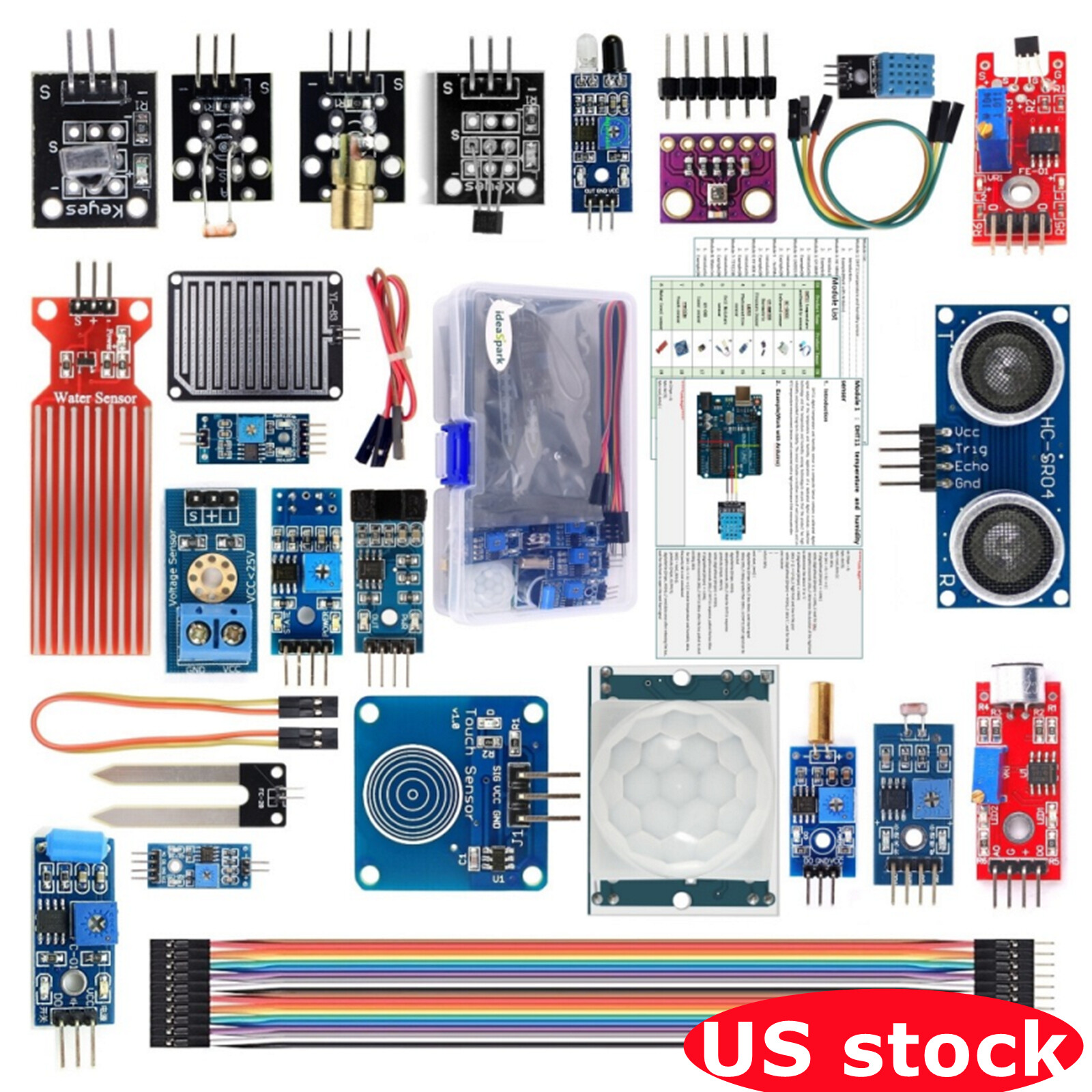
The clearest reason to choose this kit is its stated 22-in-1 sensor package. It is aimed at beginners and is framed around learning projects, so it suits a shopper who wants several sensor-module types in one purchase. The title's Arduino-Raspberry Pi wording also makes the intended maker audience easy to identify. The main limitation is the higher listed price compared with the Electronics Component Basic Kit. That extra cost is tied to the broader 22-module format, so it makes less sense if your immediate need is simply a breadboard and basic components for UNO R3 work. Pick it when variety is the deciding factor; skip it when your project list is already centered on a component kit and breadboarding.
Electronics Component Basic Kit with 830 tie-points Breadboard Resist for UNO R3
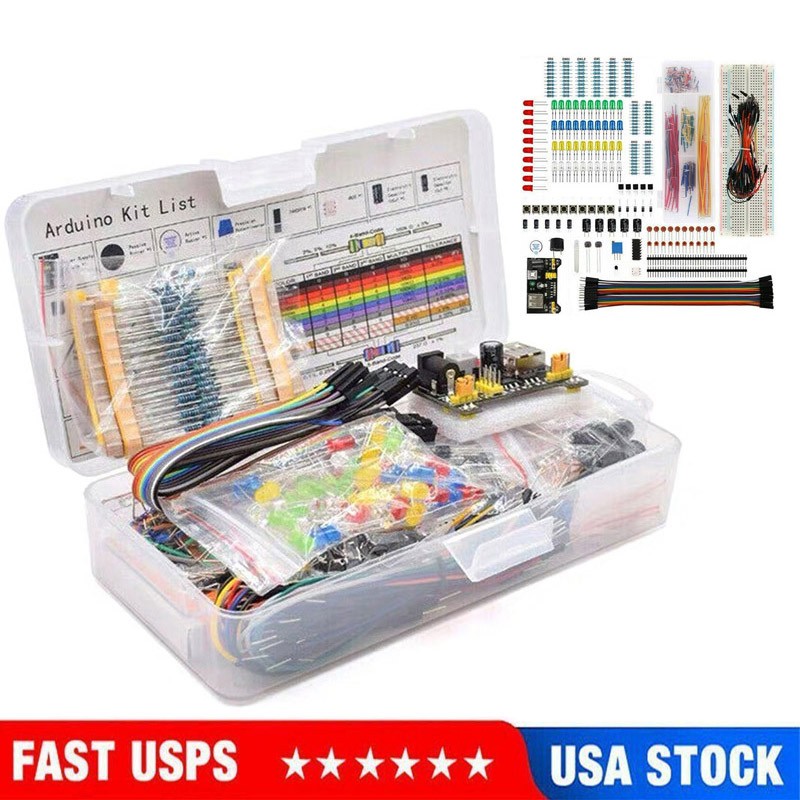
Organization is the standout reason to choose this kit. The title specifies an 830 tie-point breadboard, while the description adds a lightweight white storage case, multicolor signal lamps, and a function sheet printed on the lid. It is also explicitly applicable to UNO R3, giving it a clear target for basic Arduino-style component projects. The limitation is its narrower positioning: shoppers seeking the 22-sensor assortment named by the competing kit may find this component-focused package less directly aligned. Its listed package size is 180 × 85 × 45 mm and its package weight is 290 g, useful details for anyone planning a neatly contained setup rather than a sensor-heavy assortment.
Final choice by use case
- Choose the 22-In-1 Starter Kit for beginner sensor exploration, a multi-module learning package, or projects where the stated 22-sensor count matters most.
- Choose the Electronics Component Basic Kit for UNO R3 projects that need an 830 tie-point breadboard, organized storage, and a component-first setup.
- Choose the Electronics Component Basic Kit for the lower listed price, while accepting that its focus is basic components rather than the rival's sensor-module range.
The decision is therefore practical: the 22-In-1 kit is the broader sensor choice, while the Electronics Component kit is the more focused breadboarding choice.