If you're wiring up a stepper motor, the controller choice often decides how flexible your motion system will be. Two options in the servo stepper motion control space stand out: the SMC05 Stepper Servo Motor Pulse Controller with Forward/Reverse Speed Control and the SMH 42 57 Stepper Motor Controller Forward/Reverse Pulse Delay Positioning Angle. The first offers more interface options and a screen; the second is a straightforward, single-axis controller at a lower listed price.
Quick Verdict
For projects where you want to monitor and adjust on-device, the SMC05 gives you the edge. It supports 20 motion modes, 4 outputs, 4 limit switch inputs, and 3 expansion button interfaces, so it's better suited to builds with multiple sensors or external controls. The SMH 42 57 is the simpler pick: it lists a lower price, stores settings after power off, and accepts DC 6-36V, so it fits focused single-axis jobs.
At a Glance
| Product | Listed Price | Price Level | Key Attributes |
|---|---|---|---|
| SMC05 Stepper Servo Motor Pulse Controller Forward/Reverse Speed Control | USD 28.35 | 20 motion modes, 1.8-inch color screen, 4 outputs, 4 limit switch inputs | |
| SMH 42 57 Stepper Motor Controller Forward/Reverse Pulse Delay Positioning Angle | USD 18.69 | Single-axis, power-off memory, DC 6-36V, two-phase four-wire stepper support |
Where Each One Wins
SMC05 wins if you want a richer control surface. The color screen and silicone keys make it easy to browse motion modes, and the headroom for 4 outputs, 4 limit switch inputs, and 3 expansion button interfaces lets you add external sensors or coordinated signals.
SMH 42 57 wins if you prefer a lower listed price and simpler wiring. Its single-axis design and DC 6-36V range make it a direct fit for dedicated stepper control without extra display or expansion features.
SMC05 Stepper Servo Motor Pulse Controller with Forward/Reverse Speed Control
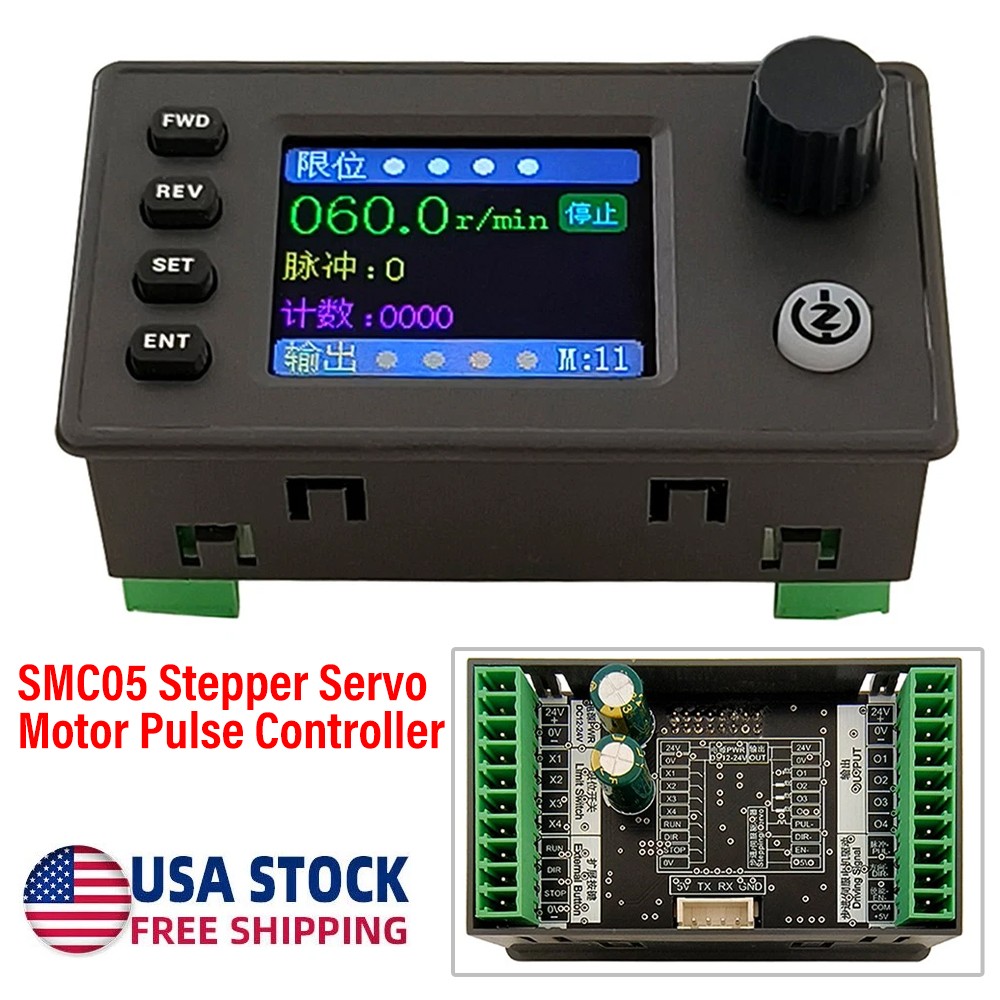
The SMC05 justifies its position at the upper end of the listed range with a more complete control environment. You get 20 motion modes, so common movement patterns are already built in, plus a 1.8-inch HD color screen and silicone keys that make mode selection visible and tactile. For wiring, the controller exposes 4 outputs, 4 limit switch inputs, and 3 expansion button interfaces, which is a strong fit for a machine with multiple sensors or override buttons. It also supports remote firmware upgrades, which can be useful if you want to adjust behavior later. The compromise is that it runs on 12-24V, so your power supply needs to land in that window. If your build already has a 12V or 24V rail, the SMC05 is the one to choose.
SMH 42 57 Stepper Motor Controller Forward/Reverse Pulse Delay Positioning Angle
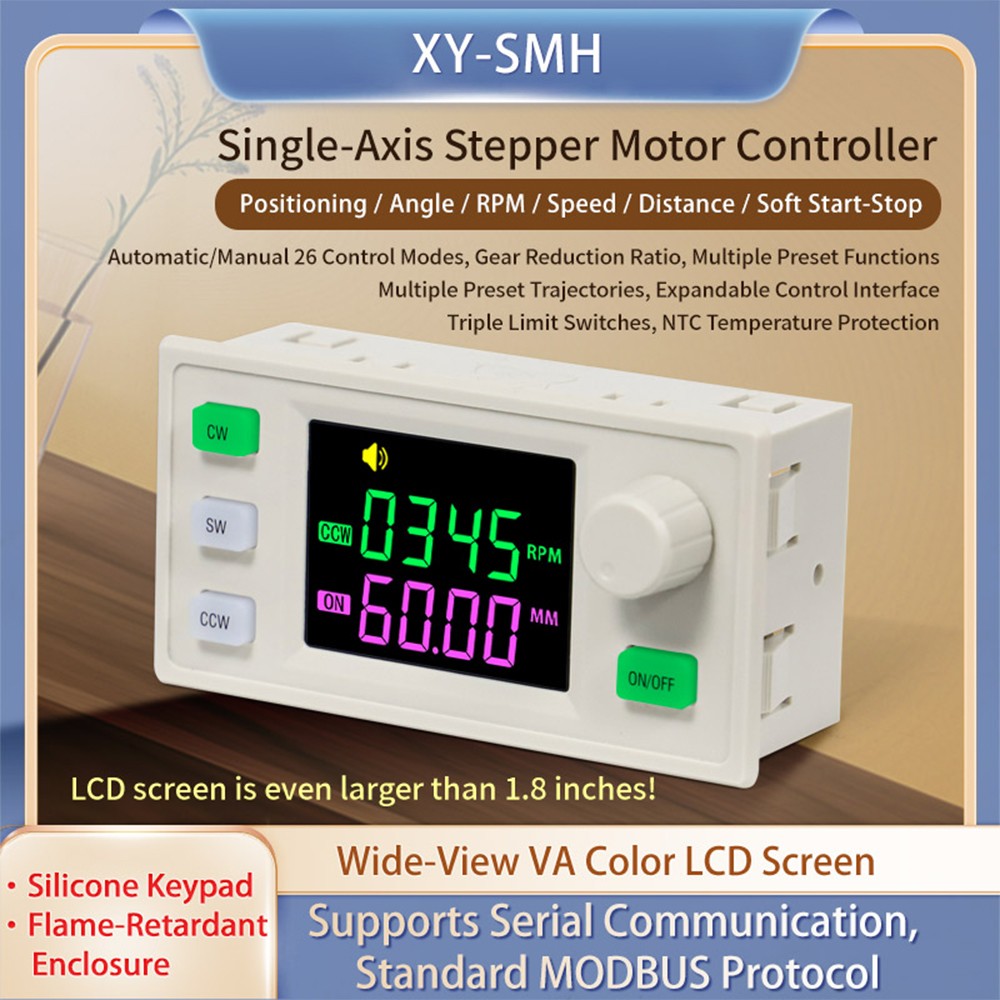
The SMH 42 57 takes a more minimal approach. It is explicitly a single-axis controller, which keeps the wiring and programming focused on one motor at a time. You still get forward/reverse pulse control and positioning angle, plus acceleration/deceleration support. The built-in memory function means settings can survive a power loss and pick up where you left off after restart. Its DC 6-36V input range is wider than the SMC05's, so it can work with lower-voltage supplies. The trade-off is that you don't get the color screen or the extra button interfaces, so setup is more about setting the pulse pattern than browsing a menu. For a straightforward two-phase four-wire stepper project, this controller is the more economical entry point.
Final Choice by Use Case
If you're building a machine with multiple limit switches, buttons, and the desire to see motion modes on a screen, the SMC05 is the better match. If you need one dependable axis at a lower listed price and can live without a display, the SMH 42 57 gets the job done. Both controllers handle forward/reverse, so the real decision is interface complexity versus simplicity.