Choosing between sensors, modules & components comes down to project scope: do you want a broad starting point for learning and experimenting, or a focused module for measuring distance? The 22-In-1 Starter Kit Sensor Module and BTLIFE TFS20-L Miniature LiDAR Sensor Module serve very different roles, so the right pick depends more on your build than on the price gap.
Quick verdict
Choose the 22-In-1 Starter Kit Sensor Module for broad, beginner-oriented Arduino and Raspberry Pi projects. Choose the BTLIFE TFS20-L Miniature LiDAR Sensor Module when the build has a defined distance-measurement job and needs a single-point LiDAR design. The starter kit is the broader learning route; the TFS20-L is the more specialized route.
Price and focus
| Product | Listed price | Listed focus |
|---|---|---|
| 22-In-1 Starter Kit Sensor Module | USD 22.99 | Beginner sensor learning package for Arduino and Raspberry Pi; 22 sensor modules |
| BTLIFE TFS20-L Miniature LiDAR Sensor Module | USD 30.62 | Single-point distance measurement with UART, IIC, and I2C specifications |
The absolute price spread is $7.63, with the starter kit at the lower listed price. That difference is modest compared with the change in purpose: one package emphasizes variety, while the other centers on LiDAR ranging.
Where each product wins
The starter kit wins for learning breadth
For broad, beginner-led experimentation, the 22-In-1 Starter Kit Sensor Module has the clearer role. Its description frames it as a learning package with multiple project designs and names Arduino, Raspberry Pi, and STM32 projects. That gives it more starting points for someone exploring electronic components kit ideas rather than building around one sensor function.
The TFS20-L wins for focused ranging
For a defined ranging job, the BTLIFE TFS20-L Miniature LiDAR Sensor Module has the clearer role. It is identified as a single-point LiDAR and distance measurement module, with UART, IIC, and I2C specifications. Its TFS20-L specification also states a 20-meter range, while the description names drone applications, giving the module a specific project direction.
Product notes
22-In-1 Starter Kit Sensor Module
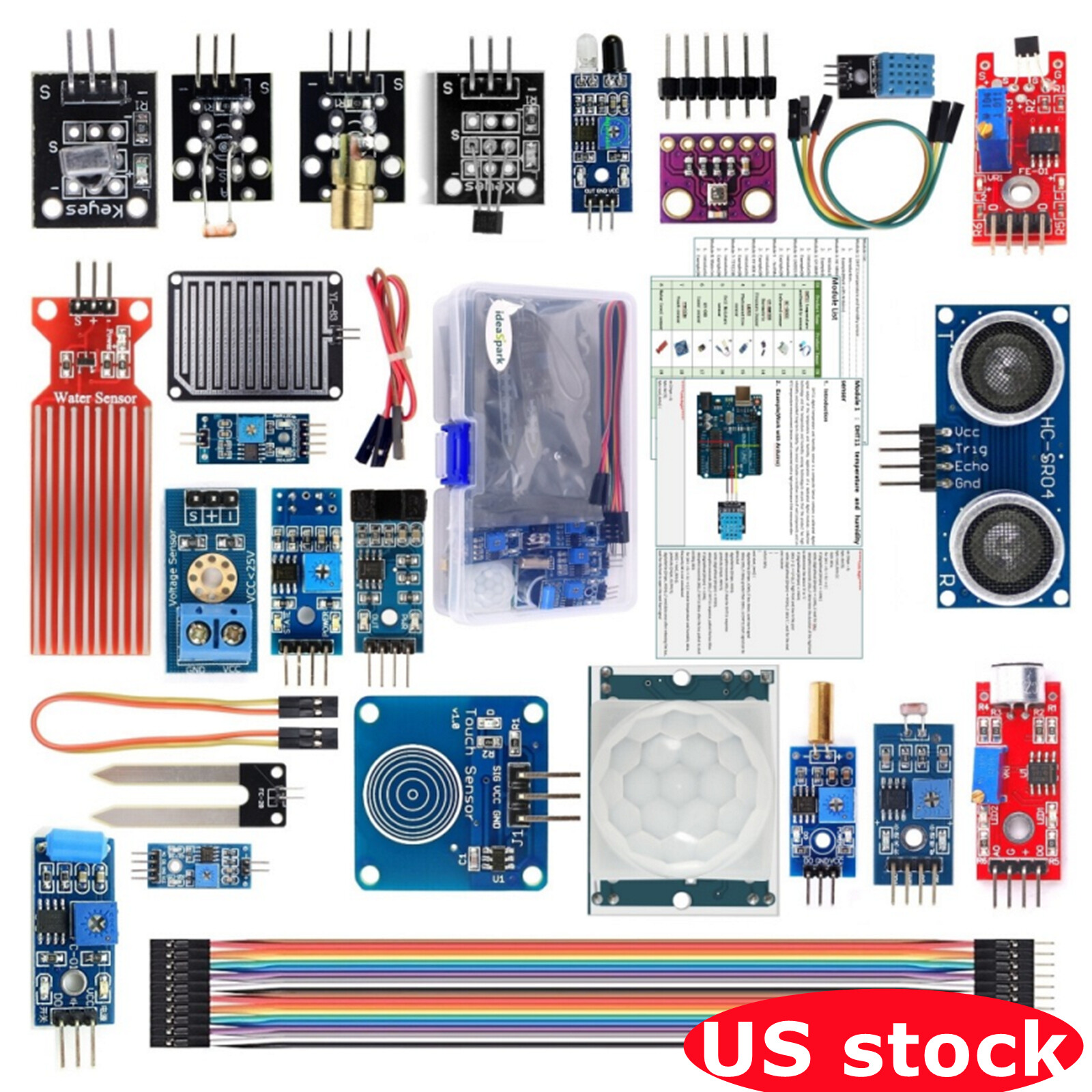
The 22-In-1 Starter Kit Sensor Module is the more natural pick when the project is still exploratory. Its description centers on a beginner learning package for Arduino and Raspberry Pi, with a collection of sensor modules intended for multiple project designs; that breadth is the concrete reason to choose it over a dedicated ranging part. It is described for Arduino, Raspberry Pi, and STM32 projects. The trade-off is focus: a broad starter kit is less direct when the build needs one defined distance-measurement function or a UART/IIC/I2C LiDAR interface. Choose the kit for experimentation, not for a narrowly specified ranging task.
BTLIFE-UART IIC I2C Miniature LiDAR Sensor Module TFS20-L
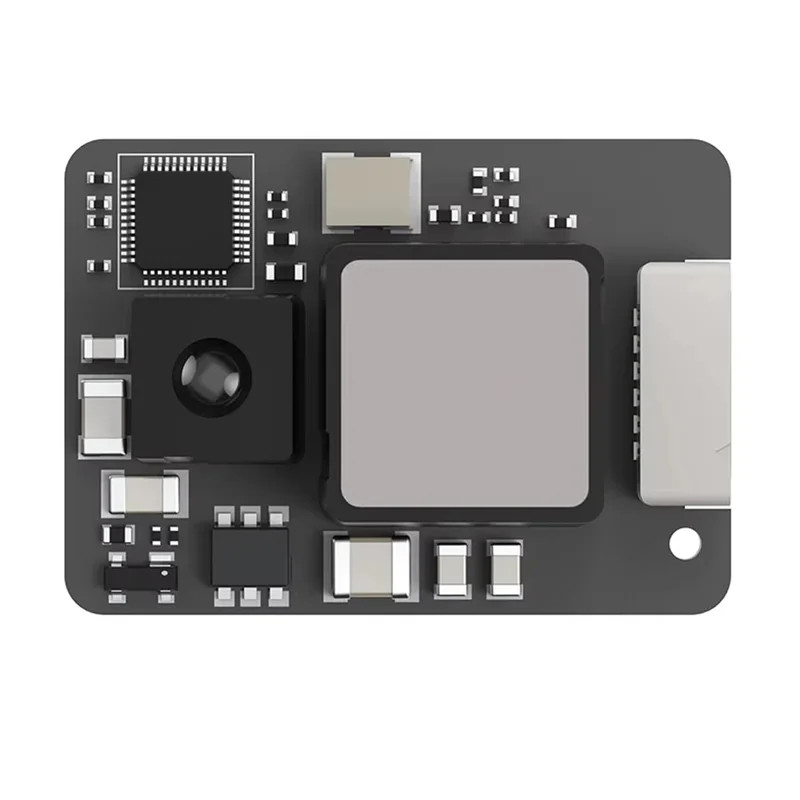
BTLIFE-UART IIC I2C Miniature LiDAR Sensor Module TFS20-L makes sense when distance measurement is the actual assignment. The description identifies a compact, integrated dToF ranging module with high-precision distance measurement, sunlight resistance described at 15m@100Klux, and reflectivity correction. Those details give it a focused technical role rather than a general assortment of experiments. Its limitation is scope: the single-channel, single-point design does not offer the breadth of a starter-kit package. It also carries the higher listed price, USD 30.62 versus USD 22.99 for the kit, a $7.63 spread. Pick it when a defined ranging module matters more than variety.
Final choice by use case
- For a beginner building several Arduino or Raspberry Pi experiments: choose the 22-In-1 Starter Kit Sensor Module. Its beginner learning-package description and multi-project emphasis fit an exploratory path.
- For a distance-measurement build: choose the BTLIFE TFS20-L Miniature LiDAR Sensor Module. Its single-point LiDAR, UART/IIC/I2C, and distance-measurement specifications align with a focused ranging task.
- For a drone-oriented application: the TFS20-L is the more directly described match because drone use appears among its listed applications.
The decision is straightforward: select the starter-kit format for breadth, or choose the TFS20-L when the project specifically calls for LiDAR distance measurement.