Choosing among sensors, modules & components starts with a practical fork: do you want a project-oriented set of sensor modules, or a broad assortment of individual electronic parts? The 22-In-1 Starter Kit points toward board-based sensor experiments, while the 1390PCS Electronic Components Kit is organized around LEDs, resistors, and capacitors. The right choice depends more on your next build than on the relatively small price difference.
Quick verdict
Choose the 22-In-1 Starter Kit Sensor Module at USD 22.99 if your projects center on Arduino or Raspberry Pi sensor experiments. Choose the Electronic Components Kit 1390PCS at USD 18.05 if you need many discrete parts and values for circuit assembly. The listed-price gap is $4.94, so matching the kit format to your project should come first.
At a glance
| Decision point | 22-In-1 Sensor Module Kit | 1390PCS Components Kit |
|---|---|---|
| Listed price | USD 22.99 | USD 18.05 |
| Primary format | 22 sensor modules | 1390PCS electronic components |
| Main project direction | Arduino-Raspberry Pi sensor work | LED, resistor, and capacitor projects |
| Distinguishing detail | Also named for STM32 use | Five LED colors and multiple capacitor types |
Where each kit wins
- 22-In-1 Starter Kit: The stronger match when you want a defined collection of modules for learning and experimenting with a board-based project. Its format keeps the focus on sensor functions rather than on sorting through individual component values.
- Electronic Components Kit 1390PCS: The better fit when flexibility means having several electronic part categories on hand. Its assortment is designed around choosing components by type and value, not around a fixed sensor-module project path.
Product notes
22-In-1 Starter Kit Sensor Module for Arduino-Raspberry Pi
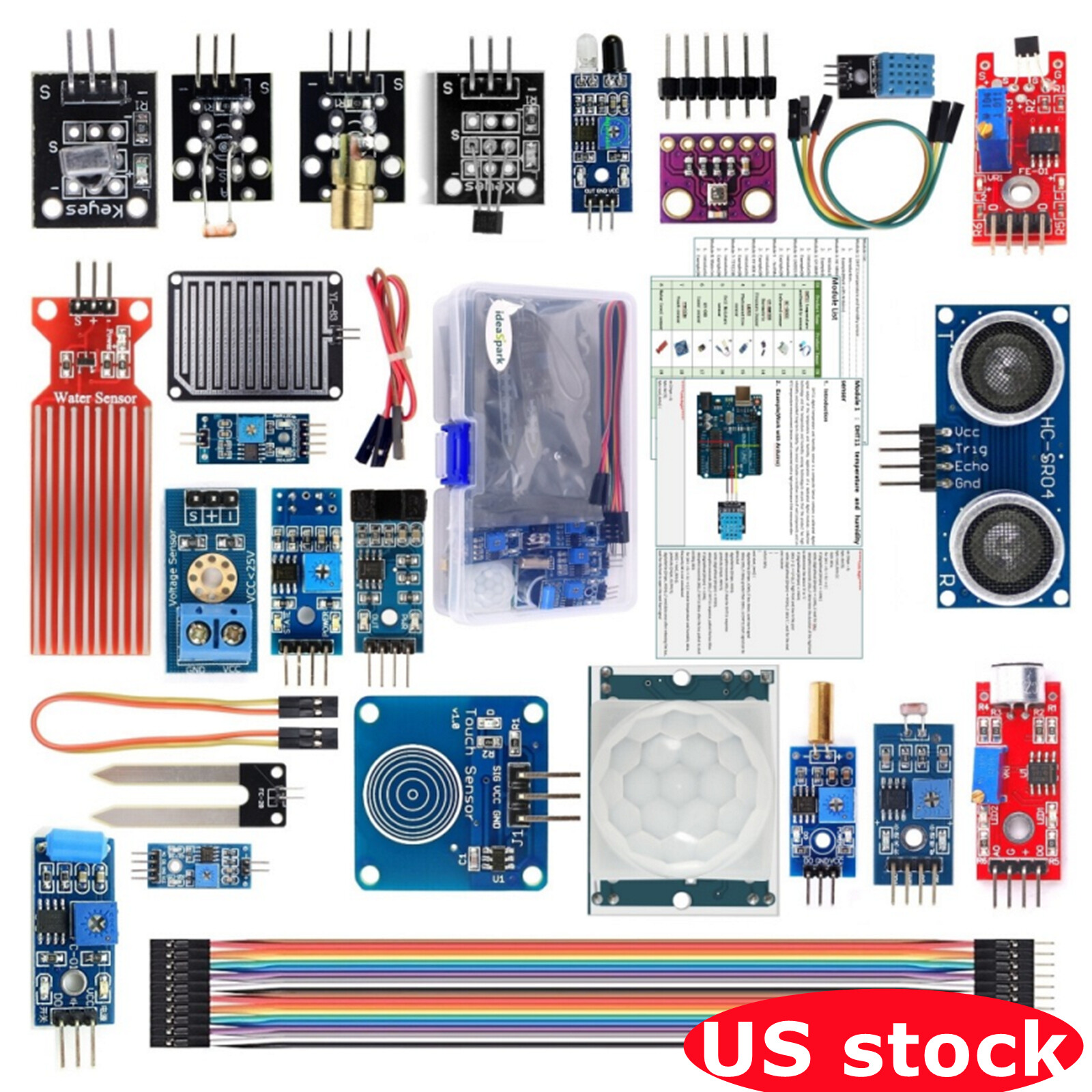
Choose the 22-In-1 Starter Kit Sensor Module for Arduino-Raspberry Pi when you want a project-oriented sensor assortment instead of a drawer of individual parts. Its 22-module format is the clearest reason to pick it, and the package is framed for beginner learning across Arduino, Raspberry Pi, and STM32. That platform focus gives the kit a defined direction for board-based experiments. The practical limitation is guidance: no instructions or manuals are included, so the "With Tutorial" wording should not be treated as an included guide. That matters if you want packaged walkthroughs alongside the hardware. For a shopper comfortable using separate learning resources, the sensor-module format is straightforward; for a parts-restocking task, its focus is less aligned.
Electronic Components Kit 1390PCS LED Diodes, Resistors & Capacitors
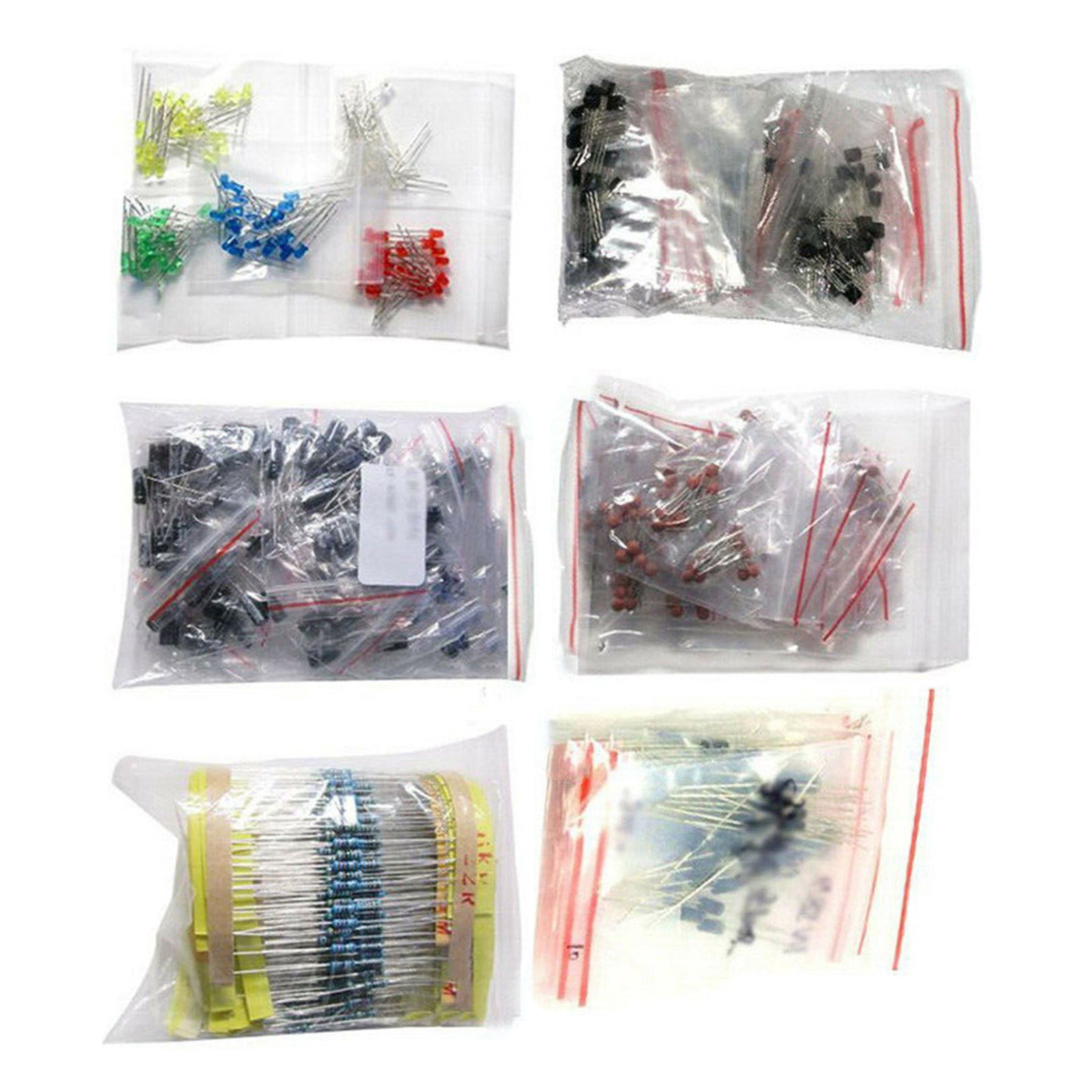
Choose the Electronic Components Kit 1390PCS LED Diodes, Resistors & Capacitors when the next build depends on having multiple discrete values ready to sort. Its assortment specifies five LED colors, 600 1/4W resistors across 30 values, 120 electrolytic capacitors, and 30 kinds of ceramic capacitors. Those concrete categories make it a clear match for circuit assembly, prototyping, and selecting individual components. The limitation is its emphasis: the named contents focus on electronic parts rather than the sensor-module learning format of the competing kit. That makes it less direct for a project brief centered on modules. It is the sensible route when the component mix itself is the priority, particularly for a shopper choosing parts by type, color, or value.
Final choice by use case
- Arduino, Raspberry Pi, or STM32 sensor experiments: Choose the 22-In-1 Starter Kit, whose title and package description center on sensor modules for those platforms.
- LED, resistor, and capacitor work: Choose the 1390PCS Components Kit, with its five LED colors, 30 resistor values, and two capacitor categories.
- A mixed project list: Start with the kit whose named contents match the first parts your project requires. The $4.94 price spread is less important than choosing between a sensor-module package and a discrete-component assortment.