When you're choosing sensors, modules & components, the main decision is breadth versus focus. Do you want a beginner-oriented package with many modules to explore, or a dedicated motion sensor for a clearly defined Arduino build? The 22-In-1 Starter Kit and the MPU9250 module take very different approaches, so the right choice depends more on your project scope than on price alone.
Quick verdict
Choose the 22-In-1 Starter Kit Sensor Module if you want a broad learning package for Arduino, Raspberry Pi, and STM32 projects. Choose the MPU9250 9DOF Axis I2C Acceleration Gyroscope Compass Sensor Module Shield USA GA if your build specifically calls for a nine-axis motion sensor with I2C or SPI. The listed prices differ by $7.41, giving the focused module the lower entry price while the kit covers a wider range of experiments.
Compact comparison
| Decision point | 22-In-1 Starter Kit | MPU9250 Module |
|---|---|---|
| Listed price | USD 22.99 | USD 15.58 |
| Stated scope | 22 sensor modules | 9DOF motion sensor |
| Platform or connection details | Arduino, Raspberry Pi, and STM32 | I2C and SPI |
Where each product wins
The 22-In-1 kit wins for exploration
This kit is the more natural match for a beginner who wants to sample different electronics projects instead of building around one sensing task. Its stated Arduino, Raspberry Pi, and STM32 coverage also gives it a wider platform brief. The broad format is useful when the project idea is still evolving and experimentation is part of the goal.
The MPU9250 wins for a defined motion project
The MPU9250 is the clearer fit when the required job involves acceleration, gyroscope readings, and compass data. Its stated I2C and SPI interfaces give a project two connection approaches to work with. That focused role makes it easier to match the module to a build that already has a specific motion-sensing requirement.
Product notes
22-In-1 Starter Kit Sensor Module
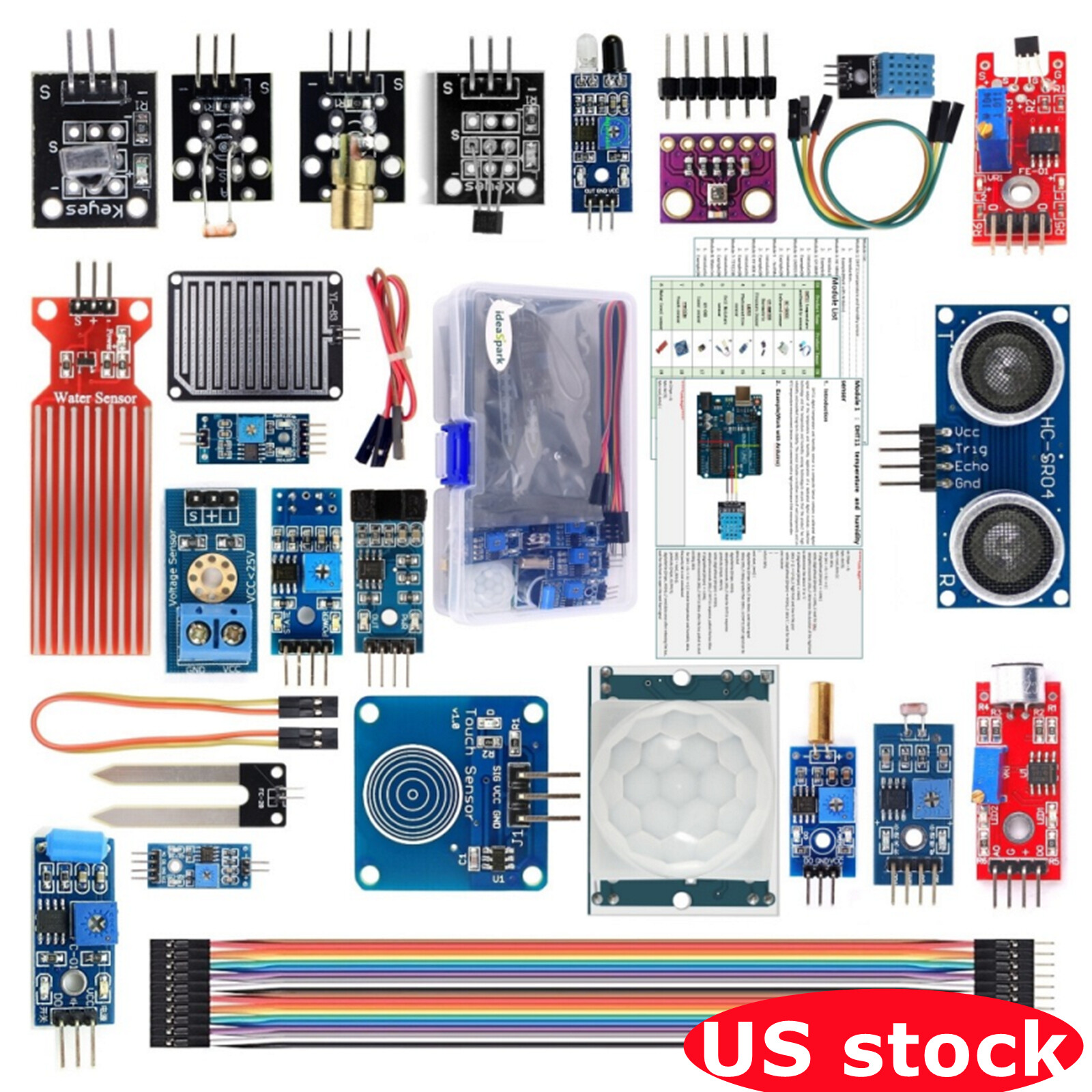
The 22-In-1 Starter Kit Sensor Module makes the most sense when variety is the priority. Its description identifies a package containing 22 sensor modules, creating room for beginner projects across several types of experiments rather than committing to one sensor function. The starter-kit wording also fits shoppers who want a learning package instead of a single board. The limitation is focus: for a build centered on one defined motion-sensing task, that broad collection may include more scope than necessary. Its higher listed price also requires a stronger reason to want the wider package. Choose it when exploring multiple electronics ideas matters more than keeping the setup narrowly tailored.
MPU9250 9DOF I2C Sensor Module
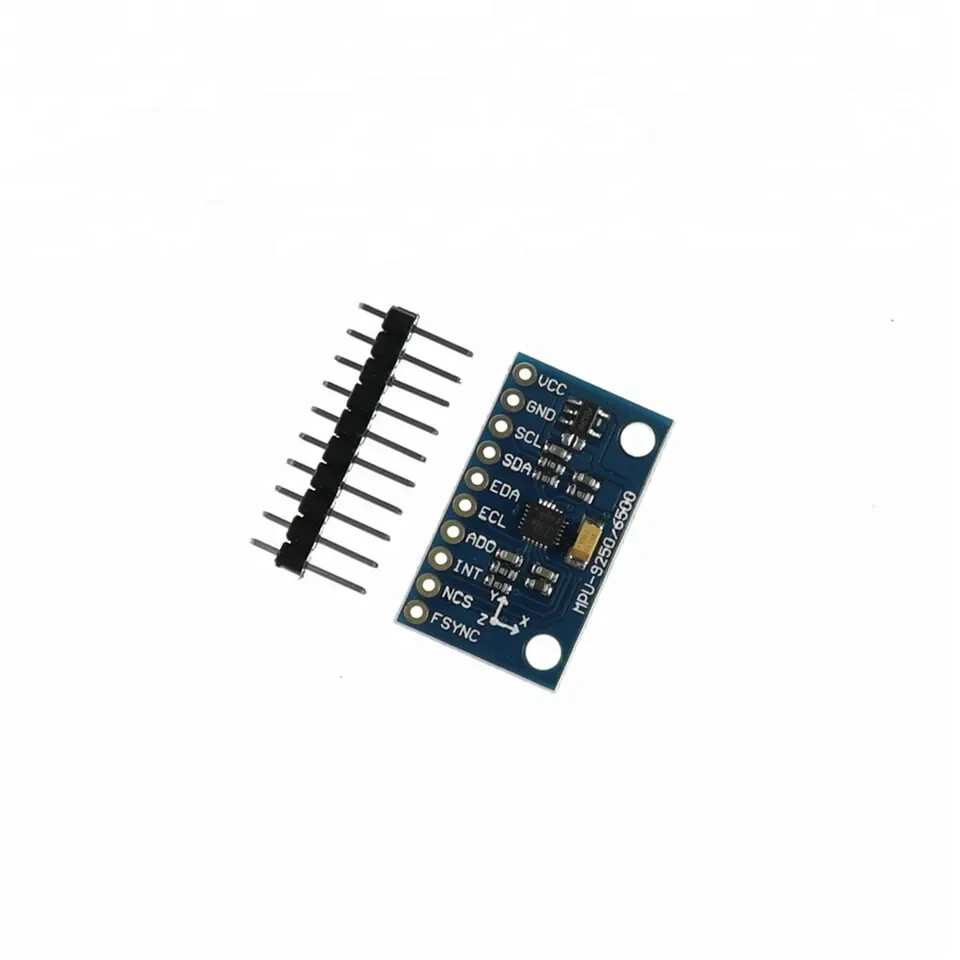
The MPU9250 9DOF I2C Sensor Module suits a clearly defined motion-sensing brief. It combines a 3-axis accelerometer, 3-axis gyroscope, and 3-axis magnetometer, so the module directly addresses projects needing those three types of input. The named I2C and SPI interfaces further clarify how it fits into a connected electronics build. Its limitation is scope: it centers on one MPU9250 sensor module rather than offering the broad starter-package approach of the 22-In-1 kit. That makes it less suitable for a beginner who wants to try many unrelated sensor projects. Pick it when the project requirements already point to acceleration, gyroscope, and compass functions.
Final choice by use case
- For beginner exploration: Choose the 22-In-1 Starter Kit Sensor Module. The starter-kit format and Arduino, Raspberry Pi, and STM32 scope align with a multi-project learning plan.
- For motion and orientation sensing: Choose the MPU9250 9DOF Axis I2C Acceleration Gyroscope Compass Sensor Module Shield USA GA. Its named sensor functions directly match a focused motion build.
- For the lower listed price: Choose the MPU9250 module, priced at USD 15.58 rather than USD 22.99.
- For the broader project brief: Choose the 22-In-1 kit, provided its multi-module scope is more useful to you than a dedicated motion sensor.