Choosing among sensors, modules & components can mean deciding between two very different project paths: a specialized muscle-signal setup at USD 89.99 or an Arduino voltage-sensing module at USD 16.38. The useful question is not which one has Arduino in its title, but which electrical signal your project needs to read.
Quick verdict
Choose SparkFun MyoWare 2.0 Muscle Sensor EMG Kit for muscle electrical activity, gesture control, wearables, prosthetics projects, or physiology labs. Its snap-together design also suits builds where avoiding soldering matters.
Choose the 0-25V Voltage Sensor Module for Arduino for voltage detection in Arduino DIY projects, smart robotics, and other electronic building blocks. It is the more direct match for a conventional voltage-measurement task.
Listed comparison
| Product | Listed price | Primary fit | Notable listed detail |
|---|---|---|---|
| SparkFun MyoWare 2.0 Muscle Sensor EMG Kit | USD 89.99 | Muscle electrical activity | Snap-together sensor and shield ecosystem |
| 0-25V Voltage Sensor Module for Arduino | USD 16.38 | Voltage detection | Stated input range of 0.02445V to 25V |
The listed prices differ by USD 73.61, but the larger distinction is purpose: EMG sensing versus voltage measurement.
Where each product wins
- SparkFun MyoWare 2.0 wins for specialized human-signal projects. The description specifically names biomedical engineering, prosthetics, gesture control, wearables, and physiology labs, giving it a clear role beyond general electronics experiments.
- The 0-25V Voltage Sensor Module wins for straightforward Arduino measurement work. Its stated voltage-detection range and focus on smart robotics make it easier to match to projects built around monitoring electrical potential.
- SparkFun MyoWare 2.0 wins for a no-solder assembly approach. The snap-together design is a concrete convenience when a project uses its intended sensor ecosystem.
Product notes
SparkFun MyoWare 2.0 Muscle Sensor EMG Kit
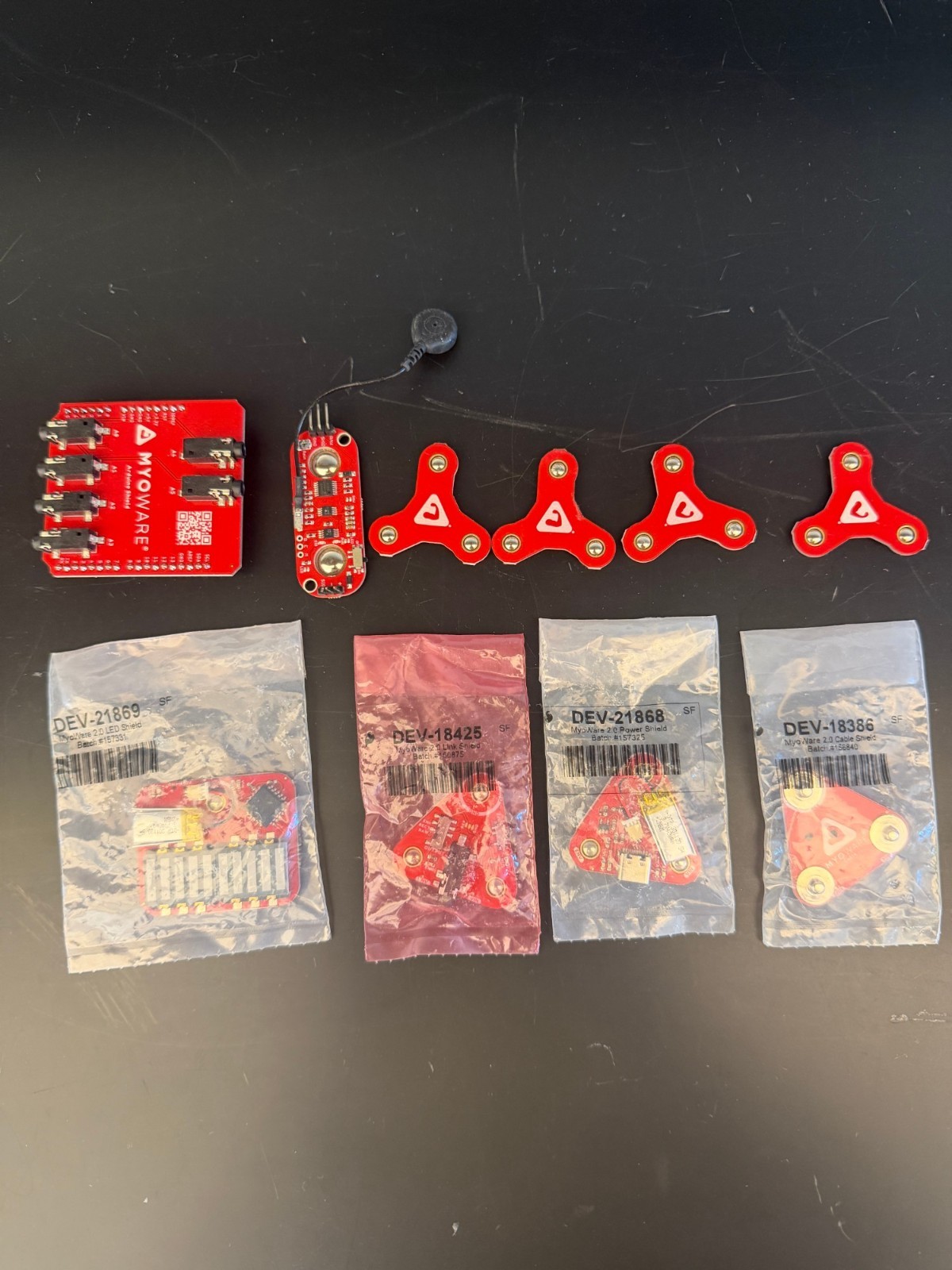
SparkFun MyoWare 2.0 is the focused choice when a project needs to read muscle electrical activity. Its named applications-biomedical engineering, prosthetics, gesture control, wearables, and physiology labs-make the intended role clear. The package centers on a MyoWare 2.0 Muscle Sensor with electrode cable and an Arduino Shield with 3.5mm TRS jacks. Four red triangular snap boards, along with LED, Link, Power, and Cable Shields, extend the setup around that sensor. The snap-together design is a practical reason to choose it when solder-free assembly is important. The limitation is specialization: the kit is built around EMG work, so it is not the natural choice for a project whose main requirement is ordinary voltage measurement.
0-25V Voltage Sensor Module for Arduino
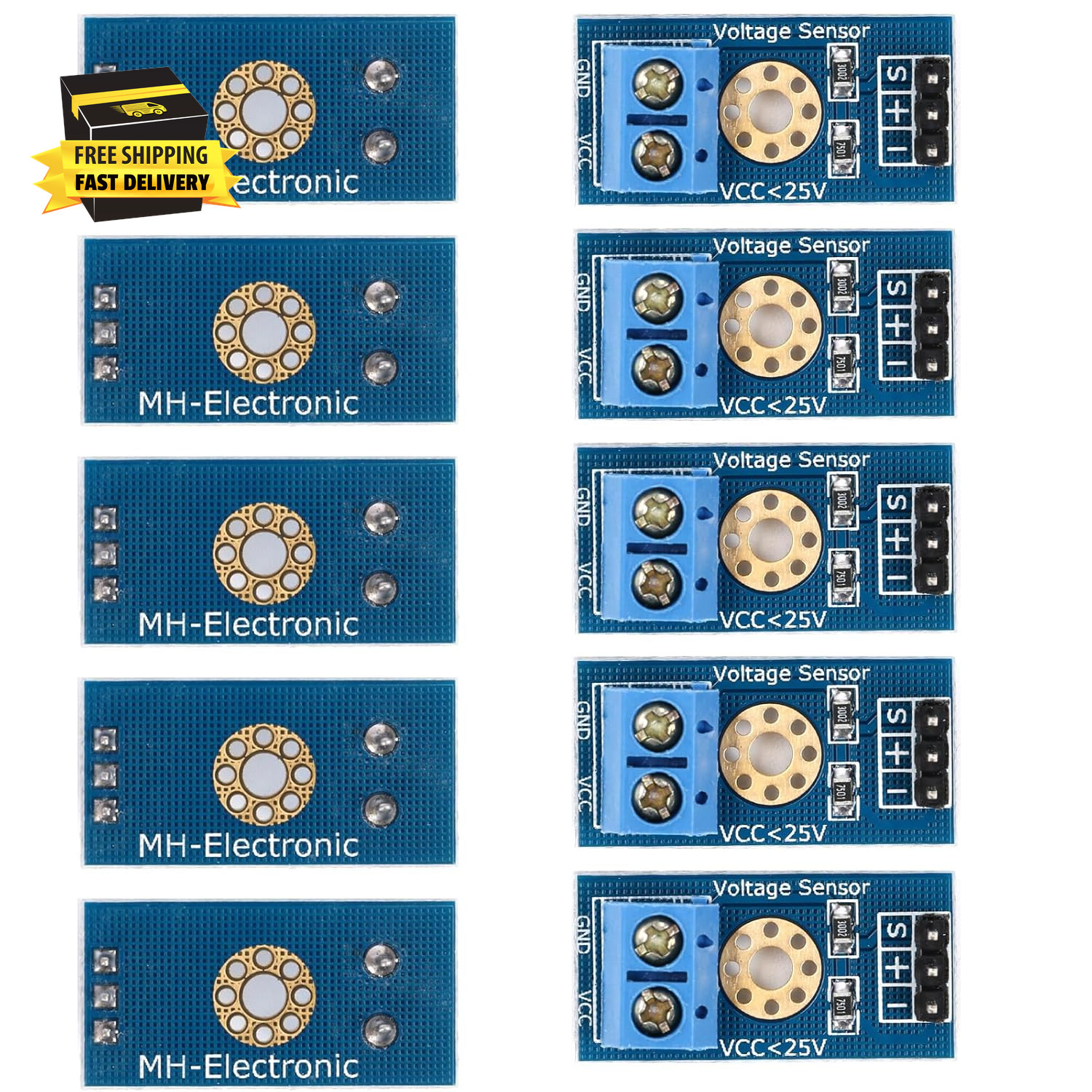
The 0-25V Voltage Sensor Module for Arduino is the direct fit for DIY builds that need voltage detection. Its description gives an input range of 0.02445V to 25V and a listed resolution of 0.00489V, useful reference points when defining a measurement task. The title also clearly places it in Arduino projects, while the description mentions smart robotics and other electronic building blocks. That focused role is the main reason to choose it over an EMG-oriented assembly. The limitation is specific to its stated operating range: the project should fit within 0.02445V to 25V. Its described purpose centers on voltage detection rather than the electrode-and-shield ecosystem associated with muscle-signal work.
Final choice by use case
- Muscle electrical activity, gesture control, wearables, prosthetics, or physiology labs: choose SparkFun MyoWare 2.0 Muscle Sensor EMG Kit.
- Arduino DIY projects, smart robotics, and voltage detection: choose the 0-25V Voltage Sensor Module for Arduino.
- A solder-free, snap-together sensor build: choose SparkFun MyoWare 2.0, whose listed design supports that assembly style.
- A project defined by a voltage range up to 25V: choose the 0-25V Voltage Sensor Module for Arduino, provided the electrical task fits its stated range.