Shopping for sensors, modules & components can split your choice between a focused project tool and a broad experimentation kit. The key question is whether you already know the kind of signal you want to read or would rather have several module types to learn from. SparkFun MyoWare 2.0 Muscle Sensor EMG Kit and Upgraded 37 in 1 Sensor Modules Kit serve those different starting points.
Quick verdict
Choose SparkFun when a project has a defined muscle-sensing goal and its listed applications fit. Choose Upgraded when a wider Arduino learning path matters more. The absolute listed-price spread is $23.09: SparkFun is $89.99 and Upgraded is $66.90. The decision is therefore focused sensing versus variety, not simply the higher or lower number.
At a glance
| Kit | Listed price | Decision cue |
|---|---|---|
| SparkFun MyoWare 2.0 Muscle Sensor EMG Kit | USD 89.99 | Purpose-built muscle-sensing setup |
| Upgraded 37 in 1 Sensor Modules Kit | USD 66.90 | 37-component Arduino module assortment |
Where each product wins
SparkFun wins for a focused build
The snap-together design is the deciding edge when assembly simplicity matters. Its sensor-and-shield arrangement gives a project a defined route instead of asking the buyer to choose among many unrelated module types.
Upgraded wins for guided variety
The concrete advantage is the mix of named modules-GY-521, LCD1602, and DS1307-alongside tutorial support for common Arduino boards. That makes it easier to connect one purchase to several small project ideas.
Product notes
SparkFun MyoWare 2.0 Muscle Sensor EMG Kit
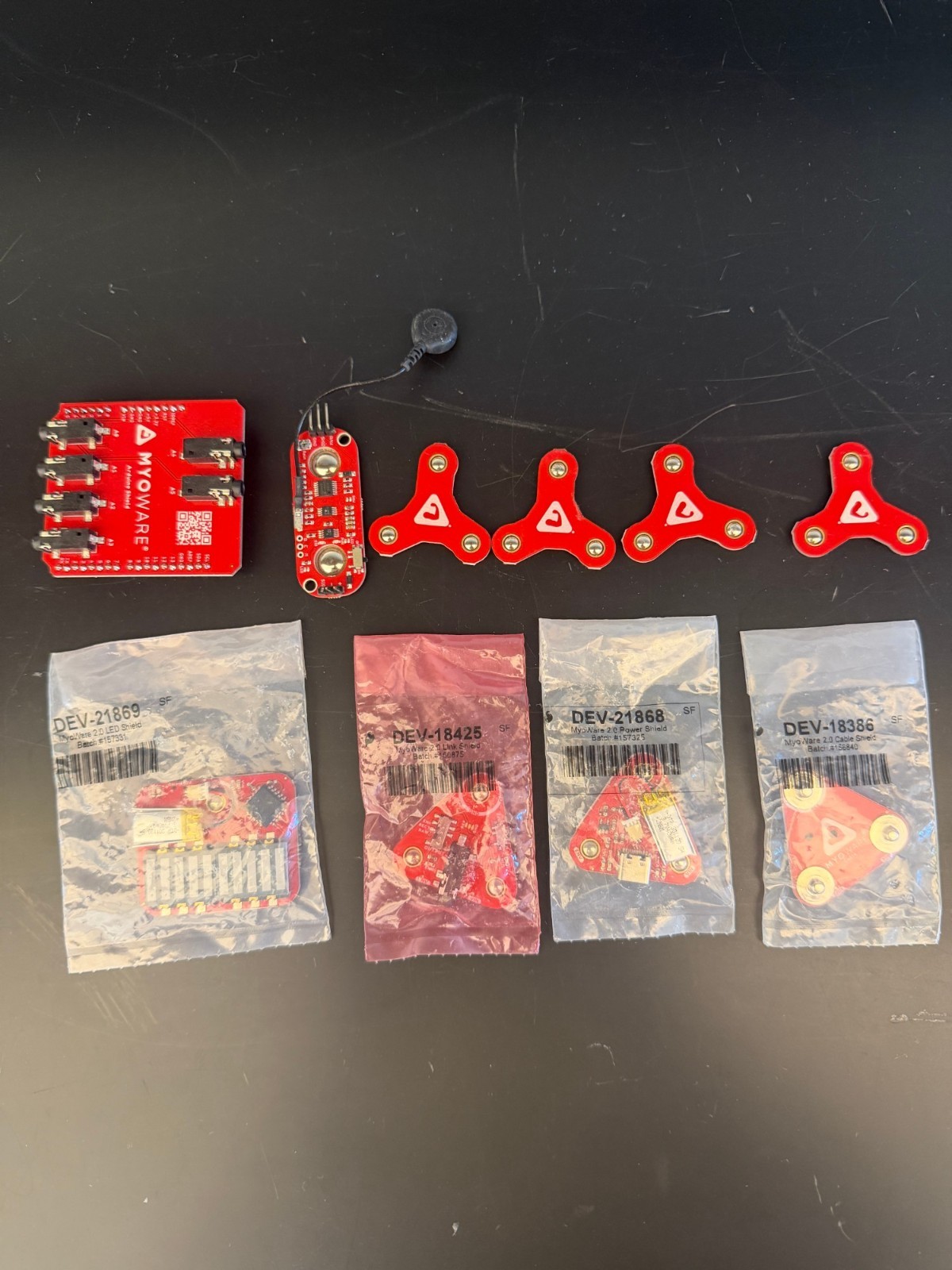
The SparkFun kit earns its place when a project needs a purpose-built route into muscle electrical activity. The package combines the MyoWare 2.0 sensor and electrode cable with an Arduino shield, four triangular snap boards, and LED, Link, Power, and Cable shields. The snap-together design means no soldering, a concrete advantage for assembling the listed setup. Its applications include biomedical engineering, prosthetics, gesture control, wearables, and physiology labs, so the intended project direction is unusually clear. The limitation is scope: the contents revolve around one EMG ecosystem, making it a narrower match for general module exploration. A defined physiological build is its clearest use case.
Upgraded 37 in 1 Sensor Modules Kit
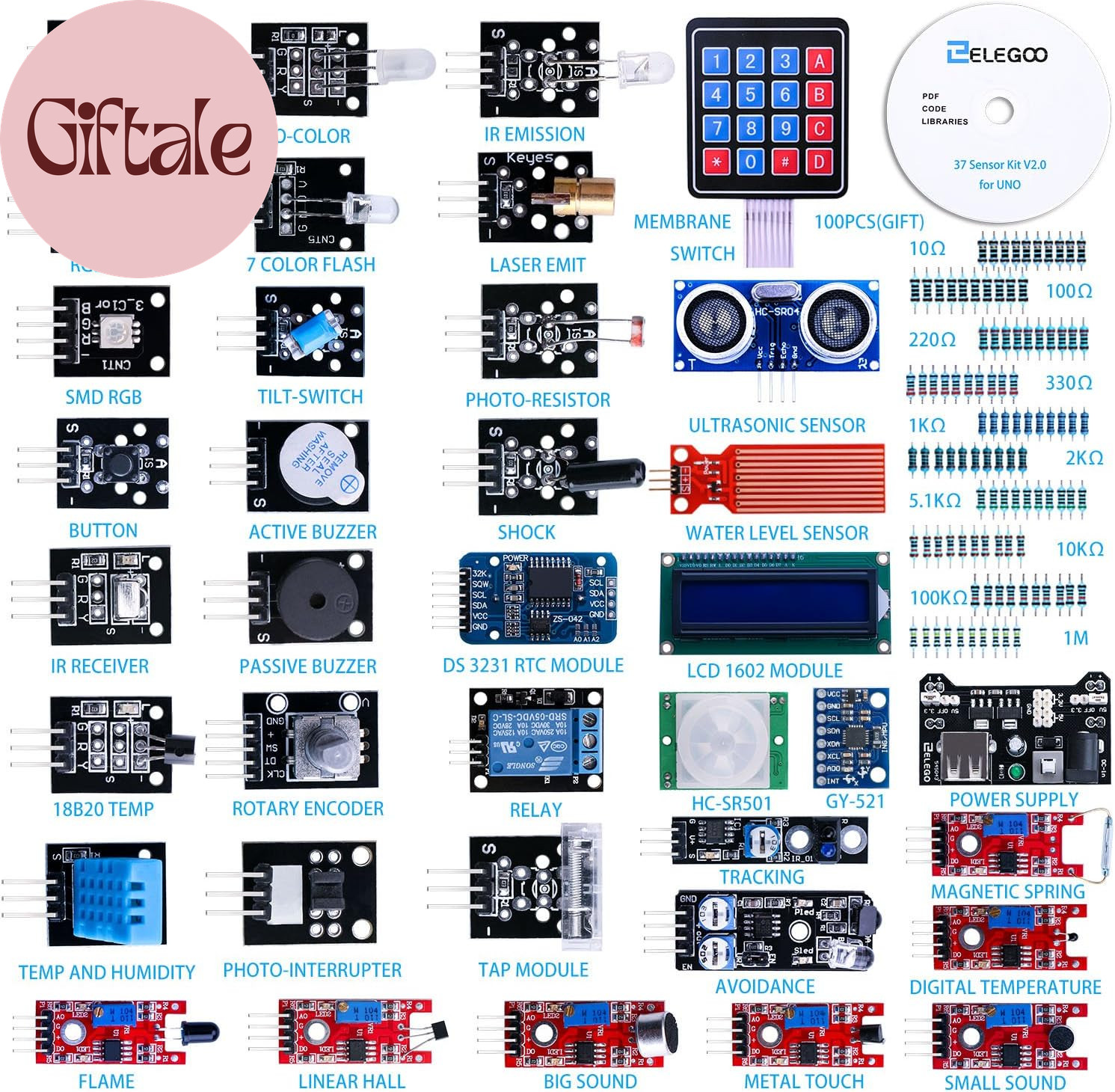
The Upgraded kit is designed for breadth. Alongside the 37-component count, it specifically names a GY-521 accelerometer, LCD1602 screen, and DS1307 real-time clock module, giving a shopper concrete starting points for motion, display, and timekeeping projects. The tutorial is designed for Arduino UNO R3, MEGA R3, and NANO, and the kit is compatible with the Arduino Official IDE and STM32. The important limitation is setup scope: the boards are not included, and basic electronic knowledge is required. That makes the kit a stronger match for someone planning several module exercises than for someone seeking a single dedicated sensor system. Its range is the reason to choose it; the extra preparation is the constraint.
Final choice by use case
- Biomedical engineering, prosthetics, gesture-control, wearable, or physiology work: Choose SparkFun MyoWare 2.0 Muscle Sensor EMG Kit for its defined application and snap-together format.
- Motion, display, or timekeeping practice: Choose Upgraded 37 in 1 Sensor Modules Kit for the named modules and tutorial-led Arduino path.
- An open-ended project brief: Use the $23.09 spread as a scope comparison. SparkFun is the dedicated EMG route, while Upgraded is the broader module route.
For a specific physiological build, SparkFun is the more direct match. For learning across several Arduino components, Upgraded offers the more suitable format.