Choosing between sensors, modules & components is really a choice between two kinds of input: muscle signals from a person or measured distance from an object. The SparkFun MyoWare 2.0 kit and BTLIFE TFS20-L are not substitutes in what they sense, so the right buy follows your build first-not a longer feature list.
Quick verdict
Choose the SparkFun MyoWare 2.0 Muscle Sensor EMG Kit Lot Shields Arduino DEV-21265 for EMG-focused builds, wearables, gesture control, or physiology work. Choose the BTLIFE TFS20-L for compact, single-point distance sensing. The SparkFun kit is listed at USD 89.99, while the BTLIFE module is USD 30.62-a $59.37 price spread.
Compact comparison
| Product | Listed price | Format | Decision signal |
|---|---|---|---|
| SparkFun MyoWare 2.0 kit | USD 89.99 | Multi-part EMG kit | Snap-together design and several shield pieces |
| BTLIFE TFS20-L module | USD 30.62 | Single-point LiDAR module | UART, IIC I2C, and distance measurement |
Where each one wins
SparkFun MyoWare 2.0 wins for human-signal projects
The MyoWare kit is the more relevant choice when the project brief names biomedical engineering, prosthetics, gesture control, wearables, or physiology labs. Its snap-together design is also useful when avoiding soldering is part of the workflow. The included Arduino Shield and multiple MyoWare shields give the kit a broader build direction than a standalone ranging module.
BTLIFE TFS20-L wins for compact ranging
The TFS20-L is the clearer fit when the central task is measuring distance. Its single-point dToF LiDAR format, UART and IIC I2C interfaces, and listed drone application give it a specific role in a compact electronics build. Its lower listed price also makes the decision straightforward when the project needs ranging rather than muscle-signal input.
Product notes
SparkFun MyoWare 2.0 Muscle Sensor EMG Kit Lot Shields Arduino DEV-21265
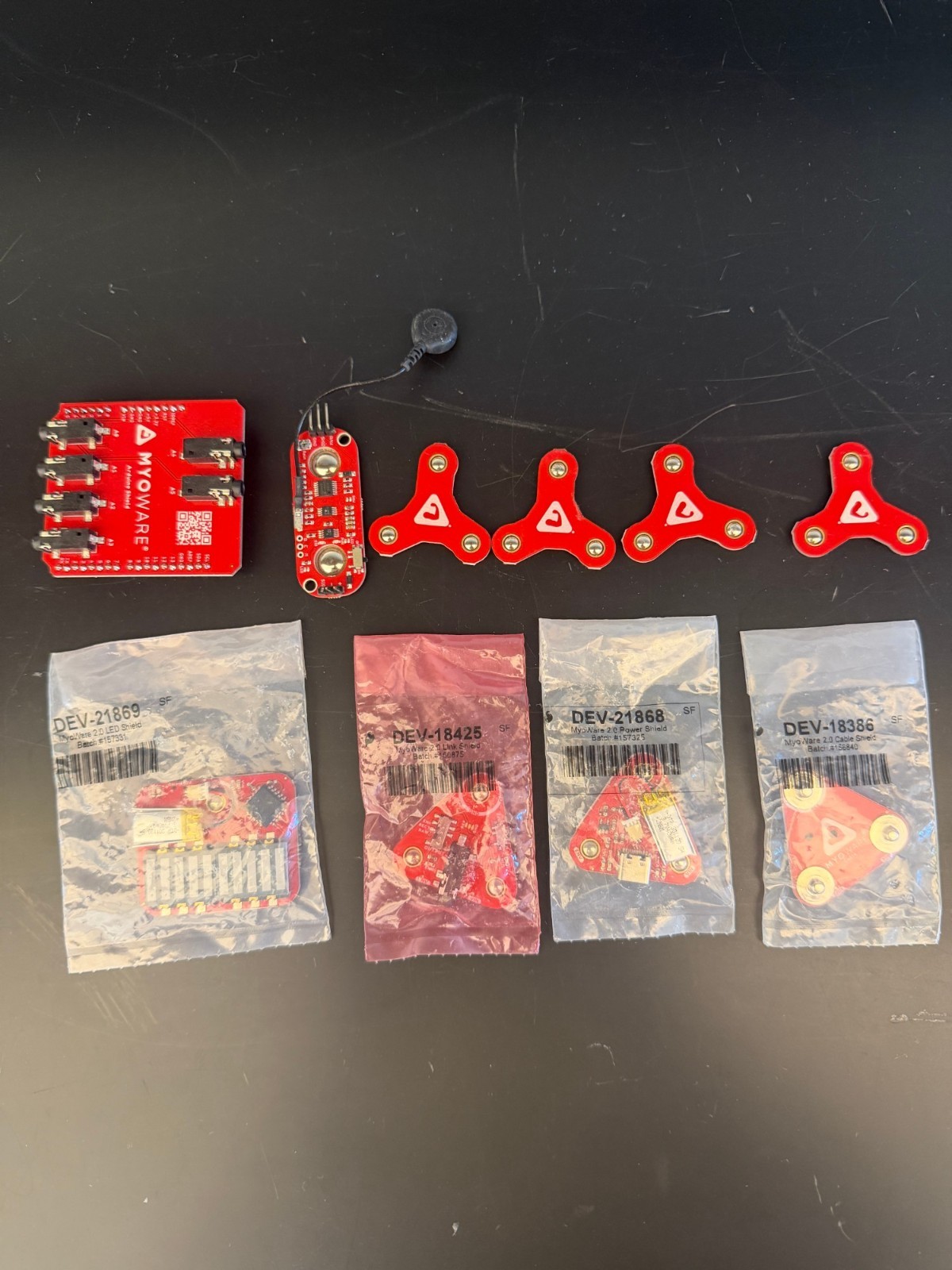
The main reason to choose the SparkFun MyoWare 2.0 Muscle Sensor EMG Kit Lot Shields Arduino DEV-21265 is its multi-part setup. It includes the MyoWare muscle sensor with electrode cable, an Arduino Shield, four red triangular snap boards, and LED, Link, Power, and Cable Shields. The snap-together design means the kit can suit a no-solder build, while the named applications cover biomedical engineering, prosthetics, gesture control, wearables, and physiology labs. The trade-off is focus: this kit centers on reading muscle electrical activity, so it is a poor match for a project whose central measurement is distance. Choose it when the project brief calls for EMG-style input or several related shield pieces rather than a standalone ranging module.
BTLIFE-UART IIC I2C Miniature Lidar Sensor Module TFS20-L 20Meters Micro Single
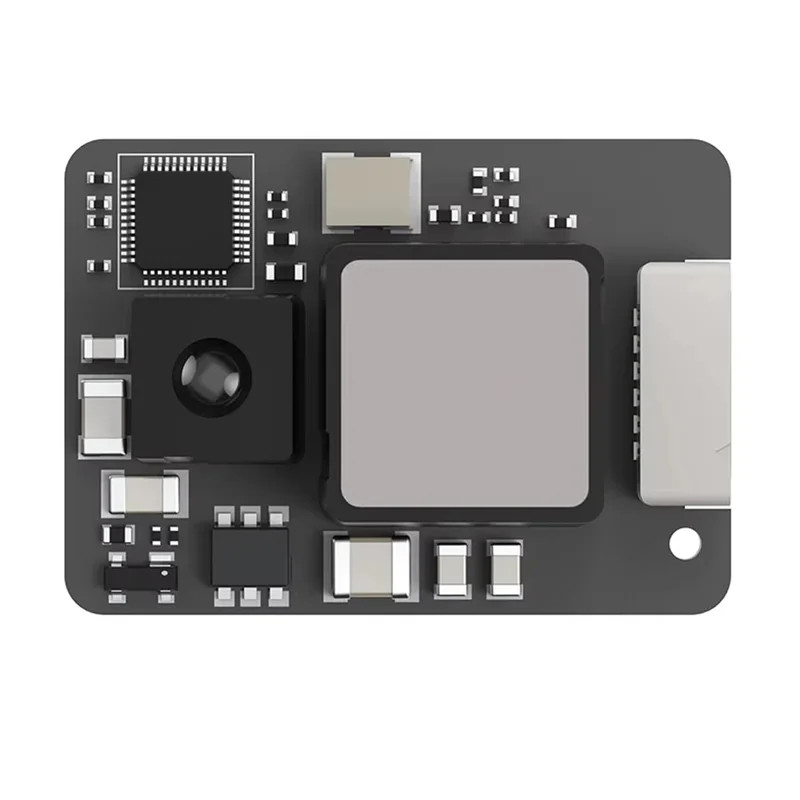
The practical reason to choose the BTLIFE-UART IIC I2C Miniature Lidar Sensor Module TFS20-L 20Meters Micro Single is its clearly defined ranging role. It is identified as a single-point dToF LiDAR module with UART and IIC I2C connections, distance measurement, and a range of up to 20m; the listed drone application gives that role a concrete direction. Its limitation is specialization: it is aimed at measuring distance, not the muscle-signal work addressed by the MyoWare kit. The TFS20-L makes sense when a compact module and a straightforward distance-sensing brief matter more than a multi-piece Arduino-oriented kit.
Final choice by use case
- Choose SparkFun MyoWare 2.0 for EMG, wearable, gesture-control, prosthetics, or physiology projects, especially when its snap-together format and included shields match the build.
- Choose BTLIFE TFS20-L for a compact single-point LiDAR project involving distance measurement, UART or IIC I2C, or the listed drone application.
The deciding question is simple: do you need to sense muscle electrical activity or distance? Once that is clear, the different formats and the $59.37 price spread make the choice much easier.