Choosing among sensors, modules & components usually comes down to one question: do you need a focused sensing setup or a broad assortment for circuit building? These kits sit at opposite ends of that decision. SparkFun MyoWare EMG Kit is organized around muscle-signal projects, while Electronic Components Kit is built around common parts for experimentation.
The shortcut is to start with the project brief rather than the number of pieces. A gesture-control, wearable, prosthetics, or physiology-lab idea points toward MyoWare. Circuit practice, passive-part selection, and indicator-light projects point toward the component assortment.
Quick verdict
SparkFun MyoWare EMG Kit is the clearer choice for a defined EMG project, especially if solder-free assembly and Arduino-oriented shields matter. Electronic Components Kit fits broader electronics work where having many resistor, LED, and capacitor choices matters more than a specialized sensing path. The $70 listed-price spread makes specialization the central trade-off.
Listed-price comparison
| Product | Listed price |
|---|---|
| SparkFun MyoWare EMG Kit | USD 89.99 |
| Electronic Components Kit | USD 19.99 |
Where each product wins
- SparkFun MyoWare EMG Kit wins for: biomedical engineering, prosthetics, gesture control, wearables, and physiology-lab projects. Its snap-together format reinforces that focused use.
- Electronic Components Kit wins for: circuit learning and prototyping that depend on choosing among resistor values, LED colors, and capacitor types. Its assortment supports general component work instead of one sensing task.
Product notes
SparkFun MyoWare EMG Kit
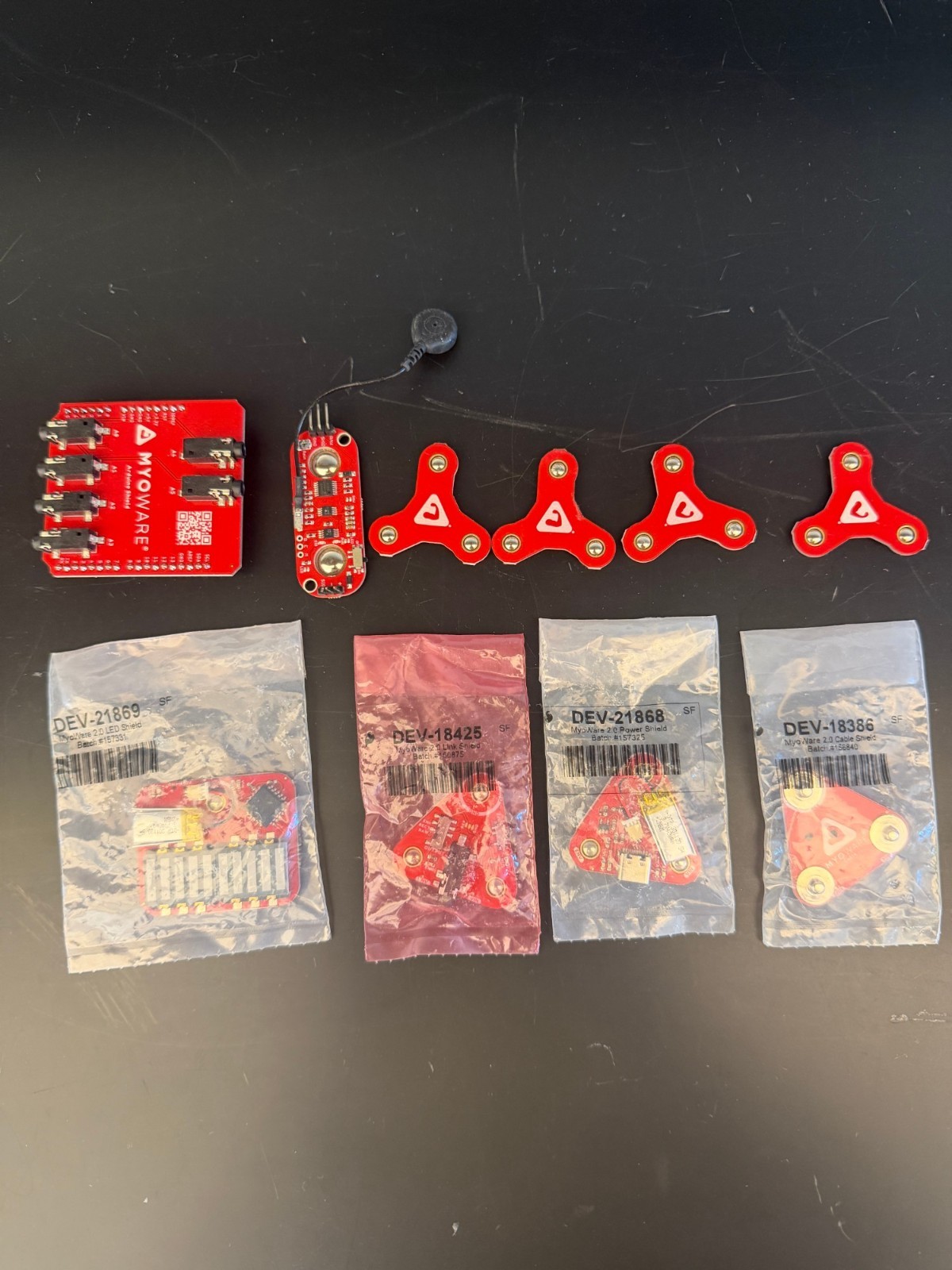
The SparkFun MyoWare EMG Kit earns its place when the project brief calls for muscle-signal work. The package includes the MyoWare 2.0 muscle sensor with electrode cable, an Arduino Shield with 3.5mm TRS jacks, four red triangular snap boards, plus LED, Link, Power, and Cable Shields. Its snap-together design means no soldering, a concrete advantage for gesture-control, wearable, prosthetics, and physiology-lab builds. The limitation is specialization: the kit is organized around one sensing direction rather than a general selection of parts for circuit experiments. That makes it a focused choice for a defined EMG build, but a mismatched starting point when the main need is a spread of LEDs, resistors, and capacitors. The USD 89.99 price makes that focused purpose central to the decision.
Electronic Components Kit
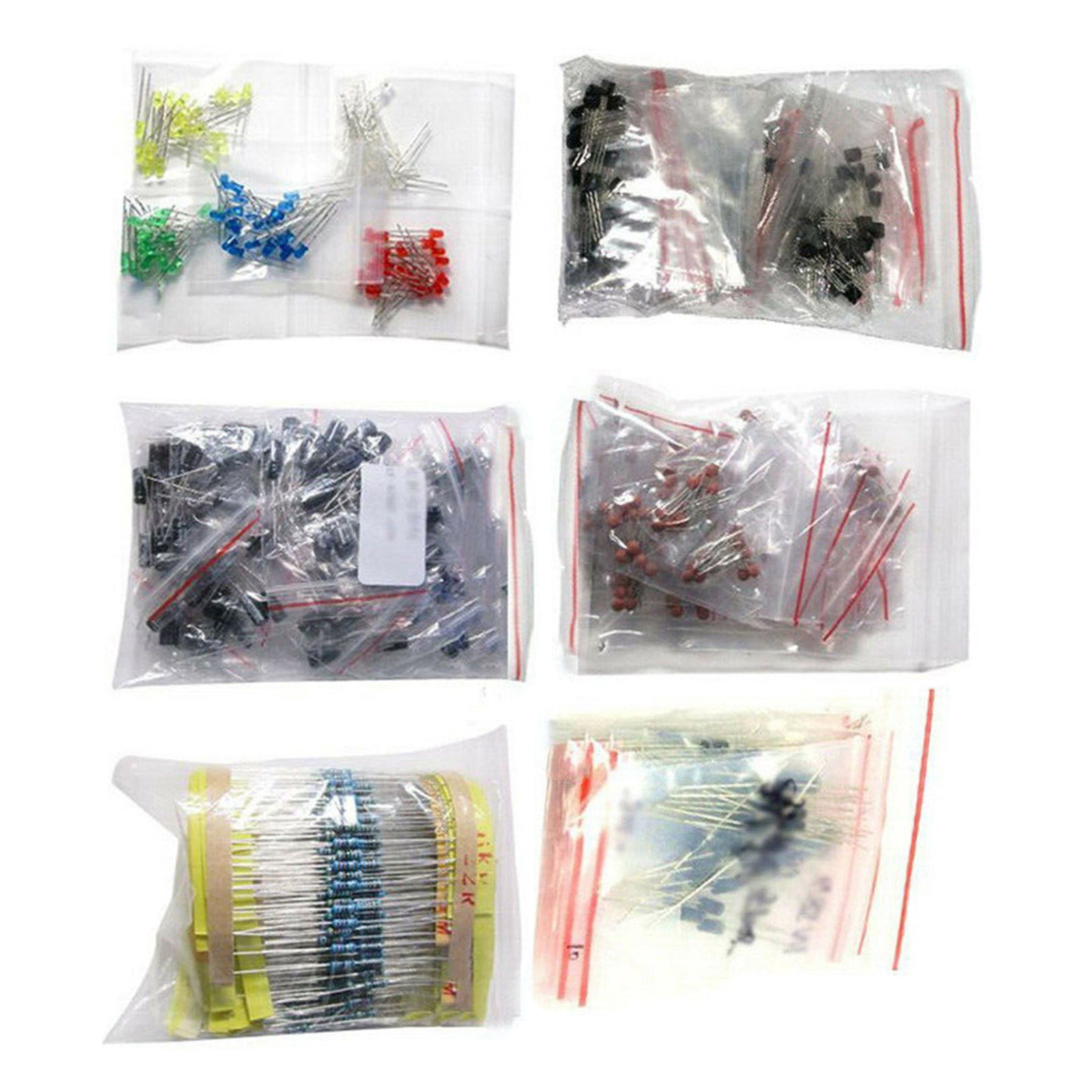
Electronic Components Kit is the better match for hands-on circuit building where variety across basic parts matters. Its contents specify 100 LED diodes in five colors, 600 1/4W resistors across 30 values, 120 electrolytic capacitors, and 30 kinds of ceramic capacitors. That mix supports resistor selection, indicator-light projects, filtering experiments, and general prototyping without making a muscle sensor the center of the build. Its limitation is focus in the opposite direction: the assortment is made up of common circuit parts, so it is less direct for a project that specifically needs EMG sensing, electrode connections, and shields. At USD 19.99, the decision centers on breadth of components rather than a specialized sensor workflow.
Final choice by use case
Choose SparkFun MyoWare EMG Kit if your build has an EMG requirement or you want the included Arduino Shield and snap boards to anchor the setup. Choose Electronic Components Kit if your work is centered on LEDs, resistors, and capacitors, or you want multiple values for circuit experimentation. The $70 spread makes sense only when the job changes: MyoWare offers a specialized muscle-signal path, while Electronic Components Kit offers a broad basic-parts starting point.