Choosing among sensors, modules & components comes down to the kind of work you want to do: measure voltage with a focused module, or assemble circuits with a broader breadboard-and-parts kit. The Voltage Sensor Module is aimed at Arduino DIY projects that need a defined voltage-reading role. The Electronics Component Basic Kit is oriented toward UNO R3 prototyping and organized component storage.
Quick verdict
Choose the 10Pcs 0-25V Voltage Sensor Module when voltage detection is the central task. Its product description gives a stated input range from 0.02445V to 25V and a resolution of 0.00489V, making its purpose specific.
Choose the Electronics Component Basic Kit with 830 tie-points Breadboard Resist for UNO R3 when you want breadboard space, assorted components, and a storage case for UNO R3 work. The absolute price spread is USD 1.89, with the kit listed lower, so the intended use matters more than a large price difference.
At-a-glance comparison
| Pick | Listed price | Defining detail | Best fit |
|---|---|---|---|
| 10Pcs 0-25V Voltage Sensor Module | USD 16.38 | Focused voltage-sensing role for Arduino DIY projects | Measurement-led builds |
| Electronics Component Basic Kit for UNO R3 | USD 14.49 | 830 tie-points breadboard and UNO R3 application | Breadboard and component work |
Where each product wins
Where the voltage sensor wins
The voltage module wins for a measurement-first Arduino DIY brief. Its named purpose directly matches projects centered on detecting an input, so it is the more direct choice when voltage readings matter more than assembling a general circuit assortment. The stated resolution also gives the project a defined measurement specification to work around.
Where the component kit wins
The component kit wins for hands-on UNO R3 prototyping. Its storage case, multicolor signal lamp, and function sheet printed on the lid make organization part of the setup, while the breadboard format supports arranging components during a build. It is the better match when the work begins with circuit assembly rather than a dedicated sensing task.
Product notes
10Pcs 0-25V Voltage Sensor Module
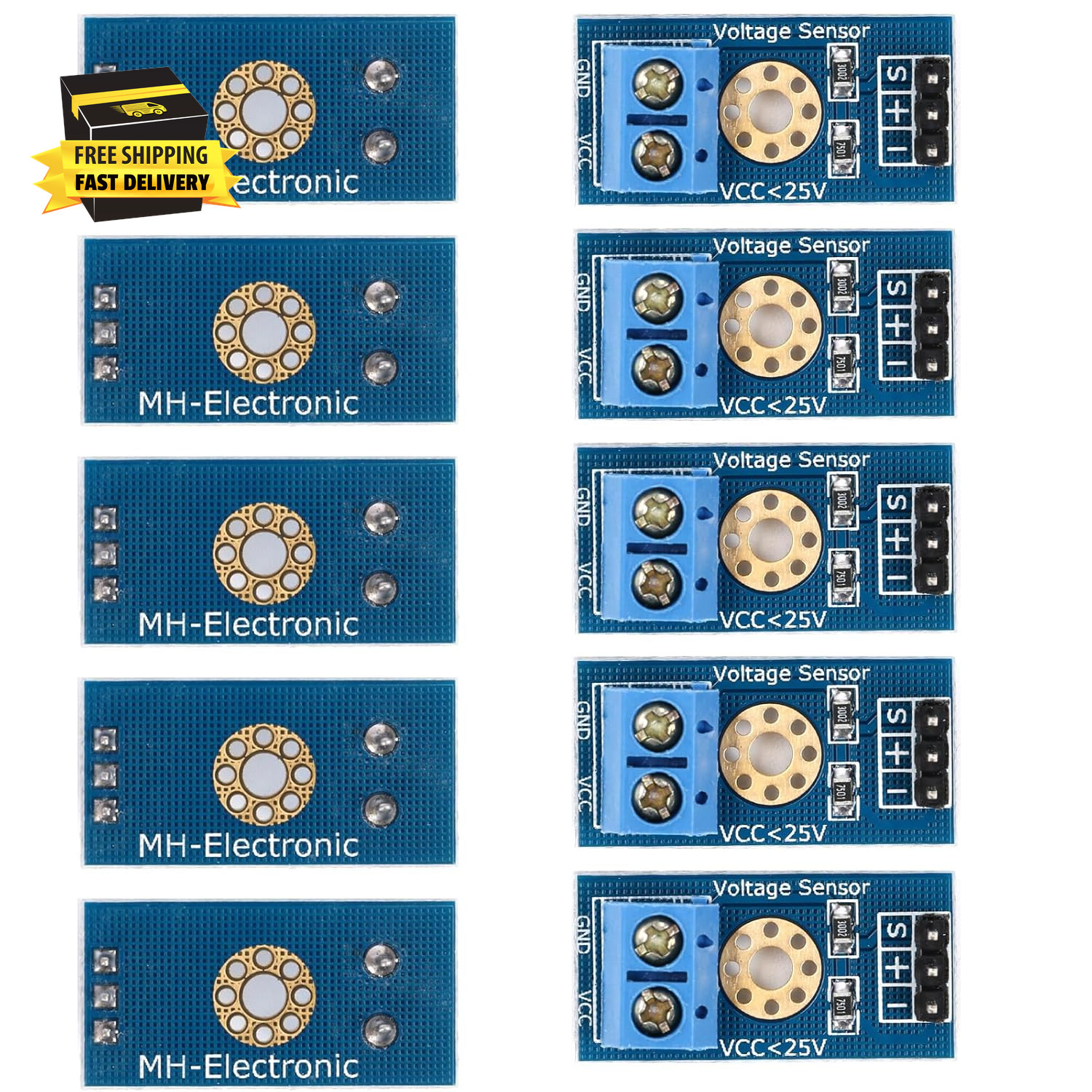
The 10Pcs 0-25V Voltage Sensor Module is the clear fit when an Arduino DIY project needs voltage readings as its main job. Its stated input range runs from 0.02445V to 25V, with a listed resolution of 0.00489V, giving the project a defined measurement brief. The title also directly names Arduino DIY projects and smart electronics, so its intended role is easy to identify. At USD 16.38, it is USD 1.89 above the component kit. The limitation is focus: it is framed as a voltage sensor module rather than an 830 tie-points breadboard-and-component assortment. Choose it for measurement-led work; choose the kit when general prototyping is the priority.
Electronics Component Basic Kit for UNO R3
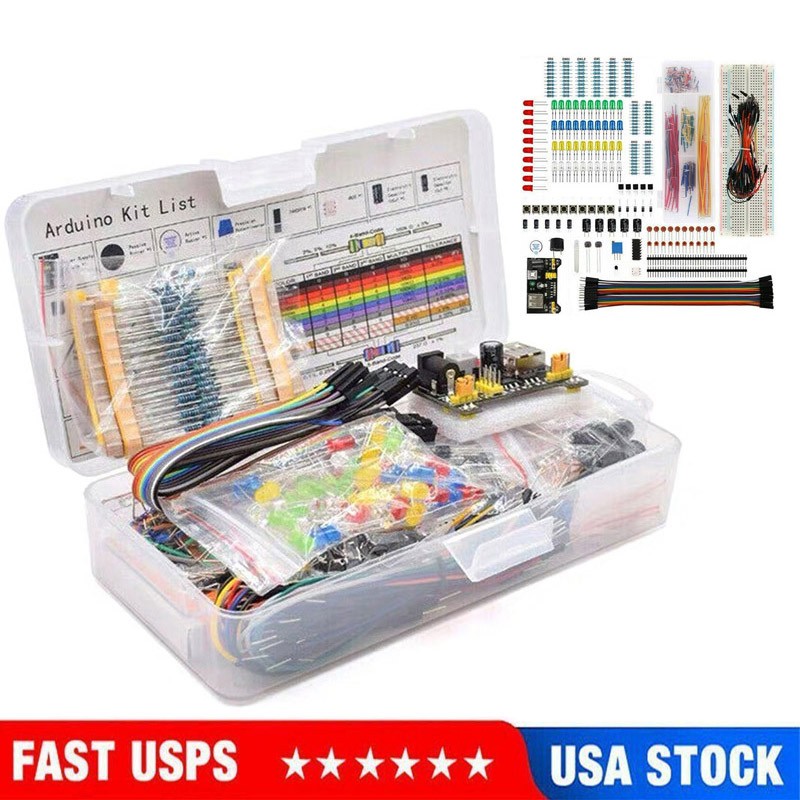
At USD 14.49, the Electronics Component Basic Kit with 830 tie-points Breadboard Resist for UNO R3 gives the more general setup for breadboard projects. Its title identifies both the 830 tie-points format and UNO R3 application, while the white storage case, multicolor signal lamp, and lid-mounted function sheet add practical organization. The description also calls the kit lightweight and convenient to carry, which suits keeping it with a project box. Its limitation is use-case fit: for work organized around a defined voltage-reading range and resolution, the voltage module is the more direct choice. Pick this kit when breadboard prototyping and assorted components matter more than dedicated voltage sensing.
Final choice by use case
- For voltage-reading Arduino DIY projects: choose the 10Pcs 0-25V Voltage Sensor Module, because its named purpose, input range, and resolution align directly with that task.
- For UNO R3 breadboard prototyping: choose the Electronics Component Basic Kit, with its stated breadboard format, component focus, and organized case.
- For the lower listed price: choose the Electronics Component Basic Kit; the two prices are separated by an absolute USD 1.89 spread.
The decision is straightforward: buy the voltage module for a specific measurement brief, or select the component kit for a more general UNO R3 building workflow.